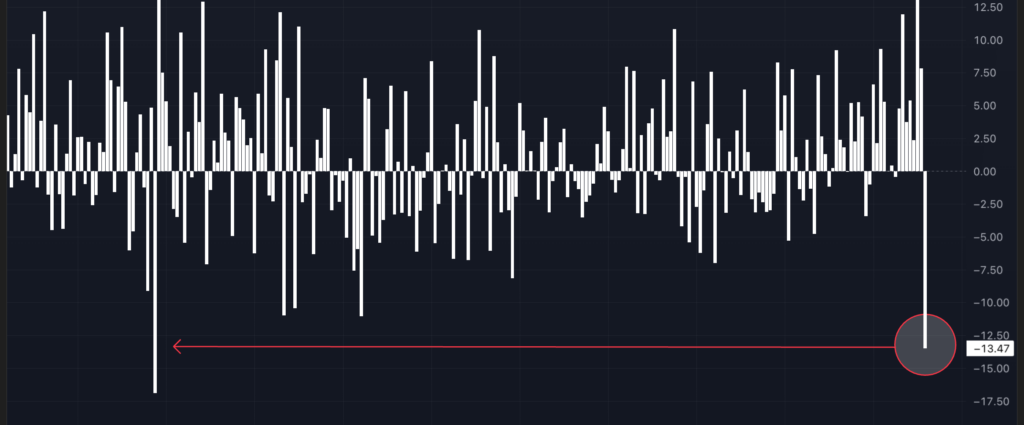
Gold is down 13% in March, on track for its steepest monthly decline since October 2008, when Lehman Brothers collapsed and global markets were in freefall.
The SPDR Gold Shares (NYSE: GLD) recorded over $8 billion in outflows during the month — more than double its prior largest monthly withdrawal, set in February 2021.
A war is raging in the Middle East. The world’s oldest safe haven is supposed to thrive in exactly this environment — so why isn’t gold working? And what does history say about what comes next after selloffs this violent?
Gold Had Its Worst Month Since 2008 – A Safe Haven That Failed To Show Up
The paradox is the story. Gold entered 2026 among Wall Street’s hottest consensus trades.
Gold had rallied 64.6% in 2025 — the bullion’s best annual return since 1979 — and by late January, spot gold reached an all-time high of $5,589 per ounce.
The bullish thesis was straightforward: falling inflation, multiple Fed rate cuts ahead, and insatiable central bank demand.
A month after President Donald Trump launched Operation Fury, the Strait of Hormuz remains closed, Brent crude trades above $110, and gold, the world’s oldest safe haven, is collapsing.
The answer is not geopolitics. It’s interest rates.
Gold is not an outright war hedge — it is an interest-rate-sensitive asset.
The conflict reignited the very inflation pressures markets had spent months assuming were behind them. The rate cuts that underpinned gold’s historic bull run have evaporated.
The Fed held rates at 3.50%–3.75% at its March 18 meeting and penciled in just one 25-basis-point cut for the year.
Yet traders went further: Polymarket traders now assign a 35% probability to zero cuts in 2026 — the single most likely …