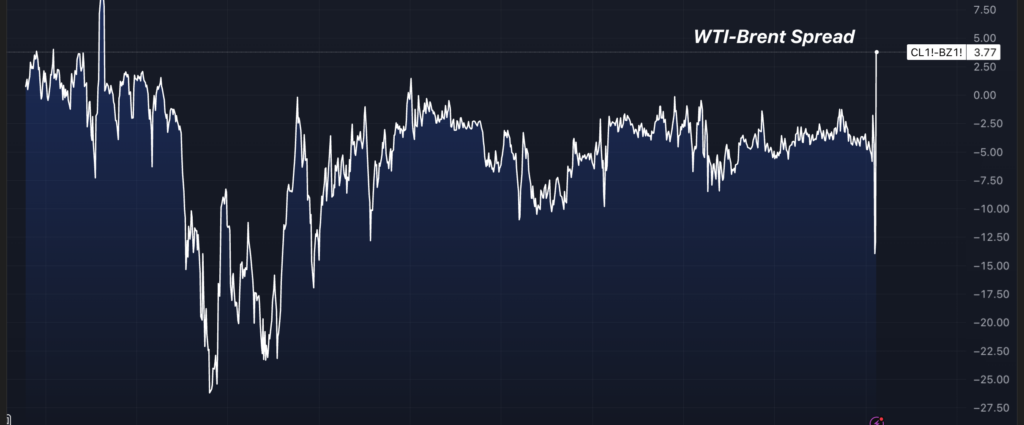
In a normally functioning global oil market, the U.S. West Texas Intermediate crude trades at a discount to Brent.
This is not an accident of geography. It is a structural reality baked into the global energy system over decades.
WTI is a landlocked benchmark, priced at Cushing, Oklahoma — a storage hub in the middle of the country with no direct ocean access.
Brent, by contrast, is a seaborne crude blend priced off North Sea cargoes and used to benchmark oil flowing out of the Middle East, West Africa and the North Sea itself. Since Brent can be loaded onto a tanker and delivered anywhere in the world, it commands a premium — typically $2–$5 per barrel — that reflects its logistical flexibility and global reach.
That relationship which has held for much of the past two decades has now broken.
On Thursday, April 2, the WTI-Brent spread has flipped positive. U.S. crude futures — as tracked by the United States Oil Fund (USO) — are trading at over $3 above Brent.
These are levels not seen since 2009.
Chart: WTI Just Flipped Above Brent. It Hasn’t Happened Like This Since 2009.
The WTI-Brent Spread Was As Negative As $15 In March, Then Suddenly Flipped
When the U.S.-Israel military campaign against Iran began on February 27, Brent immediately absorbed the geopolitical shock. Iran’s closure of the Strait of Hormuz — through which 20% of global oil flows — sent seaborne crude prices into a stratosphere that WTI, insulated from shipping risk by its inland location, could not fully follow.
By Mar. 19, the Brent-WTI …





This post was originally published here