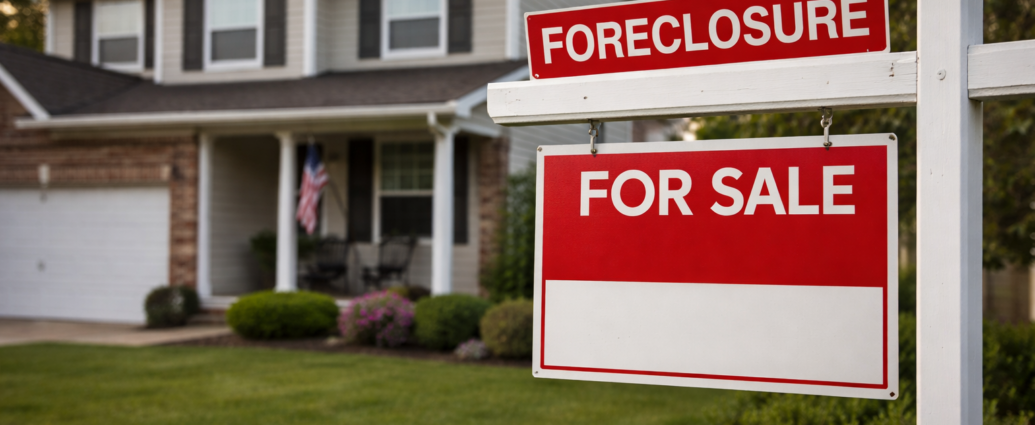
IRVINE, Calif. — U.S. residential foreclosure activity rose in the first quarter of 2026, signaling renewed stress in segments of the housing market as higher borrowing costs continue to weigh on homeowners, according to a report released April 17, 2026, by real estate data firm ATTOM.
A total of approximately 95,000 properties had foreclosure filings in Q1 2026, up from the previous quarter and marking a notable increase from a year earlier, ATTOM said. “Foreclosure activity is starting to tick up again as the market adjusts to higher interest rates and affordability constraints,” Rob Barber, CEO of ATTOM, said in the report, noting that while levels remain below pre-pandemic norms, “we are clearly seeing a shift from the historically low foreclosure environment of the past few years.”
The increase comes as mortgage rates remain elevated compared to pandemic-era lows, putting pressure on borrowers with adjustable-rate loans or those facing income disruptions. According to Freddie Mac data released April 11, 2026, the average 30-year fixed mortgage rate has hovered near 6.7%, significantly higher than the sub-3% levels seen in 2021. “Higher rates continue to strain affordability and increase the risk of delinquency for more vulnerable borrowers,” said Sam Khater, Chief Economist at Freddie Mac, in a weekly market commentary.
Regional data suggests the rise is uneven, with certain states accounting for a disproportionate share of filings. ATTOM reported that California, Florida, Texas, and Illinois led the nation in total foreclosure activity in the first quarter. “These are large housing markets where even small shifts in economic conditions can translate into significant changes in foreclosure numbers,” Rick Sharga, Executive Vice President of Market Intelligence at ATTOM, said on April 17, adding that localized job markets and home price dynamics are key drivers.
Labor market conditions remain a critical factor in determining whether foreclosure activity accelerates further. While unemployment remains relatively low, economists warn that any softening could quickly translate into housing stress. “The housing market is particularly sensitive to changes in employment, and even a modest uptick in job losses could lead to higher foreclosure rates,” said Diane Swonk, Chief Economist at KPMG U.S., in a research note published April 16.
At the same time, home equity levels are providing a partial buffer for many homeowners. Rising home values over the past several years have allowed some distressed borrowers to sell rather than enter foreclosure. “Strong equity positions continue to act as a safety valve,” said Lawrence Yun, Chief Economist at the National Association of Realtors, on April 15, noting that “most homeowners still have options that weren’t available during the last housing downturn.”
Still, analysts caution that the trend bears watching as financial conditions remain tight. “We’re not looking at a foreclosure crisis, but the direction of the data is clearly upward,” said Mark Zandi, Chief Economist at Moody’s Analytics, on April 17. “If interest rates stay higher for longer and economic growth slows, foreclosure activity could continue to increase into the second half of the year.”
What comes next will depend largely on the path of interest rates, the resilience of the labor market, and whether policymakers succeed in stabilizing housing affordability—factors that will determine whether this uptick remains contained or evolves into a broader housing market concern.
—JBizNews Desk