WASHINGTON — A growing divide in Iran’s leadership is spilling into public view, as U.S. Ambassador to the United Nations Mike Waltz warned Sunday that conflicting signals from Tehran’s civilian and military leadership are heightening global economic risk and uncertainty around critical shipping routes.
Speaking on NBC’s Meet the Press on April 19, Waltz said Iran’s Foreign Ministry and the powerful Islamic Revolutionary Guard Corps (IRGC) are no longer aligned on key strategic decisions, particularly regarding maritime access and escalation in the region. “The foreign minister says it’s open. The IRGC says it’s closed,” Waltz stated, pointing to what U.S. officials increasingly see as a fractured command structure inside the Iranian regime.
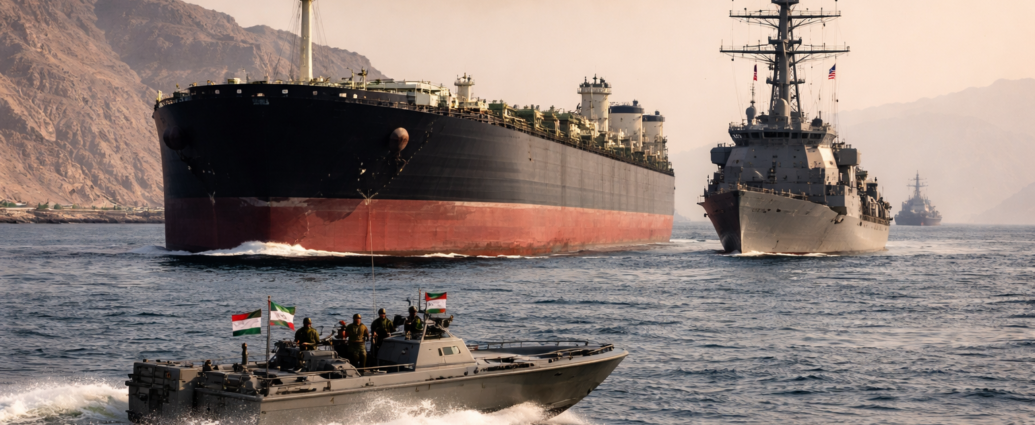
The comments come at a sensitive moment for global markets, where even the perception of instability in Middle East shipping corridors—particularly the Strait of Hormuz—can trigger volatility in energy prices, insurance costs, and supply chains. Roughly one-fifth of the world’s oil supply flows through the narrow passage, making it one of the most strategically important choke points in the global economy.
Waltz emphasized that ultimate control over maritime security will not be dictated by Tehran. “Regardless, it’s the U.S. Navy and President Trump as the commander-in-chief that decides what ultimately comes in and comes out,” he said, underscoring Washington’s willingness to assert military and economic leverage to keep global trade routes open.
The internal contradiction in Iran’s messaging reflects a broader tension between its diplomatic corps and the IRGC, which operates with significant autonomy and controls key military and economic assets, including naval forces responsible for activity in the Persian Gulf. Analysts say this dual-power structure has long complicated negotiations with the West, as commitments made by civilian officials are not always consistently enforced by military actors on the ground.
“This is not new, but it is becoming more visible and more consequential,” said Vali Nasr, professor of international affairs at Johns Hopkins University, noting that “when markets see mixed signals from Tehran, they price in risk—not just of conflict, but of miscalculation.”
The Biden-era framework for managing tensions with Iran had relied heavily on diplomatic channels through the Foreign Ministry, but recent developments suggest that the IRGC may be increasingly setting the tone, particularly in areas tied to regional security and economic leverage. That shift raises concerns among U.S. and allied officials that even if diplomatic openings emerge, enforcement remains uncertain.
Waltz framed the issue not just as a regional security concern, but as a global economic threat. “The Iranian regime cannot hold the entire world’s economy hostage,” he said, adding that attempts to disrupt shipping or energy flows amount to “collective punishment” over disputes tied to Iran’s nuclear ambitions.
Energy markets have already begun reacting cautiously. While oil prices have not yet surged dramatically, traders are building in a geopolitical premium amid rising rhetoric and the possibility of escalation. Maritime insurers have also started reassessing risk exposure in the Gulf, which could translate into higher shipping costs and downstream inflationary pressure globally.
From a business standpoint, the implications extend far beyond energy. Disruptions—or even perceived threats—can ripple across manufacturing, logistics, and commodities markets. Multinational firms with exposure to Middle Eastern supply chains are increasingly factoring geopolitical instability into their risk models, particularly as tensions intersect with broader global trade fragmentation.
The U.S. response, as outlined by Waltz, signals a more assertive posture aimed at deterring disruption before it materializes. By emphasizing the role of the U.S. Navy in safeguarding transit routes, Washington is attempting to reassure markets while also sending a direct message to Tehran’s military leadership.
Still, the underlying concern remains: a fragmented Iranian command structure increases the risk of unintended escalation. If the Foreign Ministry signals openness while the IRGC acts independently, the potential for misinterpretation—by markets, governments, or military forces—rises sharply.
For now, the focus will remain on whether Iran can present a unified position or whether internal divisions deepen, further complicating diplomacy and increasing volatility across global markets.
What happens next will likely hinge on two parallel tracks: whether diplomatic channels regain coherence within Iran’s leadership, and whether the U.S. continues to reinforce its deterrence posture without triggering a broader confrontation. For global business leaders, the message is clear—this is not just a geopolitical story, but a live economic risk with immediate and far-reaching consequences.
—JBizNews Desk