The White House is preparing a new round of sanctions targeting Iran as tensions rise over maritime security, signaling a strategy that leans on economic pressure rather than immediate military escalation. National Security Council Coordinator for Strategic Communications John Kirby said in a briefing that the administration is “actively evaluating additional measures to ensure freedom of navigation and protect global commerce,” indicating that financial and trade restrictions are under review as part of the next phase of U.S. policy.
The sanctions discussion follows conflicting signals from Tehran and ongoing uncertainty around de-escalation efforts. U.S. Ambassador to the United Nations Mike Waltz, speaking on NBC’s Meet the Press, said that “the United States will ultimately ensure what moves through these shipping lanes,” emphasizing that maritime security decisions rest with Washington. Waltz added that Iran “cannot hold the global economy hostage,” reinforcing the administration’s view that economic leverage may be more effective than direct confrontation at this stage.
Officials have not formally announced an extension of any ceasefire framework, but the shift toward sanctions suggests the administration is seeking to maintain pressure while avoiding immediate escalation. A senior White House official, speaking to Reuters on background, said the U.S. is “looking at calibrated responses that sustain deterrence without triggering broader conflict,” a signal that economic tools are being prioritized to manage the situation while diplomatic channels remain uncertain.
The potential measures are expected to focus on entities linked to the Islamic Revolutionary Guard Corps (IRGC), as well as shipping networks and financial intermediaries believed to facilitate Iranian oil exports. The U.S. Department of the Treasury’s Office of Foreign Assets Control (OFAC), which oversees sanctions enforcement, has not issued a formal announcement, but officials familiar with the process told Bloomberg that “designations could be rolled out quickly if conditions deteriorate further.”
Energy markets are already reacting to the risk environment. Helima Croft, Head of Global Commodity Strategy at RBC Capital Markets, told clients in a note that “even the perception of disruption in key transit corridors leads to immediate tightening in supply expectations,” underscoring how geopolitical developments are rapidly priced into oil markets. The region accounts for a significant share of global crude flows, making stability critical for price predictability.
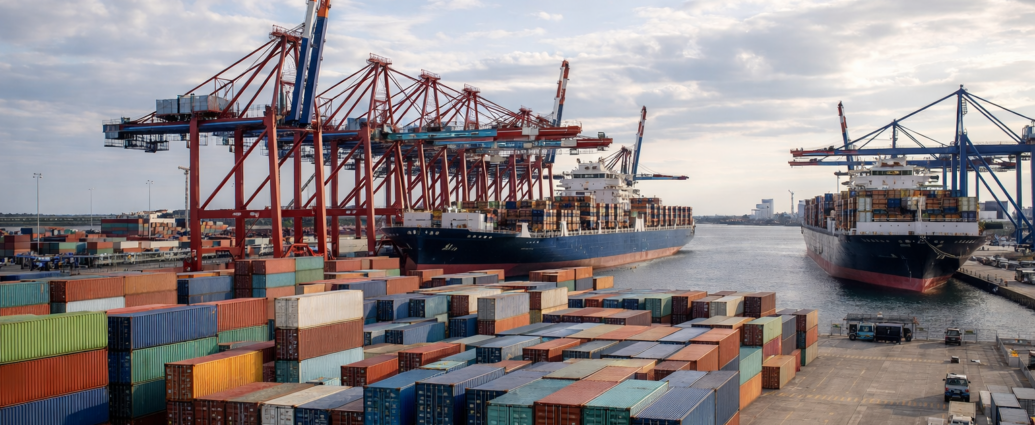
Shipping and insurance sectors are also adjusting in real time. Lloyd’s of London, in its latest market update, noted rising demand for war-risk coverage tied to vessels operating in high-risk zones, reflecting heightened concern among global cargo operators. Executives at major logistics firms, including Maersk, have indicated in industry briefings that contingency planning is underway should routes become less secure or more costly.
The broader economic implications are significant. Higher energy prices and shipping costs could feed directly into inflation at a time when policymakers are attempting to stabilize prices. Federal Reserve Chair Jerome Powell, in recent remarks, reiterated that “we remain attentive to external risks that could influence inflation dynamics,” a nod to how geopolitical developments are increasingly shaping monetary policy considerations.
For businesses, the uncertainty is immediate. Companies reliant on global supply chains are reassessing exposure to potential disruptions, particularly in sectors sensitive to transportation costs and delivery timelines. Jamie Dimon, CEO of JPMorgan Chase, recently warned that “geopolitical tensions are becoming a central factor in economic outcomes, not a side issue,” highlighting how quickly such events can impact corporate planning.
The administration’s approach suggests a deliberate attempt to balance pressure with restraint. While no formal ceasefire extension has been announced, the reliance on sanctions indicates Washington is seeking to avoid a rapid escalation while still signaling strength. The strategy reflects a broader effort to manage risk through economic tools rather than immediate military action.
What comes next will depend on both policy execution and Iran’s response. Formal sanction announcements, potential retaliatory measures, and developments in maritime security will all be closely watched by markets and policymakers alike. Whether this approach stabilizes the situation or leads to further escalation will determine how global trade and energy markets respond in the weeks ahead.
—JBizNews Desk