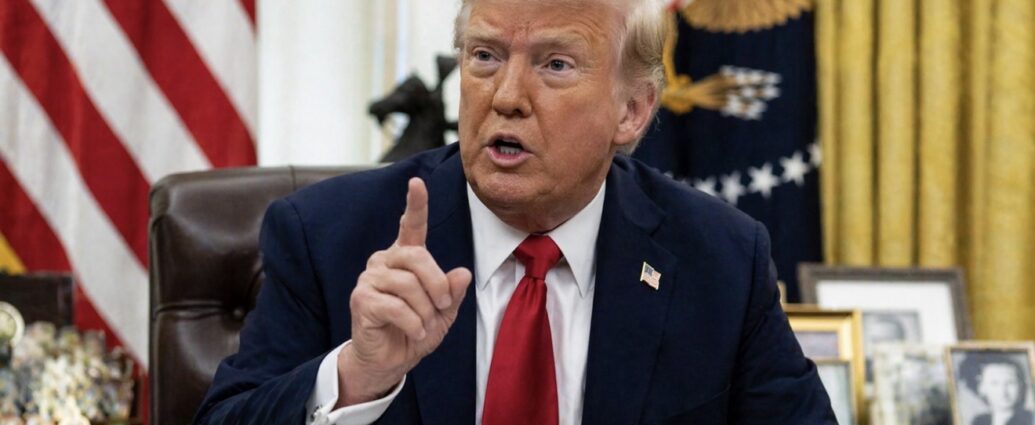
WASHINGTON — President Donald Trump said Tuesday he will “remember” U.S. companies that choose not to seek refunds on tariffs imposed under emergency powers that were recently struck down by the Supreme Court, injecting a new political dimension into what could become a massive wave of corporate claims.
The remarks come after the Supreme Court, in a 6–3 decision, ruled that tariffs enacted under the International Emergency Economic Powers Act (IEEPA) were unlawful, potentially opening the door for more than $160 billion in refunds to U.S. importers.
A day earlier, U.S. Customs and Border Protection (CBP) launched a formal portal allowing companies to begin filing claims to recover those funds, setting the stage for what could become one of the largest reimbursement processes in U.S. trade history.
Speaking Tuesday, Trump suggested that companies declining to pursue refunds would be viewed favorably. “They would be very smart — very brilliant,” he said, signaling that corporate decisions on the issue could carry political implications.
“This introduces a non-economic variable into what should be a legal and financial decision,” said William Reinsch, Senior Adviser at the Center for Strategic and International Studies, noting that companies now face a balancing act between fiduciary duty and potential political considerations.
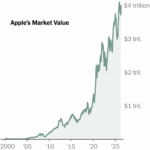
So far, several major corporations—including Apple and Amazon—have not publicly moved to file for refunds, though the timeline for submissions remains open and companies may still be assessing legal and financial implications.
“Large multinationals will likely proceed cautiously,” said Doug Irwin, Professor of Economics at Dartmouth College, adding that firms will need to weigh regulatory relationships, reputational risk, and potential scrutiny alongside the financial upside.
The scale of the potential refunds is significant. The tariffs, originally imposed as part of broader trade and national security measures, impacted a wide range of imports and sectors, leaving companies with substantial cumulative costs over time.
“$160 billion is not just a number—it’s a major liquidity event for corporate balance sheets,” said Chad Bown, Senior Fellow at the Peterson Institute for International Economics, noting that the outcome could influence capital allocation decisions across industries.
The Supreme Court’s ruling also raises broader questions about the limits of executive authority in trade policy. Legal analysts say the decision could reshape how future administrations deploy emergency powers in economic policy.
“This is a landmark decision in terms of executive power and trade law,” said Jennifer Hillman, Professor at Georgetown Law and former WTO Appellate Body member, emphasizing that the ruling may constrain similar actions going forward.
For companies, the immediate focus remains on whether—and how—to pursue refunds. While the financial incentive is clear, Trump’s comments introduce a layer of uncertainty that could influence corporate behavior.
“Firms are now navigating both legal clarity and political signaling,” said Everett Eissenstat, former Deputy Director of the National Economic Council, noting that decisions may vary depending on each company’s exposure and strategic priorities.
Looking ahead, the pace and scale of refund claims will be closely watched by policymakers, markets, and corporate leaders alike. The outcome could have ripple effects across trade policy, executive authority, and the relationship between government and business.
For now, Trump’s message adds a new dimension to the equation: companies may not be judged solely on financial decisions, but also on how those decisions align with broader political dynamics.
JBizNews Desk