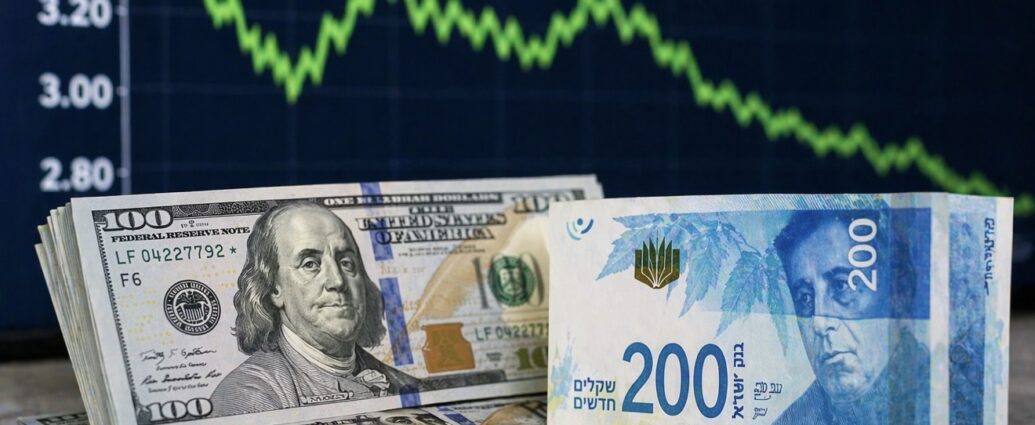
Israel’s surging currency is forcing investors to confront a key question: does the sharp decline in the shekel-dollar exchange rate present a buying opportunity for U.S. assets, or signal a longer-term shift toward a structurally stronger shekel?
The shekel’s rally over the past year has significantly eroded returns for Israeli investors holding dollar-denominated assets. Even as U.S. equities posted strong gains, currency movements offset much of the upside when converted back into shekels. “Currency can dominate returns in global portfolios,” said Jonathan Katz, Chief Economist at Leader Capital Markets, noting that exchange-rate moves have become a central driver of investor outcomes.
For example, investments tracking major U.S. indices delivered strong returns in dollar terms, but those gains were substantially reduced once adjusted for currency. The dynamic has led to capital outflows from some foreign investment tracks, reflecting investor frustration with the currency drag.
Several structural factors are supporting the shekel’s strength. Israel’s current account surplus, steady inflows from the technology sector, and a decline in perceived geopolitical risk have all contributed to sustained demand for the local currency. “Israel continues to attract significant foreign capital,” said Harel Kodesh, former CEO of SAP Israel and tech investor, pointing to ongoing deal activity as a key source of dollar inflows.
Large-scale transactions in the technology sector have amplified the trend. High-profile acquisitions—such as major cybersecurity deals—have injected substantial foreign currency into the Israeli economy, reinforcing appreciation pressure on the shekel. At the same time, global weakness in the U.S. dollar has further strengthened the relative position of Israel’s currency.
“The shekel is benefiting from both domestic strength and global dollar softness,” said Francesco Pesole, FX Strategist at ING, adding that Israel has emerged as one of the stronger currencies in the current global cycle.
The recent move below NIS 3 per dollar is particularly notable. While the exchange rate reached similar levels decades ago, analysts emphasize that today’s environment is driven primarily by market forces rather than policy intervention. “This is a fundamentally different backdrop,” said Yossi Fraiman, CEO of Prico Risk Management, noting that the move reflects structural flows rather than temporary distortions.
Still, whether the current level represents an opportunity remains a matter of debate among market participants. Some analysts argue that the weaker dollar presents an attractive entry point for investors seeking exposure to U.S. assets, particularly given ongoing strength in the American economy.
“For investors with dollar liabilities or planned spending, this is a reasonable time to increase exposure,” said Eran Yaron, Head of Markets Strategy at a leading Israeli financial institution, emphasizing the practical benefits of locking in favorable exchange rates.
Others are more cautious, warning that holding dollars purely as a currency position may not deliver meaningful returns over time. “Cash in foreign currency is not an investment—it’s a hedge,” said Saar Weintraub, Deputy CIO at Altshuler Shaham, adding that long-term fundamentals continue to favor shekel strength.
Weintraub noted that capital inflows into Israel are likely to persist, driven by the country’s technology sector and improving economic outlook. “The level itself is less important than the underlying forces,” he said, suggesting that the recent move below NIS 3 per dollar may not represent a lasting floor.
At the same time, global factors could still shift the balance. U.S. interest rates, Treasury market dynamics, and broader risk sentiment remain key variables influencing currency markets. “The dollar’s trajectory will depend heavily on bond markets,” said Kit Juckes, Chief FX Strategist at Société Générale, highlighting the role of yields in shaping currency flows.
For investors, the decision ultimately comes down to strategy. Those seeking diversification or exposure to U.S. markets may view the current environment as an opportunity, while others may remain cautious given the structural strength of the shekel.
Looking ahead, the interplay between local fundamentals and global macro conditions will determine whether the shekel’s rally continues or stabilizes. For now, the debate reflects a broader uncertainty in currency markets: whether recent moves represent a temporary imbalance—or the beginning of a longer-term shift.
JBizNews Desk