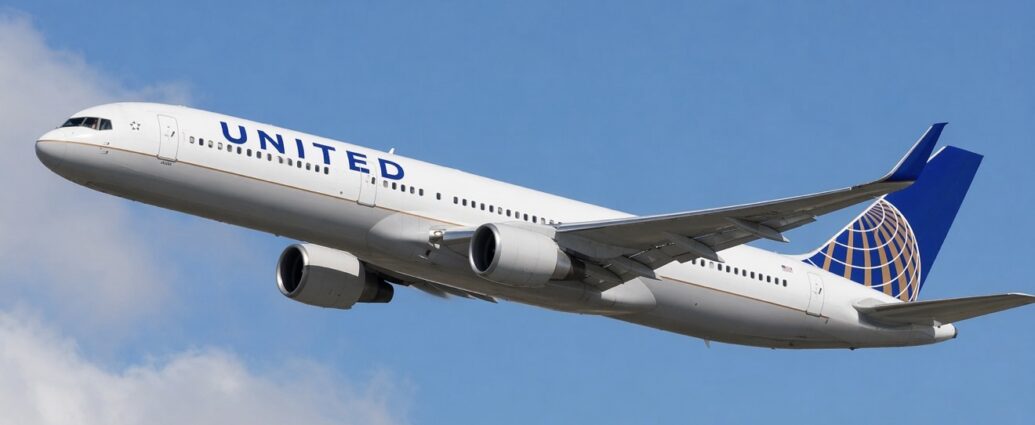
President Donald Trump said Tuesday he would oppose any merger between United Airlines Holdings Inc. (NASDAQ: UAL) and American Airlines Group Inc. (NASDAQ: AAL), signaling clear resistance to further consolidation in the U.S. airline industry just as United prepares to report earnings.
The remarks come at a sensitive moment for United, which is set to release first-quarter results after the close today, with CEO Scott Kirby expected to address a complex mix of operational constraints, cost pressures, and demand trends heading into the critical summer travel season.
Trump’s position effectively narrows the strategic landscape for U.S. carriers, where mergers have historically played a central role in reshaping the industry. Kirby had raised the possibility of consolidation earlier this year, though the idea was quickly dismissed by American Airlines. Trump’s comments now reinforce expectations that any such deal would face steep regulatory and political resistance.
“Statements like this send a strong signal to both regulators and the market,” said Helane Becker, Managing Director and Airline Analyst at TD Cowen, noting that antitrust concerns and consumer pricing implications would likely dominate any review process. “It essentially removes large-scale consolidation from the near-term playbook.”
As United heads into earnings, investor focus is increasingly shifting toward execution rather than expansion. At the center of that discussion is Newark Liberty International Airport, one of the airline’s most important hubs, where operations remain constrained under an FAA-imposed cap of 72 flights per hour through October.
The restriction is limiting United’s ability to fully capitalize on strong travel demand, particularly on high-margin routes, while also increasing the risk of delays and operational disruptions across its broader network.
“Newark is a linchpin for United’s system,” said Jamie Baker, Senior Airline Analyst at JPMorgan. “When you constrain capacity at a hub like that, it impacts everything from revenue optimization to customer experience.”
Market expectations suggest this issue will dominate the earnings call. Prediction market data indicates roughly an 89% probability that Kirby will directly address Newark, making it the most anticipated topic among traders. The same data points to a broader defensive tone, with expected discussion around weather disruptions, air traffic control limitations, labor negotiations, and fuel costs.
“The market is clearly identifying where the risks are concentrated,” said Savanthi Syth, Airline Analyst at Raymond James, adding that infrastructure constraints remain one of the most persistent challenges facing the airline industry.
Fuel costs are emerging as another key pressure point. Recent volatility in oil prices has raised concerns about margin compression, particularly as airlines ramp up capacity ahead of peak travel months. Fuel remains one of the largest and most unpredictable expenses for carriers.
“Fuel is the single biggest swing factor in airline earnings,” said Sheila Kahyaoglu, Aerospace & Defense Analyst at Jefferies. “Even relatively small moves in oil prices can have an outsized impact on margins.”
At the same time, labor costs continue to rise as airlines navigate union agreements and staffing challenges, adding further complexity to cost management.
Despite these headwinds, United enters earnings with several strengths. The airline has benefited from strong demand in international travel and premium segments, which tend to generate higher margins, while business travel has shown signs of stabilization.
“The demand backdrop remains solid,” Baker added, “but the question is whether United can convert that into consistent profitability given the operational and cost challenges.”
Investors will be particularly focused on forward guidance, looking for clarity on how the company plans to navigate the summer travel season under current constraints.
“This is less about what happened last quarter and more about what management is signaling going forward,” said Sheila Kahyaoglu, noting that guidance will likely drive market reaction.
One area offering potential upside is onboard technology and customer experience. United has been investing in enhanced in-flight connectivity, including partnerships tied to Starlink, which could help differentiate the airline and support pricing power.
“Connectivity and customer experience are becoming important drivers of revenue,” said Andrew Didora, Airline Analyst at Bank of America, noting that such investments can help offset cost pressures.
Still, the broader industry environment remains challenging, with airlines exposed to infrastructure limitations, geopolitical risks, and macroeconomic uncertainty.
“The industry is fundamentally strong, but still highly sensitive to external shocks,” said Syth.
Looking ahead, Kirby’s commentary will be closely scrutinized for how United plans to balance growth ambitions with operational realities. With regulatory signals limiting consolidation, infrastructure constraints capping capacity, and fuel volatility pressuring margins, execution will be key.
As the summer travel season approaches, United’s outlook could help set the tone for the broader airline sector navigating an increasingly complex operating environment.
JBizNews Desk