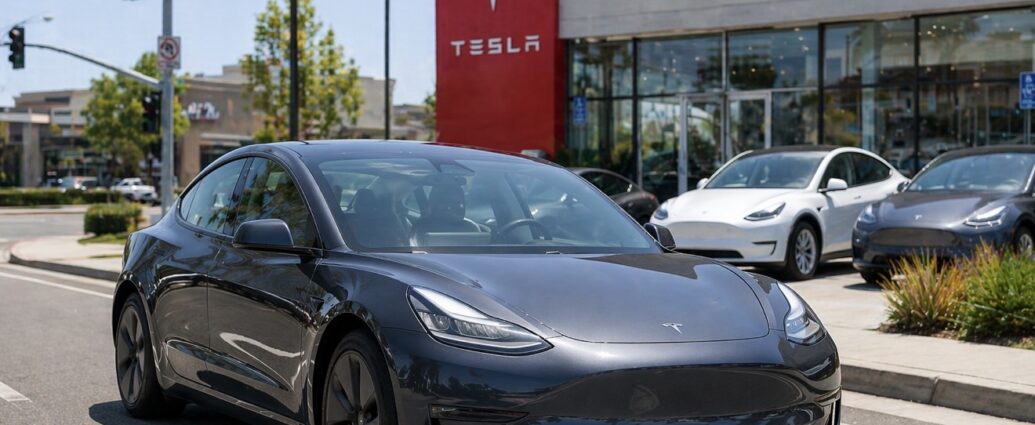
A growing backlash against Tesla’s self-driving promises is taking shape across the United States, Europe, and Australia, as customers and regulators increasingly question whether the company oversold its Full Self-Driving (FSD) technology. “Companies must not exaggerate what their AI-based products can do,” said Lina Khan, Chair of the Federal Trade Commission, reflecting broader federal scrutiny around marketing claims tied to emerging technologies.
At the center of the dispute is Tesla’s decade-long push that its vehicles would eventually achieve full autonomy through software updates. Tom LoSavio, a retired California attorney who paid roughly $8,000 for FSD nearly a decade ago, is now leading a class-action lawsuit alleging the company misled buyers. “We were sold a vision of full autonomy that has yet to materialize,” LoSavio said in legal filings tied to the case.
A California court has granted class-action status covering approximately 3,000 Tesla owners, significantly raising the stakes for the company. Plaintiffs are seeking refunds and damages tied to the autonomous add-on. “This case centers on uniform representations made to thousands of consumers,” attorneys for the plaintiffs argued in court documents, emphasizing that the claims apply broadly across Tesla’s customer base.
The legal challenges are expanding internationally. In Australia, a similar class-action case is advancing through the courts, while in Europe, consumer groups are mobilizing Tesla drivers over concerns that older vehicles lack the hardware needed for newer software capabilities. “Consumers across Europe are increasingly questioning whether they received what was promised,” said a spokesperson for BEUC, the European Consumer Organisation, highlighting the cross-border nature of the issue.
Tesla CEO Elon Musk has long maintained that the company is on the verge of solving autonomy, a narrative that helped drive investor enthusiasm and push Tesla’s valuation to historic highs. “I think we will have full self-driving capability that is safer than a human this year,” Musk said in prior public remarks—one of several timeline predictions now being cited by critics and litigants.
Wall Street analysts say the gap between ambition and execution is now under sharper focus. “Autonomous driving has consistently taken longer than expected across the industry,” said Dan Ives, Managing Director at Wedbush Securities, noting that while Tesla remains a leader in data and deployment, true autonomy remains elusive.
A key issue is hardware. Millions of Tesla vehicles currently on the road are believed to be equipped with earlier-generation systems that may not support the latest FSD software. “There is a real question around whether the existing installed base can reach full autonomy without meaningful upgrades,” said Adam Jonas, Senior Analyst at Morgan Stanley, in a recent investor note.
Despite the legal and technical challenges, Tesla is pressing forward. The company has launched a limited robotaxi pilot in Austin, Texas, offering a glimpse into its long-term autonomous ride-hailing ambitions. “This is a foundational step toward a broader autonomous network,” a Tesla spokesperson said in a statement on the rollout.
Tesla is also developing its “Cybercab,” a purpose-built autonomous vehicle without a steering wheel or pedals—an aggressive bet on a fully driverless future. “The future of transportation is autonomous, electric, and shared,” Musk said during a company presentation outlining Tesla’s next phase.
For regulators, the issue goes beyond Tesla alone. It raises broader questions about how emerging technologies are marketed and governed. “Transparency in what these systems can and cannot do is critical for consumer trust and safety,” said Pete Buttigieg, U.S. Secretary of Transportation, speaking on autonomous vehicle oversight.
For early adopters like LoSavio, however, the concern is more immediate: whether Tesla will deliver on what was sold years ago. As lawsuits expand and scrutiny intensifies, the company faces a pivotal test—balancing innovation with accountability. “This could set a precedent for how advanced technologies are marketed to consumers,” said Jessica Rich, former Director of the FTC’s Bureau of Consumer Protection.
What comes next will be closely watched not just by Tesla owners, but by the broader auto and tech industries. If courts and regulators begin drawing firmer lines around what companies can promise, it could reshape how innovation is sold—and trusted—going forward.
JBizNews Desk