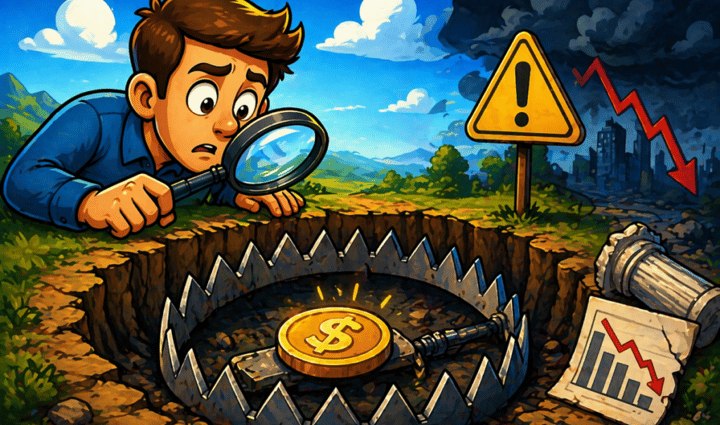
A 9% dividend yield looks like a gift until the quarterly declaration notice lands and the check is half the size it used to be. Dow Inc. (NYSE:DOW) investors lived that exact moment in July 2025, when the chemical giant slashed its quarterly dividend by 50% and watched the stock drop another 11.5% in a single session. Walgreens Boots Alliance did it first in January 2024, ending a 47-year streak of dividend hikes by cutting the payout 48%. Intel (NASDAQ:INTC) went further and suspended its dividend outright after a 30-year track record of payments.
None of those cuts were shock events for anyone running the numbers. The warning signs were sitting in public filings months ahead of each announcement. What follows is a 5-point framework any retail investor can apply in under 15 minutes to a dividend stock’s financials, using the same signals that Morningstar analysts, dividend-focused research desks, and institutional credit teams watch.
1. The Payout Ratio Reality Check
Start with the ratio of dividends paid to earnings. A payout ratio under 60% generally leaves room for reinvestment, down cycles, and future increases. Once a company crosses 100%, it is paying shareholders more than it earns, and the dividend is being funded by the balance sheet, new debt, or asset sales instead of operating profits.
Dow is the textbook case. Morningstar noted after the cut that the company had paid out more than three times its 2023 EPS and roughly 180% of its 2024 EPS as dividends, and that even the most optimistic 2025 estimates would have produced a payout ratio above 100% at the old rate. That kind of math does not survive a prolonged downturn, and it did not.
For retail screening, pull the trailing twelve-month payout ratio from any free data source like Finviz, Stock Analysis, or the Yahoo Finance key statistics tab. Anything above 80% for a non-REIT, non-MLP name deserves a second look. Anything above 100% is a red flag …





This post was originally published here