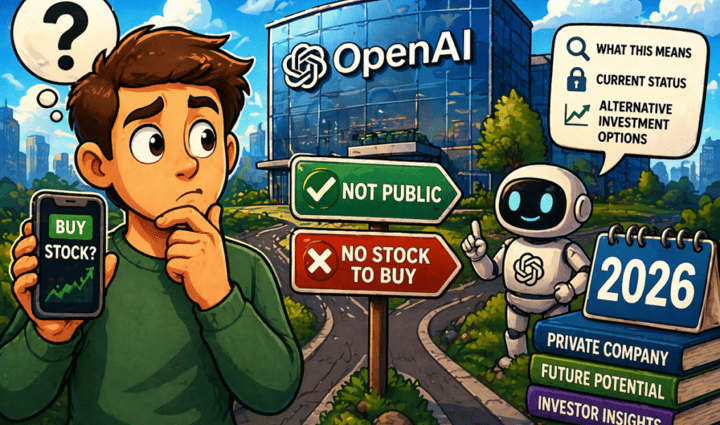
OpenAI is one of the most valuable private companies in the world, and retail investors keep running into the same wall when they try to own a piece of it. The maker of ChatGPT closed the largest private funding round in history on March 31, 2026, lifting its post-money valuation to $852 billion and leapfrogging SpaceX for the top spot in private markets. There is no OpenAI ticker, no prospectus, and no way to place a standard buy order at your brokerage.
That has not stopped individual investors from finding creative paths to exposure, and a handful of those paths have genuinely opened up over the last six months. Here is what actually works, what only partially works, and where the risks hide.
Why OpenAI Shares Don’t Trade On The Nasdaq
OpenAI’s corporate structure is deliberately unusual, and that is the root of the access problem. The OpenAI Foundation, a nonprofit, holds a controlling equity stake in OpenAI Group PBC, the for-profit public benefit corporation that runs ChatGPT and the enterprise business. Any transfer of shares in the PBC requires board approval, and direct investment in OpenAI or the venture funds backing it is legally restricted to accredited investors, who must meet income or net-worth thresholds set by the Securities and Exchange Commission.
OpenAI is also in no rush to list. CEO Sam Altman has said he is “zero percent excited” about running a public company, and while he has reportedly pushed internally for a Q4 2026 IPO, CFO Sarah Friar believes a 2027 listing is more realistic given the organizational work required. Until then, retail investors have to go sideways.
The Microsoft Workaround
The cleanest indirect route runs through Microsoft (NASDAQ:MSFT). Microsoft holds roughly 27% of OpenAI Group PBC on an as-converted diluted basis, an investment valued at approximately $135 billion as of the late-2025 recapitalization. Microsoft also receives 20% of OpenAI’s revenue under an agreement that runs through 2032.
The appeal is obvious. You buy Microsoft on any brokerage, pay no special fees, and get proportional upside if OpenAI grows. The limitation is just as obvious. At Microsoft’s market capitalization, the OpenAI stake represents roughly 8% of the total, which means OpenAI performance gets diluted against Azure, Office, LinkedIn, gaming, and everything else Satya Nadella runs. If your thesis is “OpenAI specifically,” Microsoft …





This post was originally published here