With the cost of living and housing on the rise in many metro areas, more and more homebuyers are turning to multigenerational living as a solution.
According to the National Association of Realtors’ (NAR) 2026 Home Buyer and Seller Generational Trends Report released earlier this month, 14% of buyers purchased a multigenerational home in 2025. Data from Redfin in March 2025 shows that “nearly one in five Americans share their homes with multiple generations, while Zillow reported that one of the national trends to define 2025, was the rise in searches for “multi-use homes.”
“Searches for ADU, guest house, casita and in-law suite grew, reflecting demand for multigenerational living, rental income potential and flexible floor plans,” the Zillow Zeitgeist 2025 report stated.
Out in Hawaii, Dyan Nonaka, the leader of eXp Realty’s The Agency Team Hawaii, told HousingWire that roughly one out of every four buyers he and his team work with have multigenerational living considerations when searching for a property. According to Nonaka, affordability is one of the primary factors behind many buyers’ searches for multigenerational properties.
The Agency Team rankings No. 1 by transaction sides and volume in the state of Hawaii, according to 2025 RealTrends Verified rankings.
“The first driver is definitely the cost of housing, but then the second cost people take into consideration is the cost of care,” he said. “Typically I see this more with caring for older generations than kids. The cost of long-term assisted care living is extremely high so this is one way to negotiate that.”
According to Daryl Fairweather, Redfin’s chief economist, Redfin’s data shows that roughly 6% of people who struggle to afford housing have moved in with their parents, while an additional 6% moved in with other family members.
“It seems like as people are struggling to afford housing, [so] they’re turning to multigenerational living as an alternative,” she said.
Affordability is always an ‘underlying issue’
Fairweather agrees with Nonaka that affordability is always an “underlying issue” for this type of homebuyer, but that the affordability challenges could go beyond just housing.
NAR’s deputy chief economist and vice president of research Jessica Lautz shares a similar view.
“I think an overarching theme to multigenerational housing is because of costs and affordability constraints, whether that comes down to the actual house itself or to caregiving both for older care and for child care,” Lautz said. “There’s lots of ways to pool funds,Pr and it may not be just the mortgage. It could be grocery costs and offsetting utility costs or even maintenance which could really be helpful, especially in thinking about older adults and their ability to work on the upkeep of the home. Finding ways to share costs and maintenance and resources makes a lot of sense to some households.”
In the Salt Lake City metro area, Ryan Kirkham, the managing broker of Summit Sotheby’s International Realty, said as home prices in the area have risen, he has seen more and more buyers interested in properties suitable for multigenerational living.
“Two or three decades ago, affordability was not a challenge, but all of a sudden now it is. Sometimes you see parents helping with down payments or co-signing or helping with closing costs, but you are also seeing people look for homes with a mother-in-law apartment or the ability to put an ADU in to help with housing for another generation,” he said.
HousingWire Data shows that the median sales price of a property in the Salt Lake City metro area in April 2016 was $317,570. In April 2026, however, the median sales price is $672,607, up over $350,000 in just 10 years.
Gen X dominate multigenerational buyers
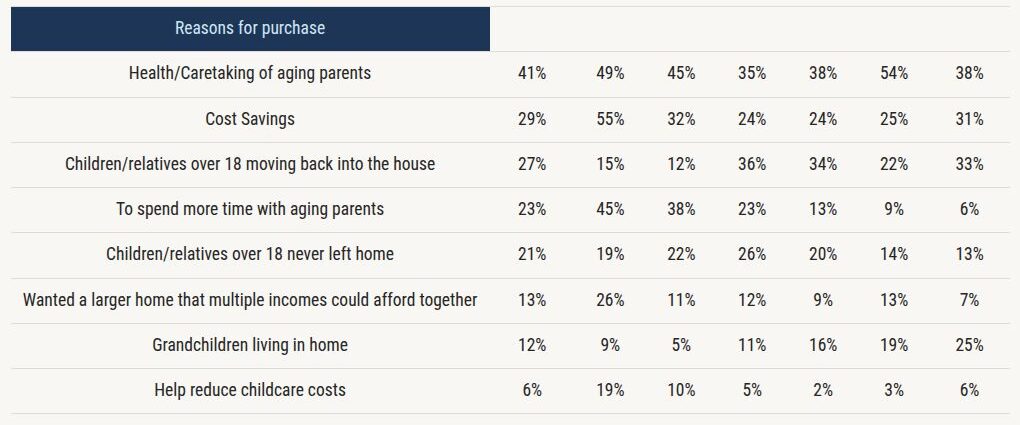
According to NAR’s 2026 Generational Trends report, Gen X buyers (those aged 46 to 60) make up the largest share of multigenerational homebuyers at 19%.
Lautz attributes this to Gen X being the most common generational cohort to be a “sandwich generation” right now.
“For Gen Xers, they are equally as likely to have a young adult living at home with them as they are an older parent or relative,” Lautz said.
But she added that some older millennials are also seeking the benefits of multigenerational living.
“For older millennials, it often reduces child care costs and for older generations they are able to live at home longer because they have someone to help them in the house,” Lautz added.
Out in Utah, while Kirkham sees a lot of Gen X buyers looking for multigeneration living, he said they aren’t the only ones.
“There isn’t just one specific generation that we are seeing helping another. I’m a Gen Xer and I see a lot of people in my generation making places or looking for homes with space for their baby boomer parents,” he said. “But I’m also seeing some younger, more recent college graduates who have great jobs looking for places that can accommodate their Gen X or younger Baby Boomer parents.”
What to know when working with multigenerational buyers
When working with clients looking for multigenerational properties, Kirkham said buyers are very attuned to how the properties fit in with any health-related concerns older family members may have.
“Stairs can oftentimes be an issue and also making sure that there is a large enough, functioning bathroom on the main floor,” he said. “On the flip side, if the parents are buying property suitable for their adult kids to share, they may prioritize things like separate entrances or the ability for everyone to have their own space.”
According to Kirkham, properties that are already set up for multigenerational living can be hard to come by in the Salt Lake City area and due to the uptick in interest, they tend to go quickly.
Nonaka said he faces similar challenges out in Hawaii.
Properties in high demand, due diligence vital
“These properties are always in high demand and usually fetch a higher price point because people see the value in having that additional unit on the property,” he said. “This definitely limits the home search for folks looking for this type of property, but it is good for sellers with this kind of home because it increases demand.”
As this trend continues to gain popularity across the country, for agents who may find themselves working with buyers looking for a property suitable to multigenerational living, Fairweather said they should be aware of the value homes with separate spaces for family members or rental income have.
“Those homes are probably more likely to get multiple offers and have more competition because they are rare,” she said.
While difficulty finding a suitable property is one thing Nonaka said agents working with multigenerational buyers should keep in mind, he also says that it is important for agents to be up to date with local zoning laws and to do their due diligence on the property they are showing.
“There was an era where they made it easier to build ADUs, so a lot of homes did, but sometimes they didn’t always do them legally and just enclosed a garage without a permit,” Nonaka said. “So, there is a range in terms of the stuff that is legal land permitted versus the inventory that is not. I think it’s important for agents to have expertise on understanding the zoning laws and understanding how to evaluate a property. There are nuances with the laws, like sometimes you can have a stove in an ADU and sometimes you can’t — it depends on the permitting when it was built. So, agents must have that expertise to assist folks and put them in the right situation so they don’t find themselves overpaying for something that they will have zoning violations with in the future.”
Looking ahead, with the cost of living and the cost of housing continuing to rise in many areas, economists believe the trend of multigenerational living and homebuying will continue to gain traction.
“I think it’s a sticky trend. It peaked during the pandemic, but it’s [still staying for] a high share of households,” Lautz said. “I don’t think this is going anywhere and part of it is demographics-based where we can see a large baby boomer generation who wants to stay in a home setting who has close ties to friends and family. Their main motivational factor is to move to be close to friends and family. As we think about this generation, who has a close tie to younger generations and family members around them, I would expect that this data would increase.”