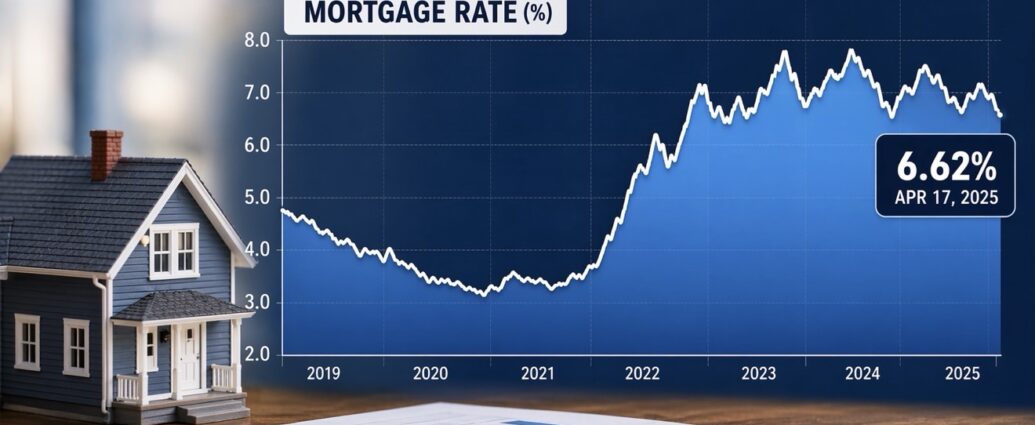
U.S. existing-home sales fell in March, extending a sluggish start to the spring selling season as elevated borrowing costs and strained affordability continued to weigh on demand. The National Association of Realtors said in its monthly release that completed transactions for previously owned homes dropped 3.6% from February to a seasonally adjusted annual rate of 4.02 million, a figure that underscored how little relief buyers have seen even as inventory improves.
Lawrence Yun, chief economist at the National Association of Realtors, said in the group’s report that “home buying and selling remained sluggish in March due to the affordability challenges associated with high mortgage rates.” In the same release, NAR said sales fell 5.9% from a year earlier, showing that the housing market remains constrained not simply by a lack of listings but by the cost of financing and the pressure that higher monthly payments continue to place on households.
Mortgage costs remain central to the slowdown. Freddie Mac said in its weekly survey that the average rate on a 30-year fixed mortgage stayed near 7% through much of the period leading into March closings, far above the pandemic-era lows that fueled a buying boom. Sam Khater, chief economist at Freddie Mac, said in a recent statement that “mortgage rates continue to climb,” adding that the increase in financing costs “is making the spring homebuying season more expensive.” That dynamic matters because existing-home sales typically respond quickly to changes in rates, and many would-be buyers have delayed moves rather than absorb sharply higher borrowing costs.
The affordability squeeze has hit even as more homes come onto the market. The National Association of Realtors said total housing inventory at the end of March rose 8.1% from February to 1.11 million units, equal to a 3.3-month supply at the current sales pace. Lawrence Yun said in the report that “increased housing inventory and lower mortgage rates are essential to bring home buyers back into the housing market.” Even with inventory improving, supply remains below the level many economists consider consistent with a balanced market, helping keep prices elevated and limiting the extent to which buyers benefit from a broader selection.
Prices, meanwhile, continued to climb. NAR said the median existing-home price in March rose 4.8% from a year earlier to $393,500, a record for the month of March. In comments accompanying the data, Yun said multiple offers still appeared on a meaningful share of homes, a sign that demand has not disappeared but instead has become highly selective and concentrated around properties that meet buyers’ budgets. That combination of slower sales and rising prices leaves the market in an unusual position: activity remains subdued, but homeowners who do sell still often command strong valuations.
Broader economic sentiment has offered little support. The University of Michigan said its consumer sentiment index fell sharply in April, with survey director Joanne Hsu stating that “consumers perceived multiple warning signs that raise the risk of recession,” according to the university’s preliminary release. While sentiment surveys do not directly determine home purchases, they often shape households’ willingness to take on large financial commitments, particularly when mortgage rates, insurance costs and property taxes remain elevated.
The labor market has held up better than housing, but not strongly enough to offset affordability concerns. The Bureau of Labor Statistics said in its March employment report that nonfarm payrolls increased by 178,000, while the unemployment rate held at 4.3%. In its release, the BLS said job gains continued in several sectors, but the pace did not suggest the kind of accelerating income growth that could quickly restore purchasing power for first-time buyers. For housing, steady employment helps prevent a deeper downturn, yet it has not been enough to overcome the payment shock created by higher rates and still-rising home prices.
Other housing indicators have pointed to the same soft patch. Reuters and CNBC have both reported in recent months that pending home sales and mortgage applications remained uneven as buyers adjusted to volatile rates and limited affordability. Diane Swonk, chief economist at KPMG, said in remarks cited by CNBC that housing “remains one of the most interest-rate-sensitive sectors of the economy,” a view widely shared across Wall Street and among real-estate economists. The implication for executives, lenders and homebuilders is that housing may stay subdued unless financing costs ease materially or wage growth outpaces home-price gains.
Regional performance in March showed the downturn spread broadly, though not uniformly. The National Association of Realtors said sales declined in the Midwest, South and West from the prior month, while the Northeast posted a modest gain. In the same report, NAR said the South remained the largest market by volume, meaning weakness there carried outsized weight for the national total. That regional split suggests local inventory conditions and price points still matter, but the national story remains dominated by financing costs and affordability rather than a simple shortage of homes for sale.
What comes next hinges largely on interest rates, buyer confidence and whether the recent increase in listings continues into the heart of the spring market. Federal Reserve officials have repeatedly signaled, in public remarks and policy statements, that they need greater confidence inflation is moving sustainably toward target before cutting rates. For the housing market, that means relief may not arrive quickly. If mortgage rates stay near current levels, sales could remain muted even with more inventory available; if rates retreat, pent-up demand could reappear quickly. For lenders, brokers, builders and consumer-facing businesses, the next few months will offer a critical read on whether housing simply endures a slow patch or slips into a longer period of stagnation.
JBizNews Desk