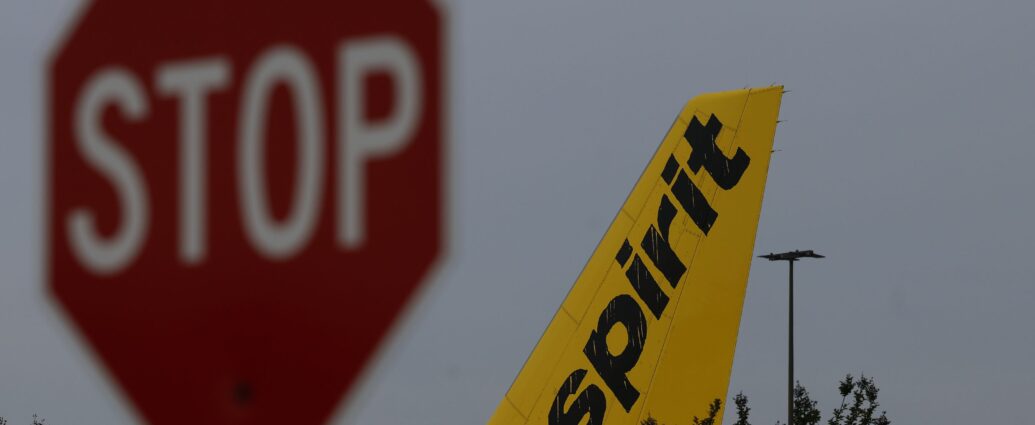
- In today’s CEO Daily: Diane Brady on why the government wants to bail out Spirit.
- The big leadership story: More CEO churn
- The markets: Mostly down as oil prices inch higher.
- Plus: All the news and watercooler chat from Fortune.
Good morning. Who wants to own an airline? Congratulations, U.S. taxpayer, it looks like you’re about to get a majority stake in Spirit Airlines, a struggling carrier on the precipice of collapse. With the Trump administration nearing a rescue package that could give Spirit up to $500 million in return for warrants that grant the government an equity stake, I reached out to a top airline executive who told me they “have a fiduciary duty to say nothing” before saying “we’re dealing with fuel prices, too.”
Washington has rescued airlines before, much like it rescued big automakers, banks, insurers and others deemed too big or important to fail. And President Donald Trump has demonstrated a fondness for using the White House as a perch for doing business deals, whether it’s owning 10% of Intel or securing access to Venezuela’s oil. But it’s unusual for the government to take a stake in a failing business with just over 3% market share. What’s going on here?
“Money, power and leverage.” That’s how Tad DeHaven, a policy analyst at the Cato Institute, sums up the government’s motivation in what he calls the “wackiest year of my career.” Trump tried to create his own sovereign wealth fund early on, only to realize he needed Congress and a budget surplus to pull that off. Instead, he’s doing trade deals like one with Japan that requires Tokyo to invest $550 billion in projects “selected and managed” by the U.S. government and aggressively interpreting laws to dictate how defense companies are run. “It’s very simple. This is about power, leverage and control. Everything is a deal. Everything is transactional,” DeHaven told me. “What is desperately needed is for Congress to step in and say no to the government acquiring shares. This is a Pandora’s Box.”
Aviation is an essential industry. There’s a reason why the government rescued airlines during COVID and after 9/11. Airlines are critical to transportation and regional development, and airline competition is critical for consumers. Brian Kelly, founder of The Points Guy, notes that Delta immediately raised fares 50% on some routes when Spirit exited the market. “Spirit’s existence saves consumers money,” he told me last night. “The question is whether Spirit can become profitable when it has already filed for bankruptcy twice.” It’s a question that President Trump is intimately familiar with, having bought Eastern Air Line’s shuttle for $365 million in 1988, renaming it the Trump Shuttle, only to sell it to US Airways less than three years later. Some blame the Biden Administration for blocking JetBlue’s bid to merge with Spirit in 2024, prompting its first bankruptcy.
Capitalism has many forms. There’s state capitalism, entrepreneurial capitalism, crony capitalism, free-market capitalism and more. One of the hallmarks of American capitalism is Chapter 11 bankruptcy, which allows failing companies to restructure, reorganize and return to the playing field to fight a new day. Spirit CEO Dave Davis knows this because he’s already done it. Some don’t survive. Remember ValuJet, People Express, Skybus, Pro Air and National Airlines? Gone. Ditto for budget subsidiaries of the big guys like Delta Express/Song, MetroJet, Ted and Continental Lite (not to mention Continental itself). It’s a tough business. The government’s job is to protect individual rights and create conditions for competitive players to compete. Spirit is failing for a reason. As Shawn Tully argues, a bailout could just make things worse.
Contact CEO Daily via Diane Brady at diane.brady@fortune.com
This story was originally featured on Fortune.com





This post was originally published here