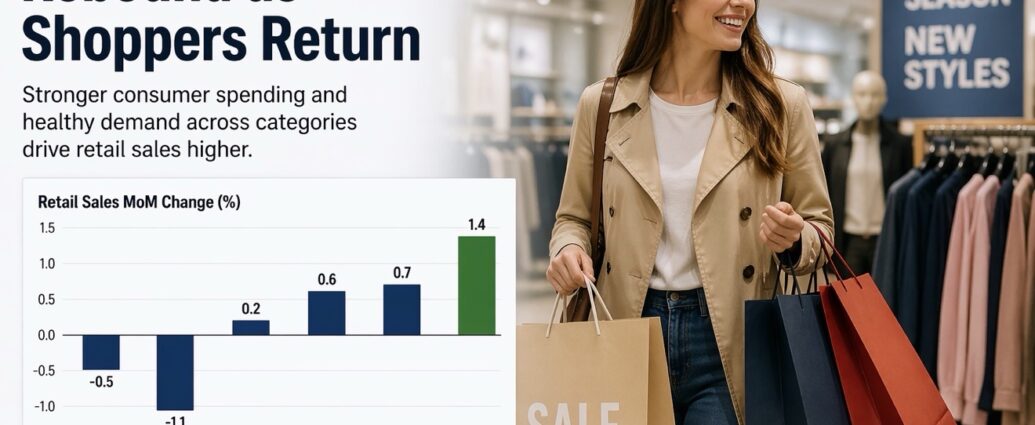
U.S. retail spending picked up in February, offering a fresh sign that consumers kept buying despite a weak start to the year and lingering concerns about growth. The U.S. Census Bureau said in its advance monthly report that retail and food services sales rose 0.6% from January, while the year-over-year increase reached 3.7%; economists surveyed by Reuters had expected a 0.5% gain, and the government’s release pointed to a broad recovery after winter disruptions hit activity early in the year.
The rebound mattered because consumer spending remains the main engine of the U.S. economy, and several economists said the February data suggested households had not sharply retrenched. In commentary carried by Reuters, economists said severe winter weather likely depressed January activity and set up a payback in February, while analysts at Oxford Economics said in a note that spending trends still pointed to “resilient” household demand even if momentum looked uneven across categories.
The strongest gains came from discretionary and everyday categories that often serve as a read on household confidence. The Census Bureau said sales at department stores rose 3.0%, health and personal care stores increased 2.3%, and clothing and accessories stores advanced 2.0%; motor vehicle and parts dealers, gasoline stations and nonstore retailers also posted gains, according to the official release. Those figures suggested shoppers returned to stores and online channels after January’s weather-related slowdown rather than pulling back decisively.
Not every corner of retail shared equally in the improvement, a reminder that consumers still face higher borrowing costs and persistent price pressure in some categories. Economists cited by Bloomberg said the latest report fit a pattern of selective spending, with households still willing to spend on essentials and targeted discretionary purchases but more cautious on big-ticket outlays. Bloomberg Economics economists said the data indicated consumption “remains on a moderate expansion path,” even if monthly readings continue to swing with weather, seasonal quirks and shifting gasoline prices.
The February report also arrived as investors and policymakers looked for evidence on whether the labor market and wage growth still support consumption. Officials at the Federal Reserve have repeatedly said they are watching household demand for clues on inflation and economic durability. In recent public remarks published by the Federal Reserve, Chair Jerome Powell said the economy has remained “solid” while inflation still sits above the central bank’s target, a combination that keeps attention on whether spending strength could delay interest-rate cuts.
Retail executives have offered a similarly mixed but not alarmed picture of the consumer backdrop. On recent earnings calls reported by CNBC and other outlets, several major chains said shoppers remain value-conscious but continue to spend when they see promotions, convenience or necessity. Walmart executives have said consumers are “choiceful” and focused on value, according to company earnings materials, while Target has said customers continue to respond to compelling assortments and seasonal demand, underscoring that spending has not disappeared so much as become more selective.
For markets, the retail sales figures help shape expectations for first-quarter growth and the path of monetary policy. Economists tracked by The Wall Street Journal and Reuters have said stronger retail activity can support GDP estimates, though they also caution that nominal sales data reflect prices as well as volumes. Analysts at Bank of America, in research cited by financial media, said the consumer still looks healthier than many recession forecasts assumed, even as lower-income households remain under greater strain from credit-card balances and financing costs.
The details of the report reinforced that point: categories tied to daily life and mobility held up, while the overall gain marked the best monthly increase in several months. The Census Bureau release showed that retail sales excluding food services still improved, and economists quoted by MarketWatch said the data were consistent with an economy that continues to expand at a moderate pace rather than slipping abruptly. That distinction matters for companies planning inventory, pricing and hiring into the second quarter.
What comes next will depend on whether February’s rebound extends into spring and whether inflation cools enough to give households more real purchasing power. Upcoming reports on jobs, prices and personal consumption will test whether the consumer can keep carrying the expansion, and officials at the Federal Reserve have made clear in public statements that they want more evidence before changing course on rates. For retailers, lenders and investors alike, the February sales gain offered a clear message from the Census Bureau data and economists cited by Reuters and Bloomberg: the U.S. consumer still looks active, and that keeps the broader economy on firmer footing than many had feared.
JBizNews Desk