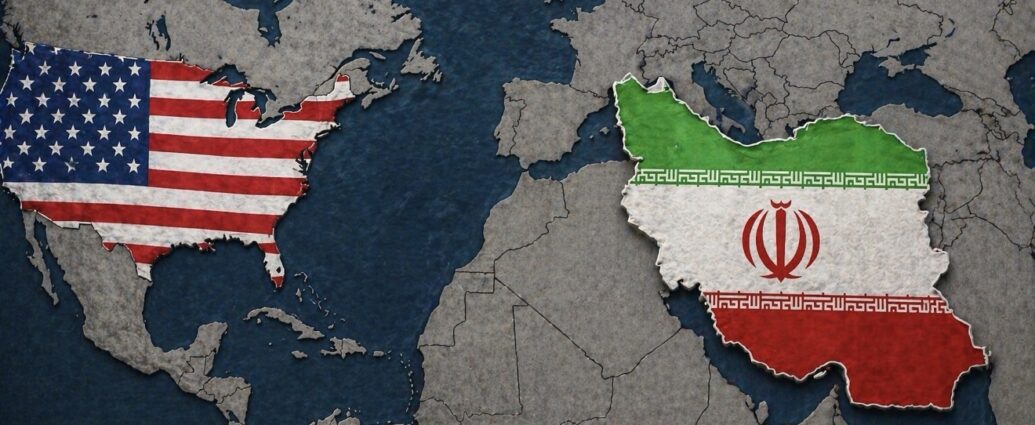
President Donald Trump said the U.S. and Iran will begin direct talks on Tehran’s nuclear program this weekend, a fresh diplomatic push that immediately raised the stakes for energy markets, regional security and U.S. allies already bracing for a broader confrontation. Speaking alongside Israeli Prime Minister Benjamin Netanyahu at the White House on April 7, Trump said, “We’re having direct talks with Iran, and they’ve started,” adding that a “very big meeting” would take place Saturday, according to remarks carried by Reuters, Associated Press and other major outlets.
Iran quickly signaled a narrower interpretation. Iranian Foreign Minister Abbas Araghchi said in a post on X that “Iran and the United States will meet in Oman on Saturday for indirect high-level talks,” calling the encounter “as much an opportunity as it is a test,” according to statements reported by Reuters and Bloomberg. The gap between Trump’s description of direct talks and Tehran’s insistence on indirect negotiations underscored how fragile the opening remains, even as both sides publicly confirmed a diplomatic channel.
The planned meeting follows months of renewed pressure from Washington and a warning from Trump that Iran would face severe consequences if diplomacy failed. “If the talks aren’t successful with Iran, I think Iran is going to be in great danger,” Trump said Monday, according to AP. That language, paired with his administration’s revived “maximum pressure” campaign and tighter sanctions enforcement described by the U.S. Treasury Department in recent releases, left investors weighing whether the talks mark a genuine off-ramp or simply the next stage in a coercive strategy.
For Israel, the diplomacy comes with deep skepticism. Netanyahu said any agreement with Iran would need to follow the “Libya model,” meaning, in his words, “you go in, blow up the facilities, dismantle all the equipment, under American supervision and American execution,” according to remarks cited by Reuters. The Israeli leader also said that if diplomacy drags on, “the military option” would remain on the table, a message that reinforced how closely regional security calculations now track the outcome of the Oman meeting.
Oil traders and shipping executives have focused just as closely on the risk to Gulf transit routes, especially the Strait of Hormuz, through which roughly a fifth of global oil consumption passes. Analysts at Rapidan Energy Group told clients, as quoted by CNBC and other financial media, that even the prospect of direct U.S.-Iran engagement could temporarily ease the geopolitical risk premium in crude, though they cautioned that any sign of military escalation would reverse that quickly. The market’s sensitivity reflects a simple reality: a diplomatic breakthrough could stabilize flows, while a breakdown could threaten one of the world’s most important energy chokepoints.
The business implications stretch beyond oil. Bloomberg reported that investors across emerging markets and global shipping have treated the U.S.-Iran file as a key variable for freight costs, insurance pricing and broader Middle East risk appetite. In a note cited by MarketWatch, analysts at ING said the talks “offer a potential de-escalation channel,” but they also stressed that sanctions, uranium enrichment levels and regional proxy activity remain unresolved, meaning any relief in markets could prove short-lived without concrete follow-through.
The diplomatic choreography also matters because Oman has long served as a trusted intermediary between Washington and Tehran. Omani Foreign Minister Badr Albusaidi said on X that Muscat is “pleased to facilitate and mediate” the upcoming talks, according to reporting from Reuters. That role gives both sides a face-saving mechanism if they want to test compromises without publicly conceding ground, especially on the central issues of uranium enrichment, sanctions relief and verification.
Still, recent history offers little reason for complacency. Since the collapse of the 2015 nuclear accord after the first Trump administration exited the deal in 2018, Iran has sharply expanded enrichment activity, while the International Atomic Energy Agency has repeatedly raised concerns about transparency and monitoring. IAEA Director General Rafael Grossi said in recent public remarks that time for diplomacy is limited because Iran’s nuclear advances continue to accumulate, a warning cited by Financial Times and Reuters. That leaves negotiators with less room for symbolic gestures and more pressure to produce measurable constraints.
What comes next now looks unusually clear, even if the outcome does not. The Oman meeting, expected on April 12 based on statements from Trump, Araghchi and Oman’s foreign ministry reported by AP and Reuters, will show whether the two sides can move past procedural disputes and into substantive bargaining. For executives, policymakers and investors, the significance goes well beyond diplomacy: a credible negotiating track could lower immediate risks to oil, shipping and regional stability, while a failed opening could revive the prospect of harsher sanctions, military escalation and another shock to already fragile global markets.
JBizNews Middle East Desk