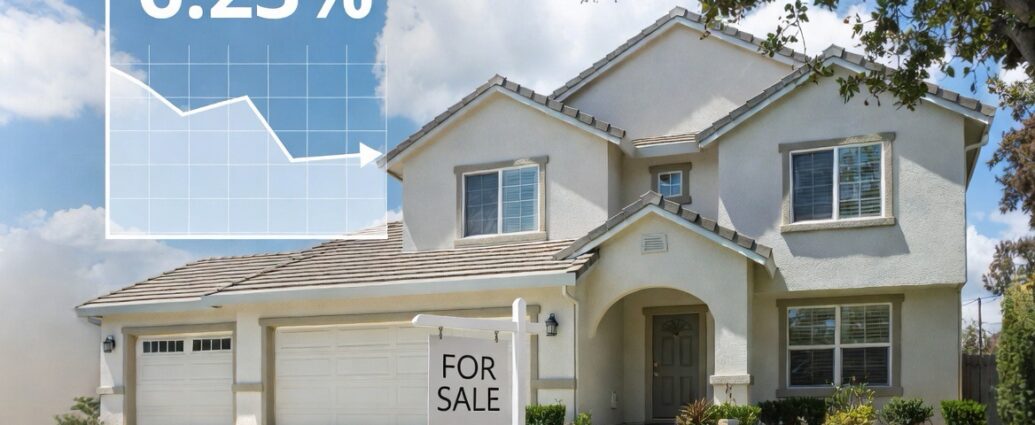
American homebuyers are entering the spring season with the most favorable mortgage rate environment in three years, as a combination of geopolitical uncertainty and shifting bond market dynamics pulls borrowing costs lower — offering a narrow but meaningful opportunity for buyers and homeowners alike.
Freddie Mac reported that the average 30-year fixed-rate mortgage fell to 6.23% for the week ending April 23, 2026, down from 6.30% the previous week and significantly below the 6.81% level recorded one year ago. The 15-year fixed-rate mortgage declined to 5.58%, reflecting broader easing across lending markets. Meanwhile, data from Zillow’s lender marketplace showed select offerings dipping below the 6% threshold, with some quotes briefly reaching 5.99%, marking the first sub-6% reading since early February.
The drop in rates is closely tied to movements in the U.S. Treasury market. Mortgage rates, which track the 10-year Treasury yield, have declined roughly 30 basis points over the past month as investors moved into safer assets amid global uncertainty. Analysts point to easing fears around worst-case oil supply disruptions following diplomatic developments in the Middle East, which helped stabilize inflation expectations and drive bond yields lower.
Sam Khater, Chief Economist at Freddie Mac, said the current rate environment represents “the lowest level seen during the spring homebuying season in the past three years,” noting that the decline is already translating into increased activity. Purchase applications and refinance demand have both begun to tick higher, signaling renewed engagement from consumers who had been sidelined by elevated borrowing costs.
For households, the financial impact is immediate. According to LendingTree, the difference between a 7% mortgage rate and approximately 6.1% can translate into hundreds of dollars in monthly savings. On a typical $500,000 home with a 10% down payment, buyers could save more than $3,000 annually, easing pressure on budgets already strained by higher energy and food prices.
Orphe Divounguy, Senior Economist at Zillow, said that “slightly lower rates combined with increasing housing inventory are beginning to create opportunities for buyers who have been waiting on the sidelines.” Inventory levels have gradually improved in several U.S. markets, giving buyers more negotiating power than they had during the peak of the housing shortage.
Still, economists caution that the current window may be short-lived. The Mortgage Bankers Association projects mortgage rates to hover around 6.3% through much of 2026, while Fannie Mae expects rates to remain slightly above 6% by year-end. However, volatility remains a key risk. Analysts warn that renewed geopolitical tensions — particularly in energy markets — could quickly reverse recent gains and push borrowing costs higher again.
The Federal Reserve’s upcoming policy decisions also loom large. With inflation still above target and leadership transitions underway at the central bank, markets remain sensitive to any signals on interest rate direction. Even modest shifts in Treasury yields could translate into rapid changes in mortgage pricing.
For current homeowners, the decline is prompting renewed interest in refinancing. LendingTree analysts suggest that borrowers with rates above the high-6% range may benefit from exploring refinance options, while those already locked into lower rates may see limited advantage in the near term.
The broader takeaway for the housing market is clear: conditions are improving, but not stabilizing. The interplay between inflation, global conflict, and monetary policy continues to shape borrowing costs in real time. For buyers, that means timing remains critical.
As the spring homebuying season gains momentum, the coming weeks — particularly around the Federal Reserve’s next decision — could determine whether this brief window evolves into a sustained trend or closes just as quickly as it opened.
JBizNews Desk