April 27, 2026 | JBizNews Desk
Meta Platforms Inc. is moving beyond Earth in its race to power artificial intelligence. The company announced Monday a pair of ambitious energy partnerships — including a first-of-its-kind agreement to harness solar power from space — underscoring how far major tech firms are willing to go to secure reliable electricity for next-generation data centers.
The announcement positions Meta as the first major technology company to reserve capacity for space-based solar energy, alongside one of the industry’s largest commitments to ultra-long-duration energy storage — a dual strategy aimed at solving the growing power constraints of AI infrastructure.
Energy From Orbit: The Overview Energy Deal
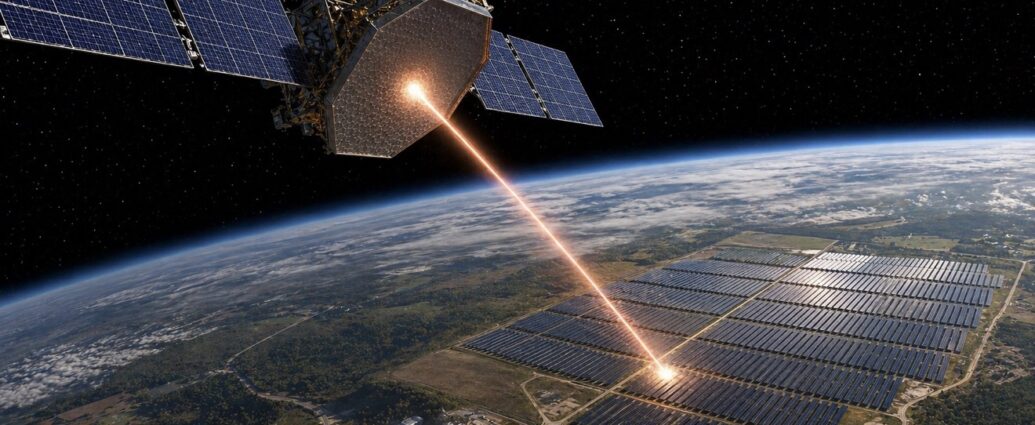
Meta has partnered with Overview Energy, a space-based power startup, to develop a system that captures solar energy in orbit and beams it back to Earth. The companies plan an initial orbital demonstration by 2028, with commercial deployment targeted for 2030.
Under the agreement, Meta has secured access to up to 1 gigawatt of capacity — roughly equivalent to a nuclear reactor. Financial terms were not disclosed.
Overview’s approach centers on satellites positioned in geosynchronous orbit, where continuous sunlight can be harvested without interruption. The energy would then be transmitted as low-intensity infrared light to ground-based solar facilities, effectively extending their output into nighttime hours and across regions.
CEO Marc Berte described the shift in stark terms: “Space is becoming part of America’s energy infrastructure. Our approach enables hyperscalers to secure clean power with speed and reliability, beyond traditional geographic and time constraints.”
The company envisions a constellation of hundreds — potentially thousands — of satellites transmitting energy to terrestrial solar farms. Berte confirmed that early transmission testing has already been conducted from airborne platforms, with the first satellite launch planned for January 2028.
Meta’s Vice President of Energy and Sustainability, Nat Sahlstrom, framed the partnership as both a technological leap and a strategic necessity. “Space solar represents a transformative step forward,” Sahlstrom said. “This is about delivering uninterrupted energy and strengthening long-term energy resilience for our infrastructure.”
Overview’s advisory board includes prominent figures such as former NASA Administrator Jim Bridenstine, former NASA Administrator Mike Griffin, and former FERC Chairman Joseph Kelliher, lending institutional credibility to a concept long considered experimental.
Second Front: 100-Hour Energy Storage
Alongside its space initiative, Meta announced a separate partnership with Noon Energy focused on ultra-long-duration energy storage — addressing the second major limitation of renewable energy: reliability.
The agreement includes a reservation for up to 1 gigawatt and 100 gigawatt-hours of storage capacity, with a pilot project of 25 megawatts and 2.5 gigawatt-hours expected by 2028.
Noon’s technology uses reversible solid oxide fuel cells capable of storing energy for more than 100 hours, far exceeding the four-to-eight-hour limits of conventional lithium-ion batteries.
CEO Chris Graves called the deal “a monumental step,” noting the system is designed to deliver multi-day energy supply during periods when renewable generation is unavailable.
Sahlstrom emphasized the urgency: “Bringing data centers online faster requires reliable, scalable energy. This technology helps deliver that — with resilience built in.”
The Bigger Picture: AI’s Energy Arms Race
Meta’s twin announcements highlight a deeper reality: the AI boom is driving an unprecedented surge in energy demand.
In 2024 alone, Meta’s data centers consumed more than 18,000 gigawatt-hours of electricity — enough to power over 1.7 million U.S. homes. That figure is expected to rise sharply as AI models grow in size and complexity.
To meet demand, Meta has already contracted more than 30 gigawatts of clean energy, including major investments in geothermal and nuclear power through partnerships with Vistra, TerraPower, Oklo, and Constellation Energy.
Yet traditional renewables face hard limits — solar depends on daylight, wind is variable, and battery storage remains constrained in duration. Space solar and ultra-long-duration storage aim to solve all three challenges simultaneously.
The broader tech sector is moving quickly. Microsoft, Google, and Amazon are all competing to secure energy capacity for AI workloads, driving a global race not just for compute power — but for electricity itself.
Meta’s move into space raises the stakes.
What Comes Next
Both the Overview orbital demonstration and the Noon Energy pilot project are scheduled for 2028 — a critical test of whether experimental energy technologies can scale fast enough to meet AI-driven demand.
If successful, space-based solar could redefine how power is generated and distributed — turning orbit into a permanent layer of the global energy grid.
For now, investors are watching closely. Meta reports earnings later this week, with shares trading near record highs — and expectations building that its energy strategy will become as central to its future as its AI ambitions.
— JBizNews Desk