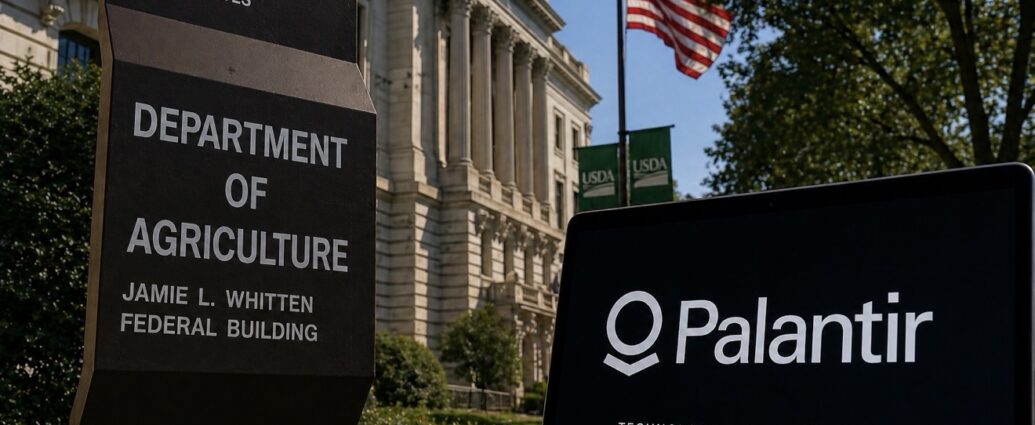
Washington — The U.S. Department of Agriculture has awarded Palantir Technologies a contract worth up to $300 million to help solve difficult problems that farmers face when dealing with government programs, using advanced smart technology to make everything simpler and safer for the nation’s food supply.
The Problem: American farmers often have a tough time getting the help they need for loans, disaster aid, crop support, and conservation programs. Their important records are scattered across many old, separate computer systems in different offices. This leads to lots of repeated paperwork, long waiting times, mistakes, and frustration for both farmers and government workers in county offices. Agriculture Secretary Brooke Rollins has called reducing this government red tape one of her top priorities to better support the people who grow our food.
The Solution: Palantir Technologies will create a new smart system called “One Farmer, One File.” It brings all of a farmer’s information together into one easy digital file. Government staff can see the complete picture quickly, and field workers will get mobile tools on phones or tablets to help farmers much faster with far less paperwork. USDA officials said the new technology will cut administrative burdens, speed up help for farmers, and improve visibility into risks that could affect food production.
Brooke Rollins, Agriculture Secretary, described the award as important for both daily efficiency and protecting the country. “Protecting America’s farmland is protecting America itself,” Rollins stated in department materials.
The contract builds on previous work Palantir has done with the USDA on digital reporting tools. Alex Karp, Chief Executive Officer of Palantir Technologies, explained that his company builds software for real government needs. “We create systems that integrate data, automate routine work, and help leaders make better decisions in the real world,” Karp said in company statements and earnings calls.
Todd Neeley, DTN Environmental Editor, reported that the “One Farmer, One File” program will remove duplicate records and give staff a full view of each farmer. “This award should reduce delays and make government services work better for producers across the country,” Neeley noted.
The project tackles problems long identified by the Government Accountability Office in reports about outdated federal computer systems. Rather than replacing everything at once, Palantir’s approach connects existing data and automates tasks — a method supported by the Office of Management and Budget in its push for smarter government technology upgrades.
Farmers should benefit directly with faster approvals during tough times like droughts or storms, fewer errors on forms, and easier access to programs without needing multiple trips to county offices. USDA said the platform will especially help teams at the Farm Service Agency and the Natural Resources Conservation Service serve thousands of local locations more effectively.
This award also strengthens protection for the nation’s food supply. USDA officials highlighted that better data tools will help spot and manage threats such as animal diseases, supply chain issues, and cyber attacks on farms. Agencies including the Cybersecurity and Infrastructure Security Agency have listed food and agriculture as critical national infrastructure that requires strong digital safeguards.
Alex Karp has long positioned Palantir as a trusted partner for large government agencies that need practical technology solutions. In the company’s recent SEC filings, executives noted strong demand from U.S. government customers as a key area of growth, even as contract timelines can vary with budgets and priorities.
Heath Terry, global head of technology research at Citi, said this type of government award shows increasing interest from civilian agencies in advanced data platforms. “Awards like the USDA’s Palantir contract demonstrate real demand for tools that deliver clear improvements in efficiency and risk management,” Terry observed.
The rollout will take several years, with full implementation targeted for 2028. Challenges will include combining old records, training staff spread across the country, and measuring actual results on the ground. The Government Accountability Office has repeatedly stated that successful technology modernizations need strong leadership and measurable goals.
Bloomberg Government tracking data indicates this award fits a growing national trend of civilian departments spending more on data integration and cloud-based tools to achieve better results for citizens.
Farmers, agricultural lenders, and industry groups will watch closely to see whether the new system brings faster help and fewer headaches in real life. If the project succeeds, the Palantir award could become a useful example for similar technology upgrades in other parts of the federal government.
Overall, the USDA award to Palantir represents a practical step by Secretary Brooke Rollins to use modern smart technology to solve everyday problems for farmers — delivering simpler, quicker, and more reliable government support while helping safeguard the agricultural foundation that feeds the United States.
JbizNews Desk- April 27