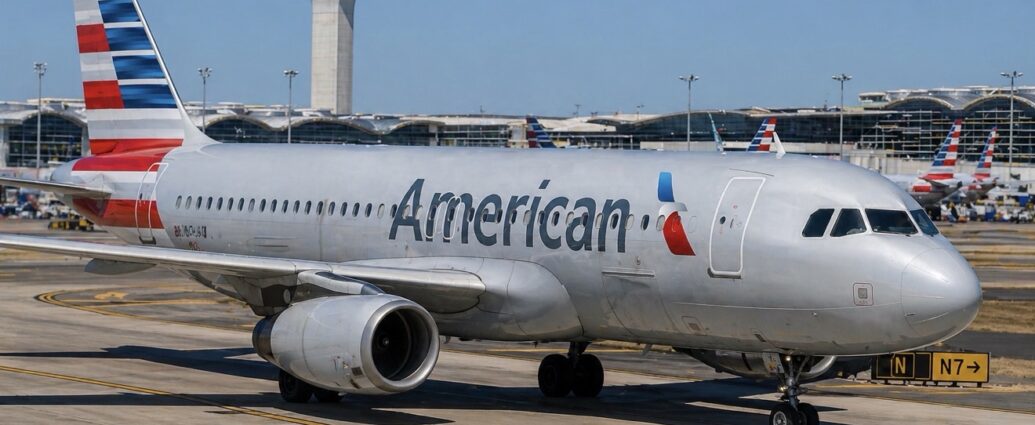
American Airlines Group Inc. is tapping the debt markets with a $1.14 billion aircraft-backed bond offering, underscoring how major U.S. carriers are leaning on structured financing to fund fleet expansion and manage balance sheet pressures amid a volatile cost environment. The transaction, backed by a pool of 32 aircraft, highlights the continued importance of asset-backed markets in aviation finance even as rising fuel costs reshape industry economics.
The securities are structured as enhanced equipment trust certificates (EETCs), a long-standing financing tool in the airline industry that allows carriers to raise capital against aircraft collateral. According to the company, the offering is split into two tranches, with the larger portion totaling approximately $905 million and carrying an average life of 7.7 years. That tranche is being marketed at a yield near 5.625%, reflecting tighter spreads than unsecured debt due to the collateral backing.
Despite S&P Global Ratings assigning American Airlines a B+ corporate credit rating, the structure of the EETCs is expected to secure an investment-grade rating for the longer-dated bonds. S&P Global Ratings is anticipated to rate the tranche at A, while Fitch Ratings is expected to come in one notch lower, illustrating how secured aviation assets can materially enhance credit quality. “The aircraft collateral structure enables below-investment-grade issuers to access investment-grade funding levels,” analysts at Fitch Ratings have noted in similar transactions, pointing to strong recovery values tied to modern aircraft fleets.
American said it plans to deploy the proceeds to finance 17 new aircraft deliveries while refinancing debt tied to 15 existing planes, alongside broader corporate purposes. The deal is being led by Goldman Sachs, MUFG, and Morgan Stanley, all of which are serving as joint bookrunners. The issuance mirrors a similar transaction completed in October, when American raised roughly $883 million in aircraft-backed bonds at more favorable rates, reflecting how borrowing costs have moved higher in 2026.
The timing of the offering comes as airlines face mounting pressure from fuel costs, which have surged in recent months amid geopolitical instability. Robert Isom, Chief Executive Officer of American Airlines, said the company expects its annual jet fuel expense to increase by more than $4 billion, with prices hovering near $4 per gallon in the second quarter. “Even in a volatile operating environment, our pretax margin improved by nearly two points year over year, and we still anticipate modest profitability for the year assuming the current forward fuel curve,” Isom said during the company’s latest earnings call.
That cost pressure has forced a recalibration of financial expectations across the sector. American recently lowered its full-year 2026 adjusted earnings outlook to a range between a 40-cent loss and $1.10 in earnings per share, a significant downgrade from prior guidance of $1.70 to $2.70. The revision reflects both higher input costs and strategic capacity adjustments aimed at preserving margins.
Still, underlying demand trends remain resilient. American reported first-quarter revenue of $13.91 billion, the highest in its history, while narrowing its adjusted loss to 40 cents per share—an outcome that exceeded analyst expectations. Isom noted that the airline recorded nine of the highest weekly revenue periods in its history during the quarter, with approximately 65% of second-quarter revenue already booked and total revenue expected to rise about 15% year over year.
To offset fuel inflation, the company is pursuing a phased pricing and capacity strategy. Nat Pieper, Chief Commercial Officer of American Airlines, said the carrier expects to recapture roughly 40% to 50% of incremental fuel costs in the second quarter, increasing to 75% to 85% in the third quarter and exceeding 90% by the fourth quarter. “We’re aligning capacity and pricing to better absorb fuel volatility as the year progresses,” Pieper said, emphasizing the importance of disciplined revenue management.
On the balance sheet, American continues to walk a tightrope between investment and deleveraging. The company ended the first quarter with $34.7 billion in total debt and $10.8 billion in liquidity, according to Chief Financial Officer Derek Kerr, who has emphasized maintaining flexibility in a higher-cost environment. “Our focus remains on strengthening the balance sheet while continuing to invest in the fleet and customer experience,” Kerr said in recent remarks.
Fleet modernization remains a central pillar of that strategy. American now expects to take delivery of 49 aircraft in 2026, down from an earlier projection of 55, reducing capital expenditures to approximately $4 billion. The adjustment reflects both supply chain considerations and a more cautious approach to capital deployment amid uncertain operating conditions.
The broader significance of the deal extends beyond a single airline. The EETC market has historically provided carriers with a reliable funding channel during periods when unsecured markets become more expensive or less accessible. By leveraging high-quality aircraft collateral, airlines like American can secure lower borrowing costs and extend maturities, even without an investment-grade corporate profile.
Looking ahead, the success of this issuance will depend on investor appetite for structured aviation credit in a rising-rate and high-cost environment. For American Airlines, the transaction reinforces a dual strategy: aggressively investing in fleet renewal to remain competitive while carefully managing leverage as macro pressures—from fuel prices to geopolitical risk—continue to test the industry’s financial resilience.
JBizNews Desk