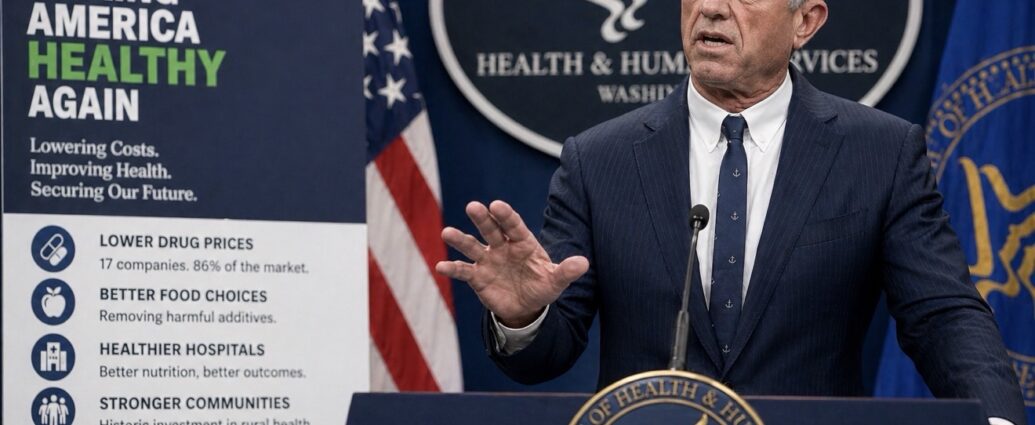
Washington, D.C. — U.S. Health and Human Services Secretary Robert F. Kennedy Jr. is rapidly reshaping the economic foundations of American healthcare, driving sweeping changes that extend far beyond Washington and into pharmaceutical pricing, food production, hospital systems, and rural healthcare infrastructure.
After a series of congressional appearances—including his eighth hearing this month before the House Energy and Commerce Committee—the most consequential developments of Kennedy’s tenure are emerging across the private sector, where policy shifts are translating into measurable cost changes and operational adjustments for major industries.
Fifteen months into leading the nation’s largest civilian agency, Secretary Robert F. Kennedy Jr. has advanced a broad “Make America Healthy Again” (MAHA) agenda that is already producing tangible economic outcomes across pharmaceuticals, agriculture, and healthcare delivery systems.
At the center of the initiative is the administration’s Most Favored Nation (MFN) drug pricing program, implemented through the TrumpRx platform launched in February 2026. The platform initially covered 40 high-cost branded medications, aligning U.S. prices with the lowest levels paid in other developed countries.
The program has since expanded significantly. As of April 23, agreements have been reached with 17 major pharmaceutical companies, including Pfizer, Johnson & Johnson, Merck, Novartis, Bristol Myers Squibb, Amgen, Gilead Sciences, and Regeneron, collectively representing approximately 86% of the U.S. branded drug market. The pricing impact has been substantial: Novo Nordisk’s Wegovy has fallen from roughly $1,350 per month to about $350, while Eli Lilly’s Zepbound has declined from more than $1,000 to approximately $346. Discounts across the platform range from roughly 30% to more than 90% on select therapies.
A recent agreement with Regeneron underscores the program’s expanding scope. The company committed to reducing the price of its cholesterol drug Praluent from $537 to $225 and agreed to apply MFN pricing to all future therapies. The same announcement included FDA approval of a gene therapy for a rare congenital form of deafness, which Regeneron said it would provide at no cost to eligible patients.
Beyond pharmaceuticals, the MAHA initiative is reshaping the food and beverage industry. More than 40% of U.S. food producers have committed to phasing out petroleum-based artificial dyes, while the Food and Drug Administration (FDA) has approved new natural alternatives derived from fruits and vegetables. PepsiCo said it will remove synthetic FD&C colors from several major beverage lines, replacing them with plant-based ingredients.
The initiative is also influencing medical education and clinical practice. More than 50 medical schools have committed to expanding nutrition education from an average of two hours to approximately 40 hours of coursework, reflecting a shift toward prevention-focused care and diet-related health management.
Within hospital systems, Secretary Kennedy directed the Centers for Medicare & Medicaid Services (CMS) to issue updated guidance requiring facilities receiving federal funding to align patient meals with national dietary standards. The directive focuses on reducing ultra-processed foods, sugar-sweetened beverages, and refined carbohydrates—effectively bringing nutrition policy into the core of clinical care.
Rural healthcare has emerged as another key pillar of the agenda. Through the $50 billion Rural Health Transformation Fund, federal officials are channeling resources into underserved communities. This month alone, more than $135 million has been allocated to expand rural residency programs, improve healthcare access, and strengthen nutrition services in remote regions.
Duvi Honig, a national business leader and public policy advocate, praised the Secretary’s leadership and broader impact. “Secretary Bobby Kennedy is making history with a bold, results-driven approach that is transforming healthcare economics in real time,” Honig said. “We are proud to work closely together and support these efforts—from lowering drug prices to advancing critical public health initiatives. We are especially encouraged by the ongoing work with HHS and the CDC on long-overdue Lyme disease awareness and updated clinical guidance, and we look forward to those updates being released.”
On Capitol Hill, Kennedy’s latest testimony also addressed leadership at the Centers for Disease Control and Prevention (CDC), where he voiced support for the nomination of Dr. Erica Schwartz, a former deputy surgeon general with extensive public health experience. Kennedy confirmed he has spoken with Schwartz and supports her candidacy.
As the MAHA agenda continues to take shape, its economic footprint is becoming increasingly visible across multiple sectors. By targeting drug pricing, food standards, hospital practices, and rural health access simultaneously, the administration is advancing a comprehensive approach that is redefining both the cost structure and delivery of healthcare in the United States.
Looking ahead, the durability of these changes will depend on continued industry participation and regulatory execution. But with broad adoption already underway, the MAHA initiative is positioning itself as a defining force in the next phase of American healthcare—where economics, policy, and public health outcomes are more tightly linked than ever.
JBizNews Desk