Tuesday, April 28, 2026 — 9:35 AM ET | JBizNews Desk
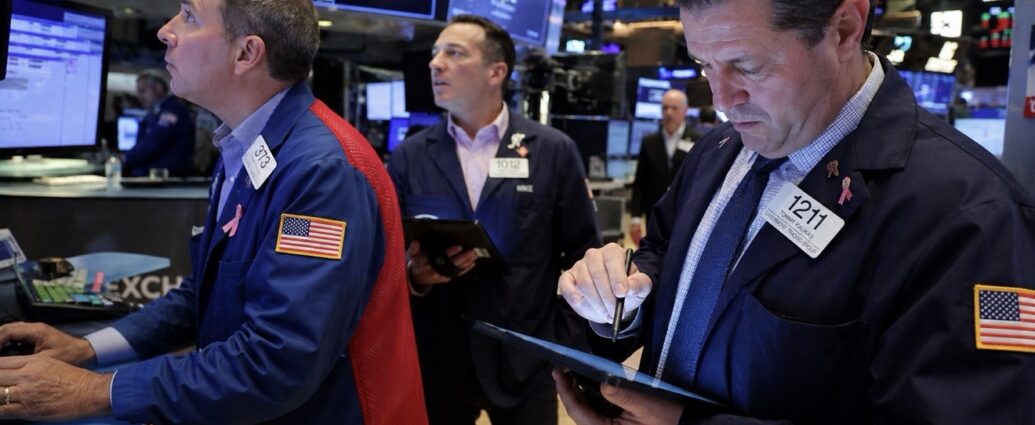
Wall Street opened Tuesday navigating a convergence of geopolitical shocks, corporate uncertainty, and central bank anticipation, as investors digested the United Arab Emirates’ abrupt exit from OPEC, fresh concerns surrounding OpenAI’s growth trajectory, and the start of what may be Federal Reserve Chair Jerome Powell’s final policy meeting.
Markets showed early divergence. The S&P 500 fell 0.6%, while the Nasdaq Composite dropped 1.2%, weighed down by technology stocks. The Dow Jones Industrial Average rose 0.3%, supported by its lower exposure to tech. The Russell 2000 edged down 0.17%. Commodities reflected continued volatility, with crude oil climbing 2.76% to $99.03 per barrel, while gold pulled back 2.05% to $4,597.50. The 10-year Treasury yield ticked up to 4.364%, signaling persistent rate sensitivity.
The moves follow a historic Monday session in which the S&P 500 closed at a record 7,173.91, and the Nasdaq reached an all-time high of 24,887.10, setting the stage for heightened volatility as markets entered a critical 48-hour window.
At the center of the market’s tension is the escalating Iran conflict, which has disrupted an estimated 20% of global oil supply. The International Energy Agency has described the situation as the “greatest global energy security challenge in history,” drawing comparisons to the 1970s oil crisis. Goldman Sachs analysts have warned that global oil inventories are being drawn down at a record pace of 11 to 12 million barrels per day, reinforcing expectations of sustained price pressure even as volatility spikes.
Diplomatic efforts remain fragile. Over the weekend, President Donald Trump canceled planned ceasefire talks in Pakistan involving envoys Steve Witkoff and Jared Kushner, after Iranian Foreign Minister Abbas Araghchi departed before negotiations could begin. Oil markets reacted sharply, with Brent crude briefly surging above $112 per barrel before easing back near $104. Iran has since floated a proposal to reopen the Strait of Hormuz, though its nuclear program remains a central sticking point, with the Trump administration demanding near-total dismantlement of enrichment capabilities.
Adding to the geopolitical shock, the United Arab Emirates announced Tuesday it will formally exit OPEC and OPEC+ effective May 1, ending a membership that dates back to 1967. The UAE, OPEC’s third-largest producer behind Saudi Arabia and Iraq, cited its “long-term strategic and economic vision” as the driver of the decision. Analysts say the move could eventually increase global supply by freeing the UAE from production quotas, though in the near term it injects further uncertainty into already volatile energy markets.
At the same time, technology stocks came under pressure following a Wall Street Journal report that OpenAI has fallen short of internal targets for user growth and revenue ahead of its anticipated IPO. Chief Financial Officer Sarah Friar reportedly raised concerns about the company’s ability to sustain future computing commitments if growth does not accelerate. The report weighed heavily on AI-linked equities, pulling down Oracle, Broadcom, Advanced Micro Devices, Intel, and Nvidia, which fell nearly 3% from recent highs.
Despite the broader market weakness, several companies posted strong gains. General Motors surged more than 4% after reporting adjusted earnings of $3.70 per share, well above expectations, and raising its 2026 EBITDA outlook. Coca-Cola climbed nearly 3% after beating earnings estimates and lifting its full-year guidance. Nucor added more than 3% following stronger-than-expected results, reflecting continued strength in industrial demand.
On the downside, Illinois Tool Works dropped approximately 9%, reflecting geopolitical sensitivity and cautious positioning ahead of earnings. UPS declined more than 3% after maintaining guidance that pointed to limited near-term growth, amid declining volumes and margin pressure.
Analyst activity remained active. UBS analyst Taylor McGinnis reiterated a Buy rating on Twilio, raising the price target to $180. Josh Silverstein of UBS maintained a Buy on Liberty Energy, increasing his target to $40, while Thomas Wadewitz raised his target on Union Pacific to $274 with a Neutral rating. Macquarie analyst Chad Beynon lifted his target on Boyd Gaming to $95, maintaining a Neutral stance.
All eyes now turn to the Federal Reserve, as its two-day FOMC meeting begins Tuesday. Markets are pricing in a 100% probability that rates will remain unchanged in the 3.5% to 3.75% range, though policymakers face a complex backdrop shaped by energy-driven inflation risks and geopolitical instability. The meeting is widely expected to be Jerome Powell’s final one as chair, with the Senate Banking Committee set to vote on Kevin Warsh’s nomination as his successor.
The week’s significance extends beyond monetary policy. Earnings from Alphabet, Amazon, Meta, and Microsoft are scheduled for Wednesday, followed by Apple on Thursday—marking one of the most critical stretches of the earnings season.
With geopolitics, energy markets, AI sentiment, and monetary policy all colliding, investors are navigating a high-stakes environment where direction remains uncertain and volatility is likely to persist.
Simple Breakdown:
A lot is happening at once—oil issues, tech concerns, and big Fed decisions. That’s why some stocks are going up while others are falling.
JBizNews Desk