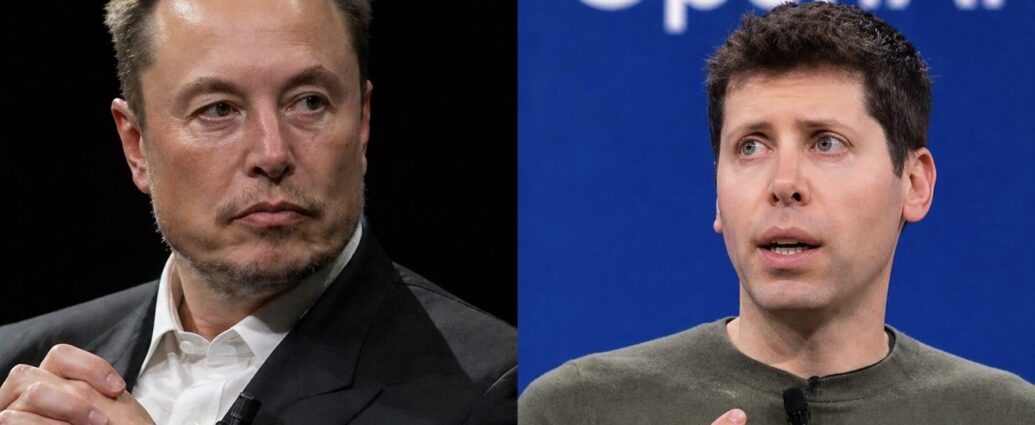
Elon Musk and OpenAI are heading toward a June jury trial in California in a case that could test how far an artificial-intelligence lab can move from its nonprofit origins without triggering legal and governance fallout. Reuters reported that U.S. District Judge Yvonne Gonzalez Rogers recently put the dispute on track for trial in spring 2026 after declining Musk’s bid to stop OpenAI’s planned restructuring, while saying an expedited trial remained appropriate given “the public interest at stake and potential for harm if a conversion contrary to law occurred.”
The lawsuit has become one of the most closely watched corporate fights in AI because it goes to the heart of OpenAI’s unusual structure and its relationship with backer Microsoft. In a court filing and public statements cited by Reuters and The Associated Press, Musk argued that he helped found OpenAI on the understanding it would develop AI “for the benefit of humanity,” not as a vehicle to enrich insiders or a large commercial partner. OpenAI, for its part, said in a blog post published in December that Musk had once supported the idea of a for-profit structure, adding that his claims “rest on increasingly baseless legal theories.”
The legal clash intensified after Musk sued OpenAI, Chief Executive Sam Altman, President Greg Brockman and related entities, alleging breach of contract and fiduciary duties tied to the company’s shift toward a capped-profit model and its deeper commercial alignment with Microsoft. According to Reuters, OpenAI and Altman have denied wrongdoing, and the company said in court papers that its structure “preserves the nonprofit’s mission” while enabling it to raise the vast sums needed to build advanced AI systems.
That financing question sits at the center of the case. OpenAI has told investors and partners that access to capital matters as competition with Google, Anthropic, xAI and other AI developers accelerates. In reporting on the company’s fundraising efforts, Bloomberg said OpenAI has pursued financing at valuations that place it among the world’s most valuable private technology groups. Sam Altman has repeatedly said, including in public appearances covered by CNBC, that building frontier AI requires “a lot more compute” and therefore much more capital than a traditional nonprofit structure can easily support.
Judge Gonzalez Rogers has already signaled that the court sees urgency even if it has not accepted all of Musk’s arguments. In a March order reported by Reuters, she denied Musk’s request for a preliminary injunction that would have blocked OpenAI from converting into a more conventional for-profit entity before trial, but she also said the court could move quickly to resolve the core claims. That mixed ruling gave each side something to claim: OpenAI said the court rejected what it called an “extraordinary” attempt to halt its business, while Musk’s legal team pointed to the judge’s willingness to fast-track the case.
The dispute also reaches beyond corporate law into the politics of AI oversight. Delaware Attorney General Kathy Jennings and California Attorney General Rob Bonta have authority over nonprofit entities operating in their jurisdictions, and their offices could become important if OpenAI seeks formal approval for structural changes. The Financial Times and Reuters have both reported that regulators and policymakers are paying closer attention to whether AI companies can claim public-interest missions while pursuing aggressive commercial expansion. OpenAI has said any evolution of its structure would keep its nonprofit board and mission intact.
The case carries unusually high stakes for Microsoft, even though the software giant is not the central protagonist in the courtroom drama. Microsoft has invested billions in OpenAI and integrated the startup’s models into products across cloud, office software and developer tools. In statements reported by Reuters and Bloomberg, OpenAI has described Microsoft as a key partner rather than a controlling owner, while critics aligned with Musk have argued that the relationship undercuts the original promise of independence and openness.
Investors and startup founders are watching because the outcome could influence how future AI ventures balance mission language with commercial reality. Legal experts interviewed by Reuters have said the trial may become a reference point for disputes involving hybrid entities, especially where early backers claim a company’s public-benefit commitments later gave way to conventional profit motives. Musk, who now runs rival AI company xAI, has framed the issue in public posts as a matter of principle, while OpenAI has countered that his campaign reflects competitive self-interest as much as governance concern.
What comes next matters not only for the parties but for the shape of the AI industry’s capital model. Pretrial discovery and motions are expected to sharpen questions around founding emails, board deliberations and the exact promises made when OpenAI launched in 2015. If a jury ultimately sides with Musk, the decision could complicate OpenAI’s restructuring plans and force a broader rethink of how mission-driven tech labs raise money; if OpenAI prevails, it could strengthen the case that hybrid nonprofit-commercial structures remain a workable path for financing the next generation of AI systems, as Reuters and other outlets have noted.
JBizNews Desk