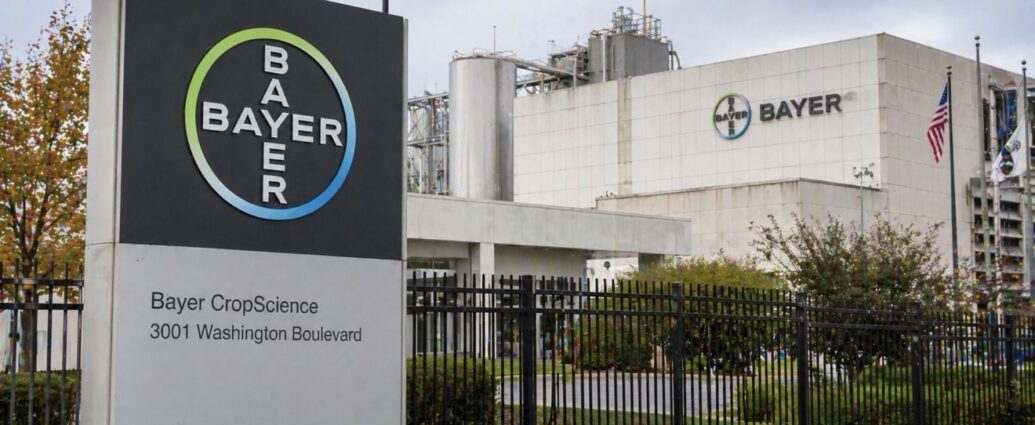
The U.S. Supreme Court has agreed to hear Bayer’s latest bid to curb the costly litigation tied to Roundup, putting a fresh spotlight on whether federal pesticide law can shield the company from thousands of state-law cancer claims. Reuters reported that the justices took up the dispute after Bayer argued that U.S. labeling rules approved by the Environmental Protection Agency preempt failure-to-warn lawsuits alleging the weedkiller causes non-Hodgkin lymphoma.
In a statement cited by Reuters, Bayer said the case presents “important questions” about the interaction between federal regulation and state tort law, a legal issue that has become central to the company’s effort to contain one of the largest product-liability battles in corporate America. The company has said repeatedly in court filings and public statements that Roundup and its active ingredient glyphosate are safe when used as directed, while the EPA has maintained that glyphosate is “not likely to be carcinogenic to humans” when used according to label instructions.
The appeal follows years of courtroom losses and settlements after Bayer inherited the litigation through its 2018 acquisition of Monsanto. In its annual reporting and investor updates, Bayer has said it already has paid roughly $10 billion to settle claims and reserved billions more for unresolved cases, while warning that the litigation remains a material financial overhang. Bloomberg and Reuters have both reported that investors view the Supreme Court’s willingness to hear the matter as a potentially significant turning point for the German group’s legal strategy.
At the center of the case sits a familiar argument: whether a state jury can find that Bayer should have added a cancer warning to Roundup’s label when the EPA has not required one. In prior filings, lawyers for Bayer told the court that federal law bars states from imposing labeling requirements “in addition to or different from” federal standards under the Federal Insecticide, Fungicide, and Rodenticide Act, according to court papers covered by Reuters. Lawyers for plaintiffs, by contrast, have argued that state-law duties to warn complement rather than conflict with federal rules, a position that lower courts have often accepted.
That split has mattered because juries around the country have continued to award damages to plaintiffs who said they developed cancer after long-term Roundup exposure. The Associated Press and Reuters have reported on multiple verdicts against Bayer, including cases in Missouri, California and Pennsylvania, though some awards later shrank on appeal. Plaintiff lawyers, including prominent trial attorney Mark Lanier in prior Roundup litigation, have argued in public statements that the verdicts reflect jurors’ conclusion that consumers deserved stronger warnings even if regulators did not mandate them.
The science behind the legal fight remains contested, and that tension has fueled both the litigation and the company’s defense. The International Agency for Research on Cancer, part of the World Health Organization, classified glyphosate in 2015 as “probably carcinogenic to humans,” a finding plaintiffs cite heavily in court. The EPA, however, has stuck to its own review, saying in agency documents that it found no risks of concern to human health from current uses of glyphosate, a divergence that Financial Times and Reuters have said helps explain why the legal and regulatory tracks have moved in different directions.
For Bayer, the stakes extend well beyond courtroom theory. The company has faced pressure from shareholders to draw a line under the Roundup saga, and executives including Chief Executive Bill Anderson have said in earnings calls that resolving major litigation exposures remains a priority for restoring strategic flexibility. In remarks reported by Reuters during prior investor updates, Anderson said the group needs to “significantly reduce” litigation uncertainty, linking the issue directly to capital allocation, portfolio decisions and confidence in the broader crop-science business.
The case also carries broader implications for regulated industries that rely on federal approvals as a defense against state-law claims. Legal analysts quoted by Bloomberg and Reuters have said a ruling favoring Bayer could strengthen preemption arguments for makers of pesticides, drugs and medical devices, while a ruling against the company could reinforce plaintiffs’ ability to use state courts to challenge products that remain on the market with federal approval. That makes the dispute more than a single-company problem; it is a test of how far federal oversight protects manufacturers from local juries.
Farm groups and agribusiness executives also are watching closely because glyphosate remains deeply embedded in U.S. crop production. The U.S. Department of Agriculture has long described herbicide-tolerant farming systems as central to modern corn and soybean production, and industry representatives have warned in public comments that abrupt legal or regulatory disruption could raise costs for growers. At the same time, consumer advocates and plaintiff lawyers say the case goes to a basic question of accountability, arguing in court papers that federal registration should not become blanket immunity from warning claims.
The justices’ decision to hear the case does not settle the merits, but it gives Bayer its clearest opening in years to change the trajectory of the Roundup litigation. A ruling next term could determine whether the company can narrow future claims or remain trapped in years of expensive jury trials, appeals and settlement talks. For investors, farmers and product makers across heavily regulated sectors, the next phase matters because it could redefine where federal approval ends and state liability begins.
JBizNews Desk