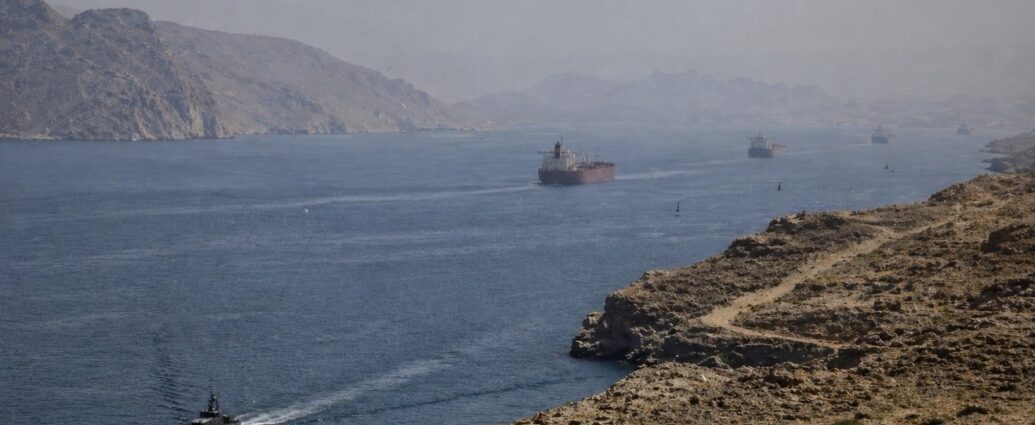
President Donald Trump is preparing to sustain the U.S. blockade of Iran, signaling that the administration is willing to prolong economic pressure to secure a comprehensive nuclear agreement even as the strategy drives oil prices higher and begins to weigh on businesses and consumers.
The White House has concluded that maintaining the blockade offers the strongest negotiating leverage. Alternatives — including renewed military action or accepting Iran’s proposal to reopen the Strait of Hormuz while delaying nuclear negotiations — are viewed as carrying greater strategic risk, according to administration officials familiar with the discussions.
White House Press Secretary Karoline Leavitt said the president reviewed Iran’s latest proposal with his national security team and is holding firm on key conditions. “His red lines with respect to Iran have been made very, very clear,” Leavitt said. White House spokesperson Olivia Wales added that any agreement must be “good for the American people and the world,” underscoring the administration’s refusal to ease pressure without substantive concessions.
Trump has publicly characterized the pressure campaign as effective. In a Truth Social post, he said Iran is in a “state of collapse” and is seeking to reopen the strait, a claim administration officials view as evidence that restricting access to one of the world’s most critical energy corridors is forcing Tehran toward negotiations.
U.S. enforcement actions have intensified. Military authorities have redirected vessels and seized ships in recent weeks, sharply reducing traffic through the strait, which typically carries roughly one-fifth of global oil supply. Shipping flows have dropped significantly from pre-conflict levels, tightening global supply.
Energy markets have responded quickly. Brent crude has risen above $110 per barrel, while U.S. gasoline prices are averaging about $4.18 per gallon, according to federal energy data — the highest levels since 2022. Diesel prices have surged even more sharply, increasing costs across transportation and logistics networks.
For businesses, the impact is building. Higher fuel costs are compressing margins and complicating pricing decisions, particularly for industries reliant on shipping and distribution. Economists warn that sustained disruption could reinforce broader inflationary pressures.
Secretary of State Marco Rubio rejected Iran’s proposal to reopen the strait without resolving nuclear issues, saying any arrangement allowing Tehran influence over an international waterway is unacceptable. “Those are international waterways,” Rubio said. “We cannot allow a system where Iran decides who gets to use them.” He added that U.S. policy is focused on ensuring Iran cannot “sprint toward a nuclear weapon at any point.”
Diplomatic efforts remain stalled. Iranian Foreign Minister Abbas Araghchi left recent talks without meeting U.S. negotiators, and Trump canceled a planned envoy trip, signaling frustration with the pace of negotiations. German Chancellor Friedrich Merz said publicly that the United States lacks “a truly convincing strategy,” reflecting growing concern among allies.
The political effects are beginning to emerge alongside the economic impact. Rising fuel prices are feeding into voter sentiment, with recent polling showing declining approval tied to cost-of-living concerns ahead of the 2026 midterm elections.
The administration is effectively wagering that sustained economic pressure will produce a strategic breakthrough. Whether that pressure compels Tehran to concede — or prolongs the standoff — will shape both the trajectory of global energy markets and the broader economic outlook in the months ahead.
JBizNews Desk