By JBizNews Desk — April 30, 2026
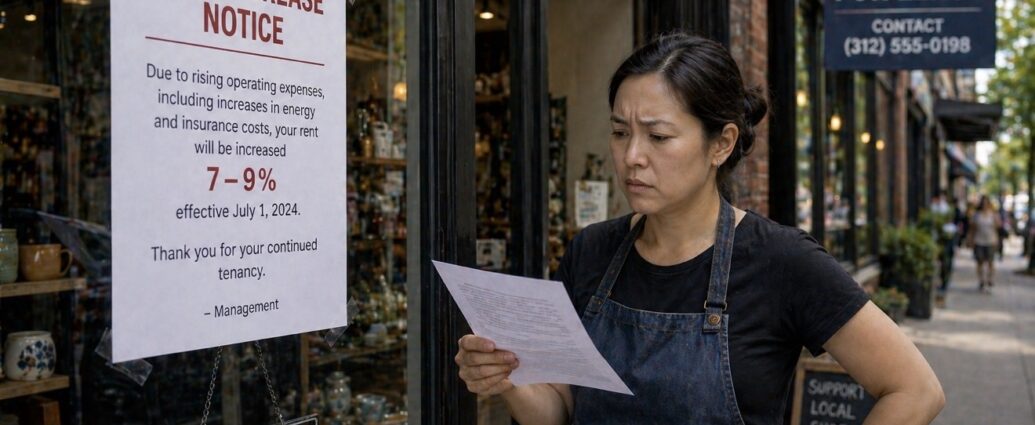
Commercial landlords across the country have begun sending formal notices to small-retailer tenants announcing average rent increases of 7–9 percent effective July 1 or upon lease renewal, directly citing sharply higher property insurance premiums, energy and utility costs, and rising operating expenses. These increases are not part of any single coordinated nationwide policy or government mandate applying uniformly in all 50 states. Instead, they reflect individual, case-by-case decisions by property owners and management companies when existing leases expire or come up for adjustment — a common practice that is fully legal in every state.
Commercial leases are private contracts, and landlords have the right to raise rents at the end of a lease term (or during the term if the lease explicitly allows escalations). There is no federal law capping commercial rent increases, and commercial rent control is extremely rare compared with residential rules. A few states and cities have added limited tenant protections, such as longer notice periods for large increases (for example, California’s SB 1103 requires extra advance warning for certain small “qualified commercial tenants” like microenterprises and small restaurants), but these rules do not prohibit the increases themselves.
This wave of notices arrives as small retailers, restaurants, and service businesses already face mounting insurance, labor, and energy pressures tracked throughout today’s coverage. For many independent operators, the higher rents could force tighter budgets, reduced hours, or difficult decisions on pricing and staffing at a time when cautious consumer spending and gas prices near $4.23 per gallon are limiting foot traffic.
What the Rent Hikes Mean for Small Retailers
• Monthly lease payments rising by hundreds to thousands of dollars depending on location and square footage.
• Many owners expected to negotiate shorter-term renewals, shared-space arrangements, or efficiency upgrades to offset the increase.
• Potential slowdown in store expansions, remodels, or new hiring as capital is redirected to cover fixed costs.
Economists described the trend as the latest example of cost pressures rippling through the small-business ecosystem, with Diane Swonk, chief economist at KPMG, noting that as diesel’s cost advantage erodes amid volatile fuel prices, fleets and small operators are increasingly open to electric alternatives but now face higher financing, utility, and real-estate hurdles; Heather Long, chief economist at Navy Federal Credit Union, pointed out the ripple effects for everyday businesses and families as cautious consumer spending weighs on growth; Oliver Allen, senior U.S. economist at Pantheon Macroeconomics, emphasized that this reflects broader trends of property owners passing sustained energy and insurance costs downstream; Nicole Bachaud, economist at ZipRecruiter, added that operational tightening could lead to more selective hiring and scheduling adjustments; and Gina Bolvin, president of Bolvin Wealth Management Group, advised small-retailer clients to review lease terms immediately and explore subleasing or efficiency upgrades to protect margins in the high-cost environment.
Outlook
While rent increases are a standard feature of commercial leasing and remain legal nationwide, the current wave underscores how energy-driven cost pressures are now flowing directly into fixed overhead for small businesses. For Main Street operators and the communities they serve, the coming months may require tighter budgeting, creative space-sharing, and proactive lease negotiations. Tomorrow’s small-business real-estate surveys and local tenant updates will reveal how widely these adjustments reshape storefront viability in different markets.
JBizNews Desk
© JBizNews.com. All rights reserved. This article is original reporting by JBizNews Desk. Unauthorized reproduction or redistribution is strictly prohibited