Tamir Cohen’s experience of finding a place to stay at night while hiking the Israel National Trail four years ago, a trail which crosses the country from Kibbutz Dan in the north to Eilat in the south and is 1,100 km. long, gave him the idea for “Angels of the Shelter.”
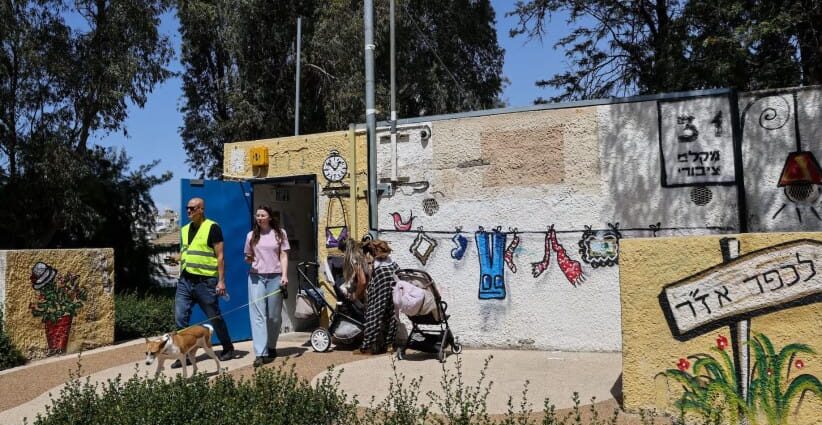
Aware of a reality in which more than a third of Israelis live without access to a standard protected space against ballistic missiles from Iran, Lebanon, Gaza, and Yemen, Cohen, a biomedical engineering student at Ben-Gurion University of the Negev (BGU) in Beersheba, developed a website that mediates between safe rooms and people without protection.
Cohen, 26, was born in Kiryat Ono and is living in Beersheba for his studies. He is participating in the LEADERS program of the Entrepreneurship Center 360 at the university, where he created the “Angels of the Shelter” website, which is open to the general public.
The initiative mediates between two parties: on the one hand, shelter owners who are willing to open their homes and let people in during alarms; and on the other hand, people without protection who are looking for shelter.
The accommodation is arranged in advance, not in real time, which allows for a relaxed arrival at the protected space with advance notice.
Users can view shelters within a few minutes’ walk and filter them by parameters such as the type of host, accessibility, and distance.
“Since the start of the war, I have come across quite a few cases of relatives and friends who have wandered from house to house, and I personally found myself staying with neighbors who built a protected space in their garden,” said Cohen.
‘People sleeping on the light rail or in parking lots’
“I also saw articles about people sleeping on the light rail or in parking lots, and about weddings held in shelters,” he added.
The young couple who offered him a place in their protected space were only a minute away from his rented apartment, and at night, woken up by the missile warnings, he came dressed in his pajamas. Other neighbors were there too, as well as dogs.
“I recognized the need, as I learned in BGU’s LEADERS program in which I’m participating,” Cohen told The Jerusalem Post in an interview.
“The Angels of the Trail are people who opened their homes and hearts to me without any desire for compensation and deepened my sense of mutual responsibility,” he continued.
“The Israel National Trail is a hiking path marked white, blue, and orange. Its significance lies in promoting national identity, commemorating fallen soldiers, connecting diverse cultures, and fostering tourism through its immense geographical, historical, and religious diversity.
“This is where I got the idea to connect this feeling with the need I identified during the war on the home front. I decided to establish a platform called ‘Angels of the Shelters’ which brings the spirit of the ‘Angels of the Trail’ to the world of emergency routine,” he said. “It is being used by Israelis across the country.”
His appearance on Channel 12 also aroused interest and admiration for his project. Cohen, who served in the IDF in intelligence technology, is now in his fourth year at BGU.
He is already working for a small startup involved in promoting women’s medicine and fertility that will soon carry out clinical studies, but he can’t give details at this early stage.
“I was interested in promoting solidarity, bringing people who have protected spaces in their homes or gardens and are ready to welcome neighbors who lack them,” he said.
“We met when it was relatively quiet, before the missiles were aimed at Israel, so we got to know each other,” he added. “The couple and I have since become friends, talking in the protected spaces about ourselves and each other.
“My parents in Kiryat Ono, who have encouraged me a lot, have a protected space in their apartment that they share with others.”
He wants to get as many people to become matches for a protected space. “It’s for an emergency, and it is saving lives,” Cohen explained. “But I want to turn this cooperation into one used in routine times, for example, so that people, including the elderly, won’t feel alone.”
The LEADERS program that inspired Cohen to initiate the website was established a few years ago. It is headed by Gadi Bahat, who has much experience in management and business.
“We cultivate entrepreneurs who know how to create value in a changing reality,” said Bahat. “Tamir identified a real-time need, connected it to a personal experience, and built a relevant solution, and this is exactly the standard we aim for.”
“We select excellent students, set a high bar for them, and accompany them with real tools that also develop a sense of competence, to turn ideas into action – because in the end, this is what produces results,” he continued.
The Entrepreneurship 360 Center promotes innovation and entrepreneurship in the Negev region and plays a vital role in connecting academia and industry.
It was established with a vision to transform ideas from university communities into impactful initiatives and constitutes a dynamic ecosystem in which students, researchers, and professionals collaborate to advance technological and social developments.
“For students,” Bahat continued, “a career that matches one’s interests and education, let alone the lifestyle one would want to lead, can feel like an impossible dream.”
“Leaders in every field know the secret to success is proactively adapting to change,” he said. “By gaining the skills and experience needed to face the world with confidence, they can turn challenges into opportunities for professional and personal achievement – whether in a job at a great company, or as the CEO of their own.”
The LEADERS approach connects what students have learned in the classroom to the needs of business and society. Through a combination of workshops, lectures, volunteer mentorship, and training on cutting-edge technology, they learn to build and launch a sustainable venture.
Cohen, who is completing his first semester of LEADERS, said the program consists of two semesters during the year and includes a two-week summer accelerator at the beginning of August in which the students translate classroom experience into a venture in the real world.
The first focuses on the early stages of innovation, including developing an idea for a business and turning ideas into successful business opportunities.
The second emphasizes the move from opportunity to implementation, and gives students the knowledge and skills required to create the right conditions for success.
“From academic knowledge and leadership skills to hands-on training and implementation, LEADERS takes students on a step-by-step journey through the entire process of entrepreneurship, ensuring that they have a solid footing in each stage before proceeding to the next,” Bahat concluded.
Take a look at Cohen’s initiative here: mamadangles.com/