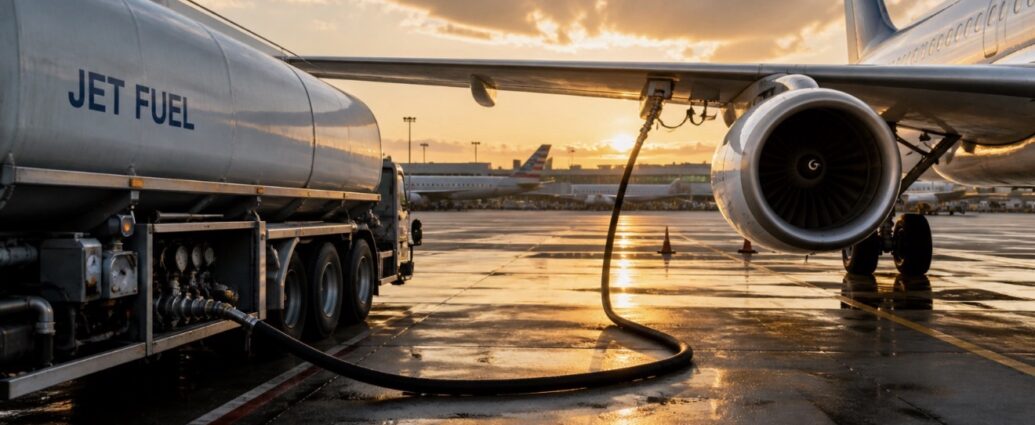
Fort Lauderdale / Dublin — May 3, 2026 — A surge in jet-fuel prices driven by the escalating U.S.-Iran conflict is rapidly cascading into a full-scale crisis for the global airline industry, with Spirit Airlines’ abrupt shutdown marking the most dramatic failure in a generation and signaling growing risk across both U.S. and European carriers.
Spirit Airlines halted all operations effective immediately after failing to secure a last-minute $500 million federal lifeline, canceling every remaining flight and leaving thousands of passengers stranded nationwide. The ultra-low-cost carrier’s liquidation — the first major U.S. airline shutdown in 25 years — puts roughly 17,000 jobs at risk. Industry analysts say jet fuel prices, now up more than 40% since the start of the Iran conflict, delivered the final blow to a company already weakened by prior bankruptcies.
The pressure is no longer isolated. Delta Air Lines, United Airlines, and American Airlines have all issued profit warnings in recent days, citing fuel costs exceeding $3.50 per gallon across major hubs. American Airlines CEO Robert Isom told investors the carrier is accelerating capacity cuts, particularly on transatlantic routes, as margins tighten. Executives across the industry are warning that if fuel prices remain elevated, broader operational reductions are inevitable.
The crisis is hitting Europe with equal force. Ryanair CEO Michael O’Leary warned that several European low-cost carriers could face bankruptcy by the end of the summer if current fuel levels persist, calling the environment “unsustainable.” Ryanair has already grounded dozens of aircraft and is weighing capacity cuts of up to 15% across its network. easyJet has issued a profit warning, citing fuel costs at levels not seen since the 2008 financial crisis, while Lufthansa Group plans to cut more than 20,000 flights this summer. Air France and KLM are also trimming schedules and increasing fuel hedging to limit exposure.
Jet fuel — which typically accounts for 30% to 40% of airline operating costs — has become the defining pressure point across the industry. Spirit Airlines’ collapse removes a major source of ultra-low-cost competition in the U.S. market, likely pushing fares significantly higher. Analysts estimate prices on former Spirit routes could rise between 15% and 25% in the coming months, reversing years of downward pricing pressure driven by budget carriers.
The ripple effects are spreading rapidly beyond airlines. Airports that relied heavily on Spirit and Ryanair routes are facing immediate revenue shortfalls from lost landing fees, concessions, and parking income. Aircraft lessors and suppliers are bracing for delayed payments and potential write-downs. Tourism-dependent economies — from Florida and Las Vegas to Mediterranean destinations — now face reduced travel volumes just as peak season approaches.
Thorsten Benner, director of the Global Public Policy Institute in Berlin, said airlines have become “ground zero” for the economic fallout of the Iran conflict. “The speed and scale of the fuel surge are turning what was a manageable cost into an existential threat for low-cost airline models,” he said, warning that the crisis could accelerate consolidation across the global aviation sector.
Government response has so far been limited. The U.S. Department of Transportation confirmed it is coordinating with remaining airlines to accommodate stranded Spirit passengers, though replacement fares are already running 50% to 100% higher than original bookings, according to consumer groups. In Europe, EU Transport Commissioner Adina Vălean has called for emergency coordination meetings as airlines warn of widespread route cancellations.
Analysts say the current environment is likely to trigger a structural shift in the airline industry. Stronger legacy carriers may absorb routes and assets from weaker competitors, but the near-term impact on consumers is clear: fewer flights, higher fares, and reduced competition across key domestic and international routes.
Compounding the uncertainty, President Donald Trump signaled Saturday that the U.S. could reduce troop levels in Germany “a lot further” than previously announced — a move that could intensify geopolitical tensions and keep energy markets volatile, prolonging the fuel crisis that is now reshaping global aviation.
What began as a geopolitical shock is rapidly becoming a defining economic crisis for airlines worldwide. With no clear resolution to the conflict and fuel prices continuing to climb, the industry is bracing for a prolonged period of disruption — and travelers are entering a new era of more expensive, less accessible air travel.
JBizNews Desk