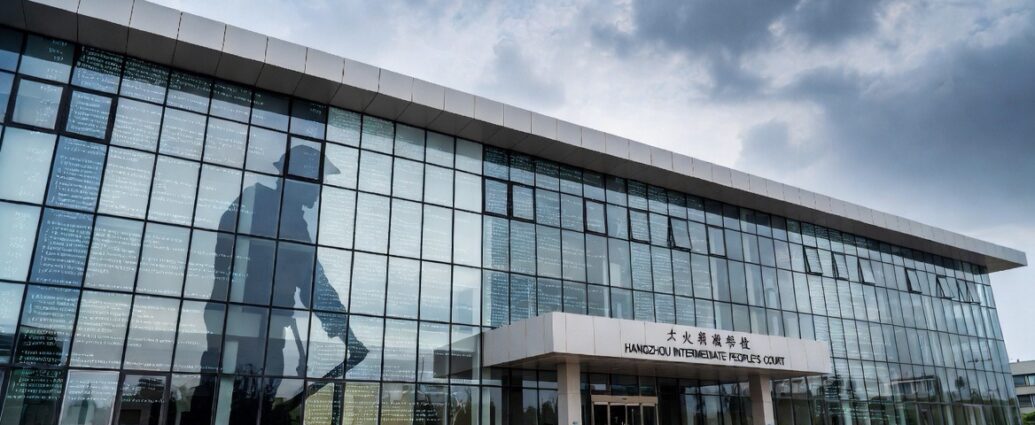
Hangzhou — May 4, 2026 — In a landmark ruling that could reshape AI adoption across China’s tech sector, the Hangzhou Intermediate People’s Court has declared that companies cannot legally fire workers solely to replace them with artificial intelligence systems, setting a significant precedent for labor rights as automation sweeps through the world’s second-largest economy.
The court upheld a lower-court decision that a tech firm in eastern China acted unlawfully when it terminated a senior employee after automating his role with AI and offering him a drastically lower-paying position. The worker refused the demotion, and the company cited “material changes in objective circumstances” under China’s Labor Contract Law as grounds for dismissal. The Hangzhou Intermediate People’s Court rejected that argument, ruling that a company’s voluntary decision to adopt AI technology does not qualify as the kind of unforeseeable, irresistible event that would justify termination without proper process or compensation.
The decision comes as Chinese authorities balance the global race to develop AI with the need to stabilize the domestic labor market amid slowing economic growth and youth unemployment concerns. Analysts say the ruling sends a clear signal to tech giants and startups alike: AI-driven efficiency gains cannot come at the direct expense of human jobs without following strict labor protections.
The economic implications are profound. China’s tech sector has poured billions into AI infrastructure and tools, with companies aggressively automating routine tasks in data collection, quality assurance, coding assistance and customer service to cut costs and boost competitiveness against U.S. rivals. The court’s stance could slow that momentum, forcing firms to invest in retraining, reassignment or severance rather than outright replacement. Economists estimate that widespread AI adoption in China could displace millions of white-collar roles in the coming years; this precedent may now require companies to absorb higher labor costs or face legal challenges and compensation payouts.
The case highlights the tension between innovation and employment stability in China’s state-guided economy. While Beijing has heavily promoted AI as a strategic priority, the ruling underscores that labor protections remain a red line. Union officials and labor advocates have welcomed the decision, viewing it as protection against unchecked automation in a country where formal unions are state-affiliated but worker rights are increasingly scrutinized.
For global investors and tech executives, the ruling adds another layer of uncertainty to China’s AI ambitions. Multinational firms with operations in China and domestic players racing to deploy large language models and automation tools must now factor in stricter labor rules when calculating return on AI investments. The decision could also influence how other countries approach AI regulation, especially as Europe and the U.S. debate similar worker protections.
The ruling is the latest in a series of Chinese court decisions reinforcing that AI adoption is a voluntary business choice — not an “objective circumstance” akin to a natural disaster or economic crisis that automatically voids employment contracts. It reinforces existing provisions in China’s Labor Contract Law that require companies to explore alternatives such as retraining or reasonable reassignment before resorting to layoffs.
As AI continues to transform industries worldwide, China’s courts have drawn a firm line: cost-saving automation alone is not legal grounds for termination. The decision is expected to be closely watched by tech firms, labor groups and policymakers as the AI buildout accelerates.
JbizNews- Desk – China / Labor / AI