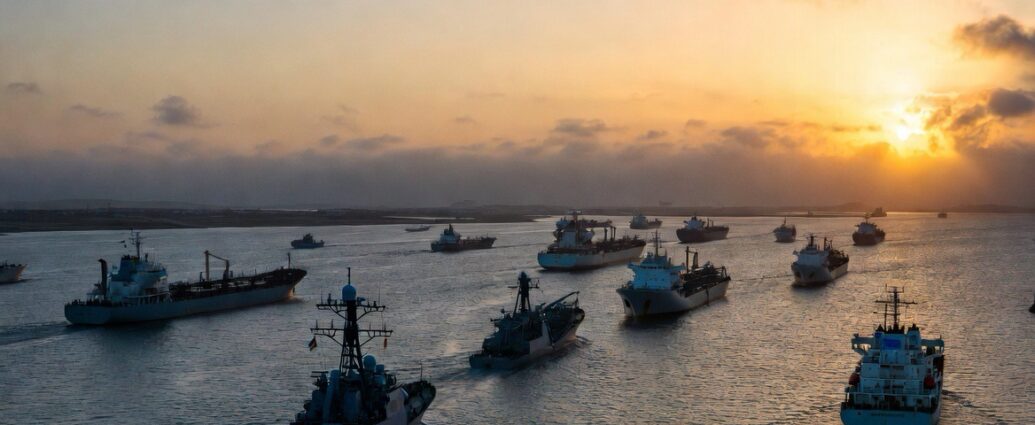
Washington — May 3, 2026 — President Donald Trump announced Sunday that the United States will lead a humanitarian operation beginning Monday morning to free dozens of neutral foreign vessels trapped in the Strait of Hormuz, the critical chokepoint engulfed in regional tensions primarily involving Iran.
The operation marks a significant escalation in U.S. involvement in the maritime crisis that has crippled commercial shipping through one of the world’s most vital energy arteries. Trump described the mission as a necessary step to protect innocent international shipping and restore the free flow of commerce after weeks of blockade-related disruptions tied to the broader Iran conflict.
Dozens of neutral foreign-flagged tankers and cargo ships — many carrying oil, liquefied natural gas and other essential commodities — have been unable to safely transit the strait amid heightened security risks, Iranian toll demands and naval standoffs. The humanitarian effort will involve U.S. naval assets providing escort and safe passage, according to senior administration officials who briefed reporters on condition of anonymity.
The economic stakes could not be higher. Roughly one-fifth of global oil and liquefied natural gas supplies normally pass through the Strait of Hormuz. The prolonged trapping of vessels has already driven up insurance premiums, freight rates and energy prices worldwide, compounding the fuel-price crunch that has hammered airlines from Spirit Airlines in the U.S. to Ryanair and easyJet in Europe. Brent crude futures, already volatile from earlier ceasefire hopes and subsequent diplomatic breakdowns, are expected to face fresh upward pressure as markets digest the news of direct U.S. intervention.
Shipping companies, commodity traders and global supply-chain managers have been on high alert. Major oil majors and tanker operators have diverted vessels or delayed cargoes, adding millions in extra costs that ultimately flow through to consumers at the pump and in higher goods prices. The humanitarian operation is designed to break that logjam, but its success will depend on de-escalation from all parties and safe coordination in a high-tension zone.
Trump’s announcement comes just hours after he rejected Iran’s latest 14-point peace proposal, which had called for resolving the conflict within 30 days. The president made clear Sunday that Washington remains committed to maximum pressure until Tehran makes deeper concessions, particularly on its nuclear program. The humanitarian mission, however, is framed separately as a limited, time-sensitive effort focused solely on protecting neutral shipping rather than broader military objectives.
For the global economy, the operation offers a potential lifeline but also introduces new risks. Successful clearance of the trapped vessels could ease immediate supply bottlenecks and help stabilize energy markets. Failure or any escalation during the escort could trigger renewed closures, higher oil prices and broader inflationary shocks at a time when the weaker U.S. dollar is already driving up grocery and travel costs for American consumers.
Insurance and reinsurance markets are watching closely. Lloyd’s of London and other major underwriters have seen claims and premiums spike since the conflict intensified. Any successful U.S.-led passage could begin to normalize rates, providing relief to shipping firms and ultimately to businesses and consumers reliant on imported energy and goods.
The move also carries diplomatic weight. Trump has positioned the operation as a defense of international norms and free navigation, a principle long championed by the U.S. in the Gulf. Iranian officials have yet to issue an official response, but state media has previously warned against any foreign interference in what Tehran calls its territorial waters and sovereign rights over the strait.
For U.S. businesses and consumers, the development adds another variable to an already turbulent weekend of economic news. From Fed Governor Michael Barr’s warning on private credit contagion to Warren Buffett’s caution on speculative gambling in crypto and prediction markets, markets are navigating multiple crosscurrents. Energy traders, corporate risk officers and logistics executives will be monitoring developments in real time as the operation launches Monday morning.
The humanitarian mission underscores the direct link between geopolitical flashpoints and everyday business costs. With global supply chains still recovering from pandemic-era disruptions and now facing renewed Middle East volatility, the successful release of the trapped vessels could prevent a sharper spike in energy and shipping expenses that would otherwise hit corporate balance sheets and household budgets alike.
Trump’s decision to move forward with the operation reflects both humanitarian and strategic calculations: protect neutral shipping, stabilize energy flows and maintain U.S. leadership in one of the world’s most critical maritime corridors. Whether the mission proceeds smoothly or encounters resistance will shape oil prices, inflation forecasts and investor sentiment heading into the new trading week.
JbizNews- Desk – Middle East / Energy