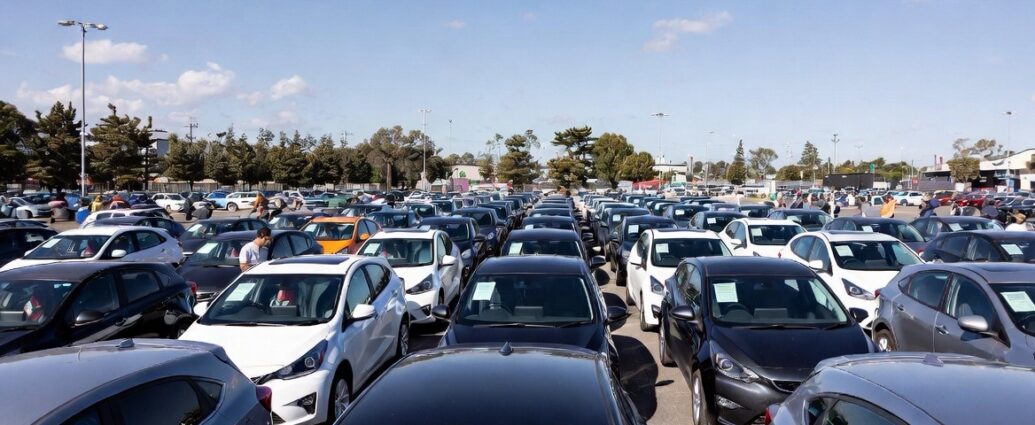
Detroit — May 4, 2026 — Used electric vehicle sales are surging across the United States even as new EV demand has cooled, driven by near-parity pricing with gasoline cars and dramatically lower total ownership costs that are delivering thousands of dollars in savings to budget-conscious buyers. The shift is reshaping the auto market at a time when high gas prices from the ongoing Iran conflict are pushing consumers to seek alternatives that slash fuel and maintenance expenses.
Data released today by Cox Automotive shows used EV sales jumped 27.7% year-over-year in March and were 53.9% higher than February, marking one of the strongest monthly gains on record. In the first quarter alone, roughly 93,500 used EVs changed hands, up 12% from the same period last year. The surge comes as more than 300,000 off-lease EVs are expected to flood the market in 2026 — a 185% increase — giving buyers unprecedented selection of low-mileage, late-model battery-electric vehicles.
Pricing has collapsed to the point where the average used EV now sells for just $1,102 more than a comparable used gasoline car. In March the average transaction price for a used EV was $34,653, down 6.1% from a year earlier, according to Cox. Forty-four percent of used EVs sold for under $25,000, up from 39% just months ago. The price gap that once exceeded $3,900 has essentially vanished, making EVs accessible to a much broader swath of American households.
The real story, however, is in total cost of ownership. A new study from the University of Michigan’s Center for Sustainable Systems, analyzing more than 260,000 used vehicle listings, found that used battery-electric vehicles now deliver the lowest lifetime ownership costs across nearly every vehicle class. For a three-year-old midsize SUV, buyers can save approximately $13,000 over a seven-year ownership period compared with purchasing its gasoline counterpart. Even against used gas models, the savings are substantial because EVs eliminate the single largest ongoing expense for most drivers: fuel.
The U.S. Department of Energy estimates that switching to an EV saves drivers an average of $2,200 per year on fuel alone. Over 200,000 miles, Consumer Reports data shows EV owners save roughly $8,811 on combined fuel and maintenance costs compared with the best-selling gasoline models. Used EVs amplify those advantages. With fewer moving parts, regenerative braking, and no oil changes, maintenance costs run 30-40% lower than for internal-combustion vehicles — a gap that widens as cars age and gas models require more expensive repairs.
Insurance remains higher for EVs — roughly 50% more on average according to recent Insurify data — but that premium is more than offset by fuel and service savings for most drivers. Depreciation, once a major hurdle for new EVs, has moderated dramatically on the used market as supply grows and consumer acceptance rises.
High gasoline prices, now hovering near multi-year highs amid the Iran tensions and Strait of Hormuz disruptions, have accelerated the shift. Search interest for used EVs on major platforms has risen sharply, with many shoppers citing pump prices as the tipping point. “You can get a pretty nice used EV for under $25,000, which is not easy to do on the market at large,” noted Jessica Caldwell, executive director of insights at Edmunds.
The economic ripple effects extend beyond individual buyers. Lower ownership costs for used EVs are helping to ease pressure on household budgets strained by the weaker dollar and broader inflationary forces. At the same time, the flood of off-lease EVs is creating opportunities for dealers and fleets while pressuring new-car pricing. Automakers and lenders are watching closely as the used market increasingly influences residual values and leasing strategies.
Challenges remain. Battery health and range anxiety still concern some buyers, though independent testing services like Recurrent Auto report that the vast majority of used EVs retain strong battery capacity. Charging infrastructure, while expanding, remains uneven outside major metros. And insurance costs, though declining as data improves, continue to be a hurdle for some.
For American families and fleet operators, the math is increasingly clear: in the used market, electric vehicles are no longer a premium choice — they are often the lowest-cost option over the life of the vehicle. With hundreds of thousands more high-quality, low-mileage EVs expected to hit lots in the coming months, the window for significant savings is wide open.
The used-EV boom adds another layer to the weekend’s heavy slate of breaking business news, from the U.S.-led humanitarian operation in the Strait of Hormuz to Fed Governor Michael Barr’s private-credit warning and the dollar’s 10% slide. As gas prices remain elevated and lease returns accelerate, more drivers are discovering that going electric — even on the used lot — is not just environmentally responsible. It is now often the smartest financial decision on four wheels.
JbizNews- Desk – Auto / Economy