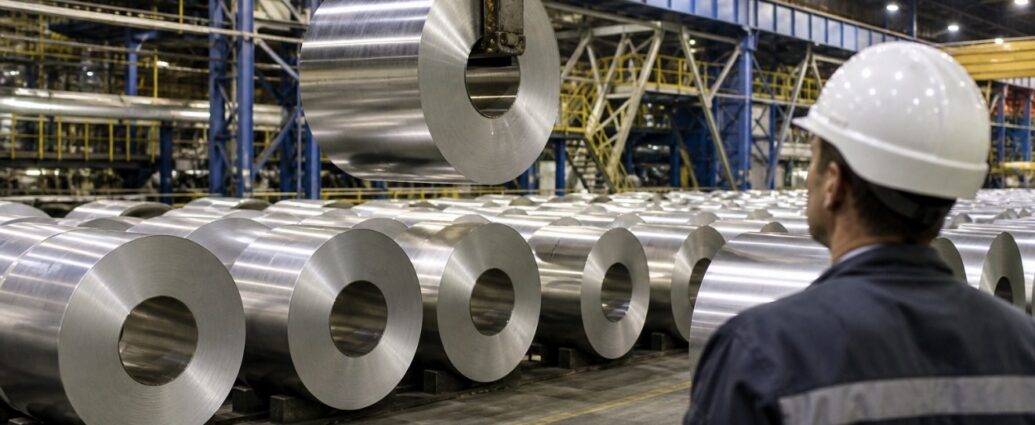
American automakers are being squeezed by a rare and brutal convergence: a 50% U.S. tariff on imported aluminum, a major domestic supplier still recovering from two fires, and a war in the Middle East that has disrupted global aluminum supply chains and sent prices sharply higher. The combined pressure is adding billions of dollars in costs to an industry already navigating a difficult market, and consumers buying new vehicles may ultimately pay the price.
The three biggest U.S. automakers have warned that commodity inflation tied to the Iran war will cost them about $5 billion this year, as the conflict squeezes supplies of aluminum, plastics and other inputs and raises the prospect of higher vehicle prices. 
The Iran War’s Role
The closure of the Strait of Hormuz has made a bad situation significantly worse. Nine percent of the world’s seaborne aluminum transits the Strait of Hormuz annually, and the collapse of shipping through the waterway has created an immediate supply shock for the metal, forcing producers worldwide to scramble for alternative sources at premium prices. 
Aluminium Bahrain — known as Alba, which operates the world’s largest single-site aluminum smelter with annual capacity of 1.6 million tonnes — declared force majeure on deliveries and cut output by 19%, citing its inability to load shipments through the effectively closed Strait of Hormuz. Qatalum, the Qatar-based joint venture between Norsk Hydro and Qatar Aluminium Manufacturing, announced a controlled production shutdown following natural gas shortages caused by Iranian strikes. 
At the outbreak of the Iran conflict on February 28, three-month LME aluminum futures jumped as much as 10% by mid-March. Guillaume Osouf, principal analyst at CRU, warned that “a prolonged conflict will likely drastically change our market outlook for the rest of the year due to the lasting impact this will have on global supply.” 
The Novelis Fire That Started It All
Even before the Iran war, Ford Motor was already dealing with a supply chain crisis of its own. Multiple fires at a facility owned by Novelis — Ford‘s primary aluminum supplier — knocked a critical hot mill in Oswego, New York offline for months. Ford incurred a $2 billion headwind from those supply disruptions, on top of a roughly $2 billion hit from tariffs in 2025, which nearly doubled the company’s projections from as recently as October, according to President and CEO James Farley. 
The Novelis Oswego plant is the largest domestic aluminum rolling facility in the U.S. and supplies aluminum sheets critical for vehicle production — especially for Ford trucks like the F-150. Ford is Novelis‘s largest customer because of its trucks’ aluminum-heavy bodies. The supply disruptions forced Ford to warn that production could drop by up to 100,000 F-Series pickup trucks, potentially costing the company as much as $2 billion. 
F-150 sales were down 16% year over year in the first three months of 2026 as a direct result of the inventory shortage. 
The Tariff Problem
With the domestic Novelis plant sidelined, Ford and other automakers were forced to import aluminum from overseas — only to run straight into the Trump administration’s 50% tariff on imported aluminum. Novelis tried to offset lost production by sourcing aluminum from its plants in South Korea and Europe, but the imported metal is subject to a 50% duty, compounding the financial damage for automakers. 
Ford petitioned the Trump administration for temporary tariff relief, at least until the Oswego plant returns to full production. The administration rejected the request. Ford CFO Sherry House said the company still expects to face a $1 billion tariff impact in 2026 even with offsets in place. “There will be tariffs and premium freight associated with that supply continuity of aluminum until we can get the Novelis hot mill back up and running sometime between May and September,” House said. 
A Gradual Path to Recovery
Novelis confirmed it expects its damaged hot mill to resume production by the end of the second quarter of 2026. The rest of the Oswego facility has continued operating without disruption since November, including cold mill, heat treatment production, and automotive finishing and shipping. 
The broader pressure on American manufacturers extends well beyond automakers. Higher aluminum costs flow through to aerospace, defense, food and beverage packaging and appliances — and American firms now pay substantially more for the metal than competitors in other markets, putting them at a significant competitive disadvantage. 
For Ford and its rivals, the road back to normal aluminum costs runs through two separate bottlenecks: a plant in Oswego that must fully restart, and a strait in the Middle East that must reopen. Until both happen, the squeeze on the auto industry — and the consumers who buy its vehicles — will continue.
By JBizNews Desk | May 4, 2026
© JBizNews.com. All rights reserved. This article is original reporting by JBizNews Desk. Unauthorized reproduction or redistribution is strictly prohibited.