This week, the Bank of Japan wrecked havoc on the foreign exchange market. What’s the Yen Carry Trade, how does an intervention work, and what does it all mean?
Yen Carry Trade – A Massive Money Printer
Years ago, a massive money printer emerged out of Japan. It was called “The Yen Carry Trade”, and it provided trillions of dollars of capital that would flow into US Treasuries, stocks, and other financial assets.
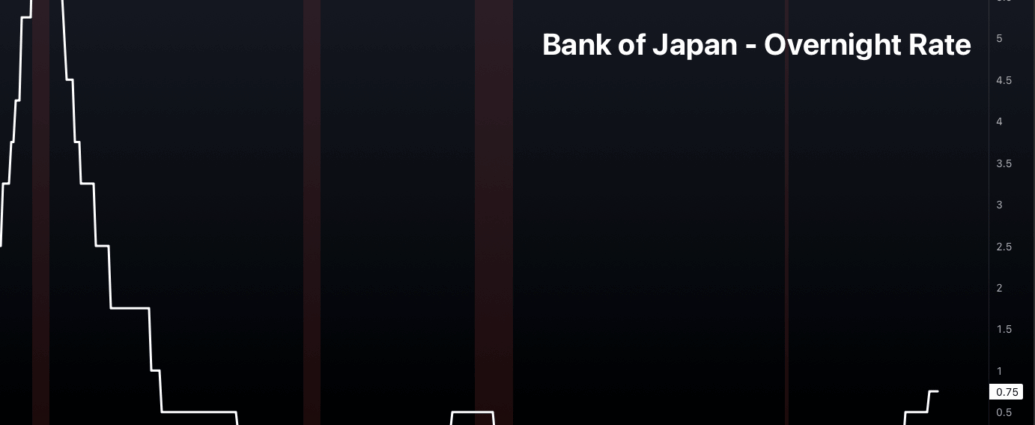
To deal with the enormous economic pain that Japan was suffering after the 1990 bubble burst, the Bank of Japan took its overnight interest rate to 0.0%, and from 2016-2024, even negative.
Japanese overnight interest rate, 1990-present
Remember, the central bank’s overnight interest rate is the price of money. In this case, they made the Yen not just free, but for a brief period, they were paying you to take out Yen loans.
It worked.
Trillions of dollars worth of Yen-denominated loans were taken out. But due to the historically easy monetary policy of ZIRP/NIRP, people didn’t want to hold onto a currency whose value was being crushed. Therefore, people immediately sold the Yen they had just gotten and bought dollars.
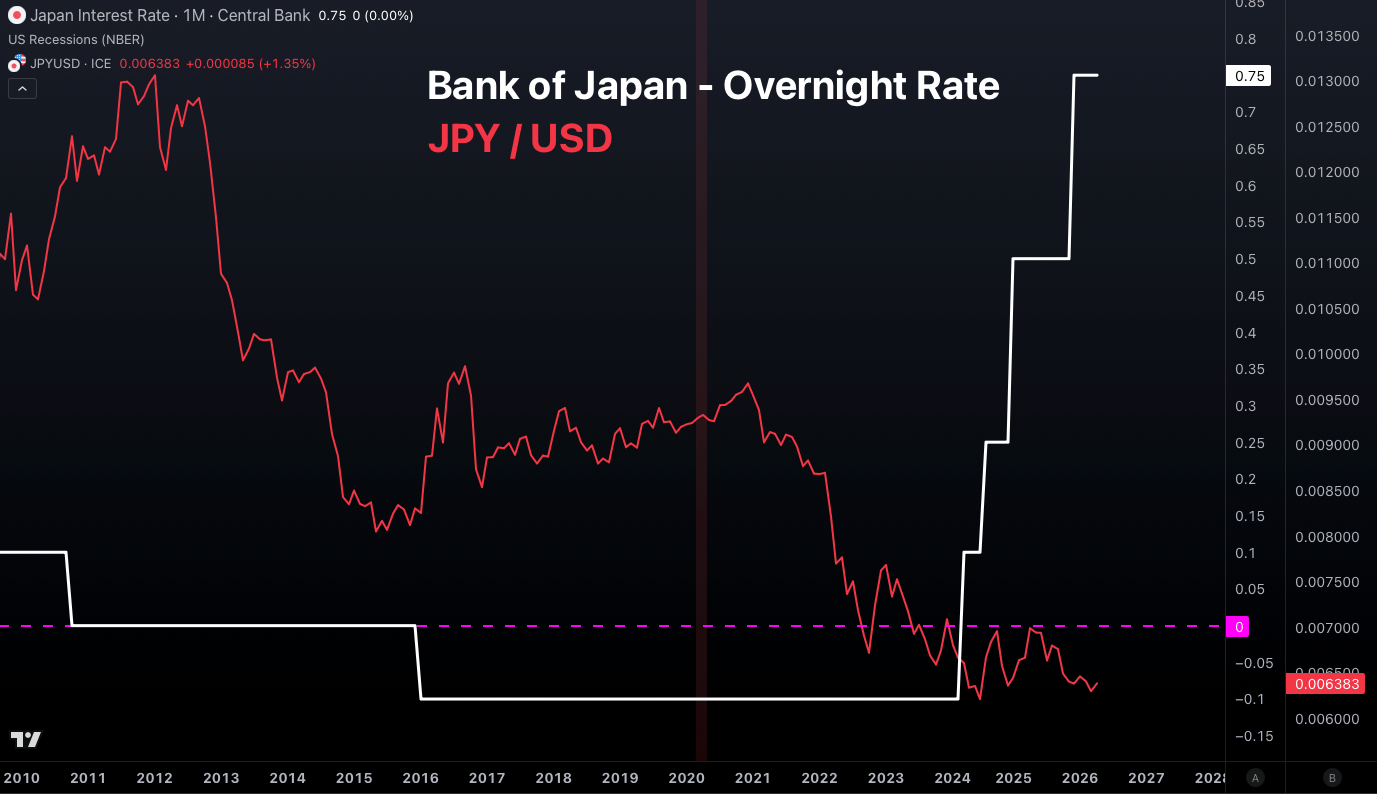
Overnight rate versus JPY/USD exchange rate
This selling pressure, coupled with poor economic growth and easy monetary policy, led to an immense amount of weakness for the Yen. In the past 15 years, the Yen has lost 49% of its value versus the dollar.
Taking out Yen loans at 0%, buying dollars and just waiting for the currency to weaken (which already would have yielded a positive return), was not enough-
Investors took out JPY at 0%, sold the Yen/bought dollars, then put those dollars into positive yielding instruments like US Treasuries, Mortgage Backed Securities, and even stocks. Not only were they making money from the dollar strengthening (meaning over time, fewer dollars would be required to pay their Yen loan back), but they also had a positive return from the dollar investment into bonds, stocks, etc.
What could go wrong?
The Problem
There was one small problem- the Yen couldn’t be allowed to weaken too much, or else Japan would suffer from the problem of domestic inflation given their reliance on food and energy imports.
This wasn’t too much of a concern for much of the last two decades (as GDP, inflation and wages were occasionally even negative), …





This post was originally published here