By JBizNews Desk | Monday, May 4, 2026
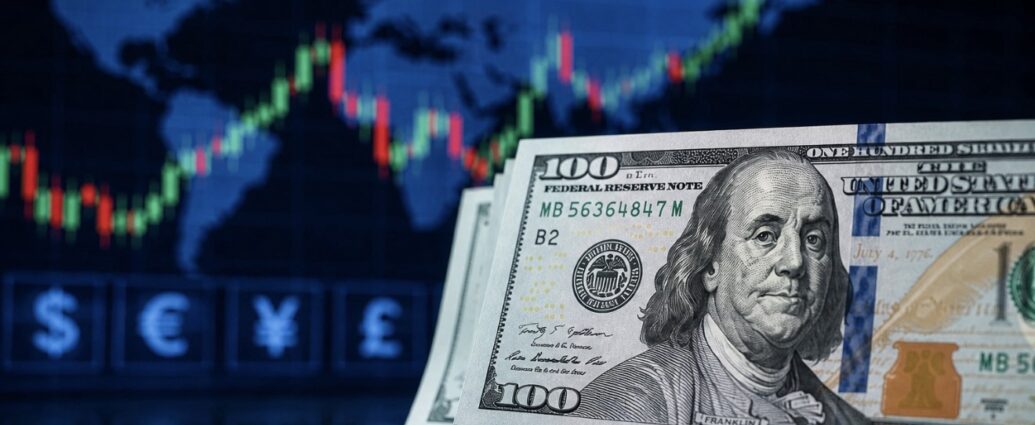
The U.S. dollar strengthened against major global currencies Monday as investors sought safety amid mounting uncertainty over global economic growth, reinforcing the greenback’s position as the world’s primary reserve currency during periods of market stress.
The dollar index rose steadily, supported by a combination of resilient U.S. economic data and weaker outlooks across key international economies. The move reflects a broader shift in investor positioning, with capital flowing away from risk-sensitive assets and toward dollar-denominated holdings.
Currency markets are being shaped by diverging economic trajectories. While the U.S. economy continues to show relative strength, growth in parts of Europe and Asia has slowed, prompting concerns about global demand and trade flows. These dynamics have widened interest rate differentials, further supporting the dollar.
Win Thin, Global Head of Currency Strategy at Brown Brothers Harriman, said “the dollar is benefiting from both relative economic strength in the U.S. and ongoing uncertainty abroad, making it the preferred safe-haven asset in the current environment.”
A stronger dollar carries significant implications for global markets. For multinational corporations, it can weigh on earnings by reducing the value of overseas revenues when converted back into dollars. This currency headwind is particularly relevant for large U.S. firms with substantial international exposure.
Emerging markets face even greater challenges. Many developing economies carry significant levels of dollar-denominated debt, and a stronger dollar increases the cost of servicing that debt. This can strain public finances and limit economic growth, particularly in countries already facing fiscal pressures.
Commodity markets are also affected. Since most commodities are priced in dollars, a stronger currency can make them more expensive for buyers using other currencies, potentially dampening demand. This dynamic can influence prices for oil, metals, and agricultural products.
At the same time, the dollar’s strength is reinforcing global financial conditions. Tighter conditions can slow capital flows into riskier markets and increase volatility, particularly in emerging economies.
Kristalina Georgieva, Managing Director of the International Monetary Fund, has previously warned that “currency strength in advanced economies can create spillover effects that amplify vulnerabilities in emerging markets.”
Despite these challenges, the dollar’s strength is underpinned by structural factors, including the depth of U.S. financial markets and the currency’s central role in global trade and finance. During periods of uncertainty, these attributes make the dollar a natural destination for capital.
Looking ahead, the trajectory of the dollar will depend on both domestic and global developments. If U.S. economic data remains strong and the Federal Reserve maintains a cautious stance on rate cuts, the dollar could continue to appreciate.
However, any signs of weakening in the U.S. economy or a shift in Fed policy could alter that trajectory, leading to increased volatility in currency markets.
What comes next: Investors will be watching global economic data and central bank signals closely, as shifts in growth expectations and policy divergence will continue to drive currency movements in the months ahead.
JBizNews Desk