By JBizNews Desk | Tuesday, May 5, 2026
Uber is making one of its most aggressive moves yet to transform its platform beyond transportation, unveiling a sweeping expansion that brings hotel bookings, in-car food ordering, and deeper subscription integration into a single app experience designed to capture more of users’ daily spending.
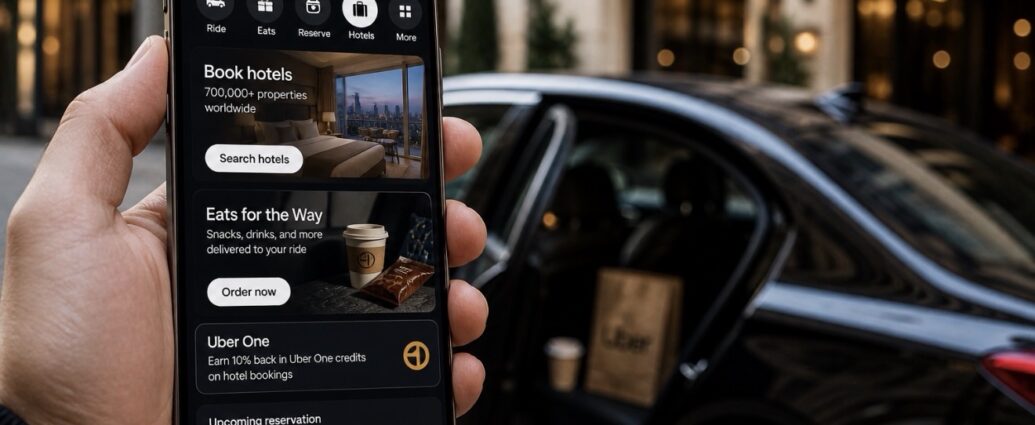
At the center of the announcement is a new partnership with Expedia Group, allowing Uber users to book hotels directly within the app, with access to more than 700,000 properties globally. The move marks a major step into the travel space, positioning Uber not just as a mobility provider, but as a broader lifestyle and commerce platform.
Uber said its Uber One members will receive 10% back in credits on hotel bookings, along with discounts of at least 20% on a rotating selection of more than 10,000 hotels worldwide. The integration is designed to be seamless, allowing users to plan, book, and manage travel without leaving the Uber ecosystem.
Dara Khosrowshahi, CEO of Uber, framed the strategy as part of a broader shift toward simplifying everyday life through a single interface. “We’re focused on helping people spend less time managing logistics and more time actually living their lives, with Uber becoming the platform that ties it all together,” he said.
The expansion goes beyond travel. Uber also introduced “Eats for the Way,” a feature that allows premium Uber Black riders to pre-order snacks, coffee, or light meals ahead of a scheduled ride. Orders are prepared in advance and placed inside the vehicle before pickup, creating a more personalized, concierge-style experience.
The feature is launching initially in six major U.S. markets—Atlanta, Austin, Los Angeles, Philadelphia, San Diego, and San Francisco—with expectations for broader rollout if adoption proves strong. The offering targets higher-value customers and aligns with Uber’s ongoing push into premium services.
Behind both launches is a clear strategic objective: deepen user engagement and increase the value of Uber’s subscription ecosystem.
Uber One, the company’s membership program, has grown rapidly, reaching approximately 46 million subscribers and now accounting for more than 40% of total platform bookings. By layering additional benefits—such as hotel rewards, exclusive discounts, and integrated services—Uber is aiming to make the subscription more indispensable and harder to cancel.
Industry analysts view the move as a direct play to compete not just with ride-hailing rivals, but with a broader set of platforms including travel booking sites, food delivery apps, and even elements of digital wallets and lifestyle super-apps seen in international markets.
The hotel integration, in particular, places Uber in more direct competition with established travel platforms, including online travel agencies and booking aggregators. However, Uber’s advantage lies in its existing user base and daily engagement, which could allow it to capture incremental travel spend without requiring users to adopt a new platform.
At the same time, the initiative reflects a broader trend in tech toward consolidation of services. Companies are increasingly seeking to become “one-stop” platforms, capturing multiple aspects of consumer behavior within a single app to drive retention and monetization.
For Uber, the opportunity is significant. Travel bookings represent a large and high-margin category, while in-car commerce opens additional revenue streams tied to its core mobility business. If executed effectively, the combination could increase average revenue per user and strengthen long-term customer loyalty.
However, execution risks remain. Integrating travel services into a ride-hailing app introduces new operational complexities, including customer service expectations, pricing transparency, and competition with specialized platforms. Additionally, expanding into premium offerings requires maintaining a consistent and high-quality user experience.
Still, the company appears confident in its direction. By leveraging partnerships rather than building infrastructure from scratch, Uber is able to scale quickly while minimizing upfront investment.
What comes next: As Uber continues to expand beyond transportation, the success of these initiatives will depend on adoption rates and user behavior. If customers embrace the convenience of a unified platform, Uber could significantly increase its role in everyday commerce—reshaping how users book travel, order food, and move through their day.
JBizNews Desk