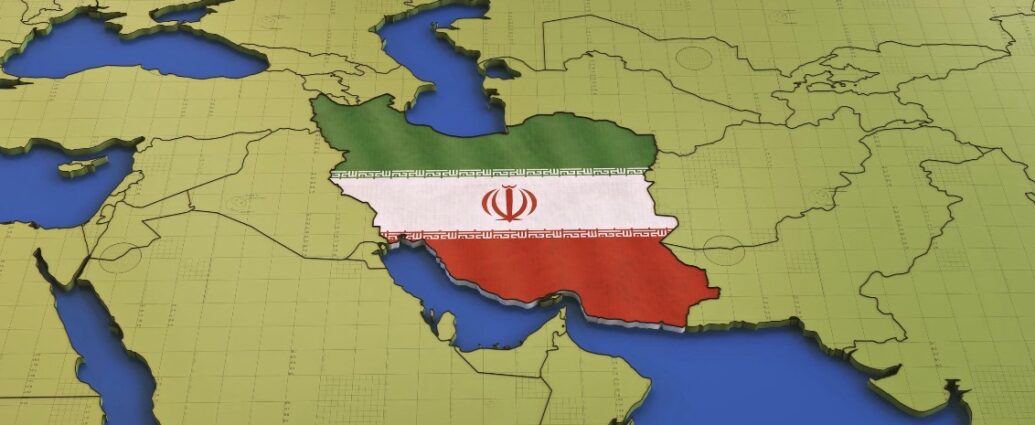
Iran resumed missile and drone attacks against the United Arab Emirates on May 4, sharply escalating tensions in the Persian Gulf and threatening a fragile ceasefire that had held since early April, while sending oil prices higher and global equities lower. Lloyd Austin Secretary of Defense United States Department of Defense said in a statement that the situation poses “a serious risk to regional stability and global energy flows,” underscoring the strategic importance of the Strait of Hormuz, a critical artery for roughly 20% of the world’s oil supply.
The UAE confirmed that multiple aerial threats were intercepted, including ballistic and cruise missiles, as well as drones targeting both urban and energy infrastructure. Mohamed bin Zayed Al Nahyan President United Arab Emirates said the country’s air defense systems “successfully neutralized the majority of incoming threats,” adding that authorities were assessing limited damage from an incident near Fujairah, where a drone reportedly sparked a fire at an oil facility. Emergency crews contained the blaze, and no casualties were immediately reported, according to government officials.
The escalation coincided with a renewed U.S. effort to safeguard commercial shipping through the Strait of Hormuz under a maritime security initiative aimed at restoring tanker traffic. Erik Kurilla Commander U.S. Central Command confirmed that two U.S.-flagged commercial vessels successfully transited the strait under military coordination earlier in the day. “Freedom of navigation remains a core priority,” Kurilla said, noting that increased naval presence would continue as long as threats persist in the waterway.
Iran’s actions have effectively disrupted confidence in safe passage through the strait, contributing to a sharp rise in global oil prices. Brent crude surged by an estimated 6% intraday, while benchmark equity indices across Asia and Europe declined amid heightened geopolitical risk. Fatih Birol Executive Director International Energy Agency warned that “any sustained disruption in the Gulf could tighten global supply balances significantly,” particularly as spare production capacity remains limited outside a handful of major producers.
Energy infrastructure in the UAE has already faced measurable strain. During the earlier phase of the conflict, production dropped by between 500,000 and 800,000 barrels per day due to repeated attacks and precautionary shutdowns. Analysts now warn that a prolonged resumption of hostilities could deepen these losses. Amin Nasser Chief Executive Officer Saudi Aramco said in a recent industry briefing that “regional instability is translating directly into supply volatility,” emphasizing that markets remain highly sensitive to developments in Gulf security.
The renewed violence undermines a ceasefire agreement that took effect on April 8 and was later extended to facilitate diplomatic negotiations. U.S. officials had indicated as recently as last week that hostilities had effectively ceased. Antony Blinken Secretary of State United States Department of State told lawmakers that there had been “no direct exchanges of fire involving U.S. forces since early April,” describing the pause as a window for de-escalation that now appears to be closing.
The broader conflict has already imposed a significant human and economic toll. UAE authorities reported that, between late February and early April, air defense systems intercepted more than 500 ballistic missiles and over 2,000 drones. Abdullah bin Zayed Al Nahyan Minister of Foreign Affairs United Arab Emirates said the attacks resulted in multiple fatalities and hundreds of injuries, calling the campaign “a sustained threat to civilian safety and economic infrastructure.”
Iran has previously outlined conditions for a comprehensive resolution, including sanctions relief and the withdrawal of foreign military forces from the region. However, diplomatic progress remains uncertain. Hossein Amir-Abdollahian Foreign Minister Iran said in prior remarks that “constructive dialogue requires consistency from all parties,” signaling frustration with shifting negotiation positions. As of May 4, Iranian authorities had not issued an official public response to the latest round of strikes.
For global businesses and investors, attention is now focused on three immediate variables: whether the United States formally classifies the attacks as a violation of the ceasefire, the operational continuity of maritime security initiatives in the Strait of Hormuz, and Iran’s next strategic move. Jane Fraser Chief Executive Officer Citigroup noted in a client briefing that “geopolitical risk is once again a primary driver of market volatility,” particularly in energy and shipping sectors.
Looking ahead, the trajectory of the conflict will likely hinge on whether diplomatic channels can be reactivated quickly enough to prevent further escalation. A sustained disruption in Gulf energy flows could have ripple effects across inflation, supply chains, and industrial output worldwide. As Kristalina Georgieva Managing Director International Monetary Fund recently cautioned, “geopolitical fragmentation is increasingly intersecting with economic stability,” suggesting that continued instability in the region could complicate the global growth outlook in the months ahead.
JBizNews Desk