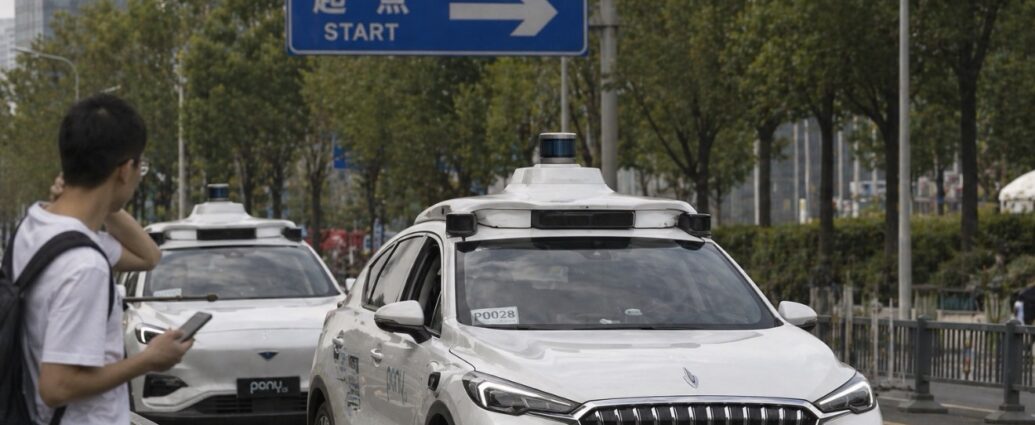
China’s auto regulator has moved to slow the rollout of driverless vehicles after a string of safety concerns, adding fresh pressure on a sector that Beijing had promoted as a strategic technology. Reuters reported in recent coverage of China’s intelligent-vehicle policy that regulators have stepped up scrutiny of advanced driver-assistance and autonomous-driving claims, while China’s Ministry of Industry and Information Technology said in an April notice that carmakers must “fully conduct combined driving-assistance testing and validation” and avoid exaggerated marketing around self-driving functions.
The tougher stance matters well beyond one market because China has become one of the world’s largest proving grounds for robotaxis, with companies including Baidu, Pony.ai and WeRide racing to expand paid services. In a statement tied to its Apollo Go business, Baidu has said it remains committed to “safe and responsible” deployment of autonomous mobility, while Bloomberg and Reuters have both reported that local approvals in China increasingly depend on tighter operational reviews, emergency-response planning and software validation after high-profile incidents in both China and the U.S.
The latest caution from Beijing follows broader concern over how autonomous systems behave in edge cases, from stalled vehicles to interactions with emergency responders. China’s Ministry of Industry and Information Technology, together with other agencies, said in its guidance that companies should improve over-the-air software management and strengthen risk controls, according to the official release, a signal that regulators want fewer surprises on public roads as pilot programs scale.
The U.S. experience has added to that regulatory mood. General Motors in December said it would end funding for its Cruise robotaxi development program, with Chief Executive Mary Barra saying in the company’s statement that “the market for robotaxis is not going to develop as quickly as we had anticipated,” a sharp reversal after Cruise’s 2023 safety crisis. That retreat, reported by Reuters and other outlets, gave regulators globally a high-profile example of how quickly confidence can erode when autonomous operations run into public-safety and compliance problems.
At the same time, U.S. rivals continue to expand, though not without scrutiny. Waymo said in a company blog post that it provides “over 250,000 paid trips each week” across markets including Phoenix, San Francisco, Los Angeles and Austin, underscoring that commercial demand remains real even as regulators probe incidents. Yet the National Highway Traffic Safety Administration has opened multiple investigations into automated-driving behavior across the industry, and the agency said in public filings that it evaluates whether such systems appropriately detect and respond to roadway hazards, emergency vehicles and unusual traffic conditions.
Tesla has become another focal point in the debate over autonomy and oversight. In April, Reuters reported that Chinese regulators had met with Tesla over data-security and mapping issues tied to the company’s driver-assistance rollout, while in the U.S. the NHTSA has continued to examine crashes involving Autopilot and Full Self-Driving features. Elon Musk has repeatedly said on X and on earnings calls that Tesla is “extremely focused on safety” and that autonomous capability remains central to the company’s future, but regulators in both countries have made clear that promotional claims will face closer examination.
China’s policy shift also lands at a delicate moment for domestic competition. Pony.ai said in recent company materials that it holds permits to operate fully driverless robotaxis in parts of Beijing, Shanghai, Guangzhou and Shenzhen, while WeRide has said it operates in several Chinese cities and overseas markets. Tony Han, chief executive of WeRide, said at public events that autonomous driving can ultimately become “significantly safer than human driving,” but analysts cited by Bloomberg and Reuters have warned that commercialization timelines still depend less on technical demos than on regulators’ willingness to approve larger fleets and broader service zones.
Investors and executives are watching the policy direction closely because China’s robotaxi economics rely on scale. Goldman Sachs analysts said in prior research notes cited by financial media that autonomous mobility in China could become a sizable long-term market if operators win permission to remove safety drivers and expand utilization rates, but they also said regulation remains the key bottleneck. That leaves companies balancing software iteration, capital spending and local-government relations at a time when authorities in both China and the U.S. are signaling that safety evidence, not ambition, will determine the pace of deployment.
What comes next now looks more procedural and more consequential. China’s regulators have indicated through official guidance that they want stricter testing, clearer marketing language and stronger software controls before broader rollout, while U.S. agencies continue to investigate whether existing systems can safely handle real-world complexity. For robotaxi operators, the next phase will hinge on permit decisions, software updates and incident data over the coming quarters; for the broader auto industry, those rulings will shape who gets to scale first in a market many executives still describe as transformative, but that regulators increasingly insist must earn public trust one approval at a time.
JBizNews Asia Desk