By JBizNews Desk –INGOLSTADT, Germany
May 6, 2026
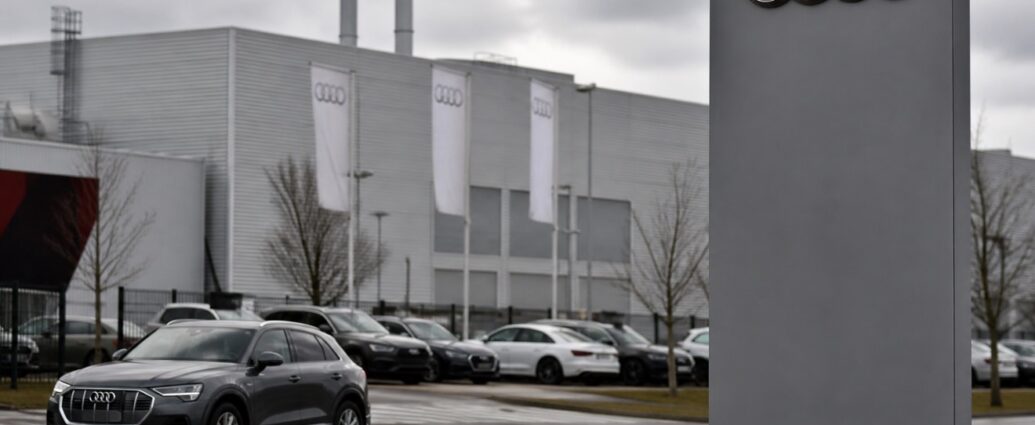
Audi is accelerating cost-cutting efforts as a renewed tariff threat from President Donald Trump puts fresh pressure on one of the auto industry’s most exposed luxury brands — a company that produces no vehicles in the United States and has already absorbed billions in tariff-related costs.
A New Tariff Threat
The Trump administration is weighing an increase in tariffs on European Union-made vehicles from 15% to 25%, a move analysts say could cost automakers billions and push a significant share of those costs onto consumers.
Matthias Schmidt, an independent automotive analyst in Germany, identified Audi and Porsche as among the most vulnerable, given their lack of manufacturing footprint in North America — leaving them fully exposed to import duties.
The timing is particularly difficult for Audi. Tariffs dealt the company a €1.2 billion hit in 2025, contributing to a 14% drop in operating profit to €3.4 billion. The broader Audi Group — which includes Lamborghini, Bentley, and Ducati — saw its operating margin fall to 5.1%, down from 6.0% a year earlier.
Pressure Across Volkswagen Group
The strain extends across parent company Volkswagen Group, which reported a 14% decline in operating profit to €2.5 billion in the first quarter of 2026, as revenue slipped 2.5% to €75.7 billion amid weak demand in both the United States and China.
Arno Antlitz, Volkswagen’s chief financial officer, said tariffs are adding roughly €4 billion in annual costs to the group.
“We will have to adjust capacity and continue optimizing costs at our plants,” Antlitz said.
Volkswagen has already announced plans to cut 50,000 jobs across the group by the end of the decade, with reductions affecting Audi and other divisions.
Audi’s Cost-Cutting Response
Jürgen Rittersberger, Audi’s chief financial officer, said the company is moving aggressively to offset mounting pressures.
“We are responding to the challenging overall economic situation and intensified competition with stringent cost control measures,” Rittersberger said. “At the same time, we are making our business model future-proof and resilient.”
Audi plans to eliminate up to 7,500 jobs in the coming years and is targeting more than €1 billion in annual savings through productivity gains, manufacturing flexibility, and reduced overhead at its German plants.
Despite the headwinds, Audi is projecting an operating margin recovery to 6%–8% in 2026, signaling confidence in its restructuring efforts.
Gernot Doellner, Audi’s chief executive, said the company is evaluating whether to establish its first U.S. manufacturing plant — a move that could mitigate tariff exposure.
A decision could come as early as this year, though Volkswagen CEO Oliver Blume has indicated such an investment would likely depend on securing tariff relief.
Impact on U.S. Buyers
For American consumers, the cost pressure is already visible.
Audi has raised prices across most of its 2026 lineup, with increases ranging from $800 to $4,100 depending on the model. To soften the impact, the company is bundling three years of prepaid maintenance covering up to 30,000 miles.
Sales data reflects the strain. In the first quarter of 2026, key Audi SUVs declined sharply:
- Q5 sales fell 26% to 10,100 units
- Q7 dropped 30% to 3,554 units
- Q8 declined 25% to 2,285 units
Across the industry, tariff-related costs are mounting. Automakers have absorbed an estimated $35.4 billion in losses since tariffs on imported vehicles and parts were implemented in 2025, according to an analysis by Automotive News. Toyota has been among the hardest hit, projecting $9.1 billion in tariff costs for its fiscal year ending March 2026.
What Comes Next
For Audi, the stakes are unusually high.
A brand built on European manufacturing and global supply chains now faces a potential escalation in trade barriers, declining U.S. demand, and the need for a costly structural overhaul — all at once.
If tariffs rise to 25%, the company will be forced to make a strategic choice: absorb further margin pressure, pass costs to consumers, or accelerate a shift toward localized production.
For buyers, the outcome is already becoming clear.
Higher prices, fewer incentives, and tighter supply could define the next phase of the U.S. luxury car market — with Audi at the center of the shift.
JBizNews Desk