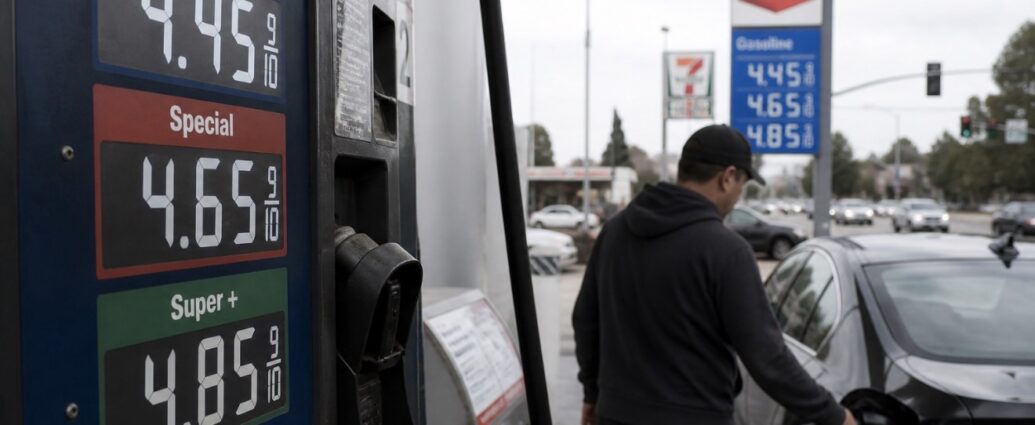
The U.S.-Iran war that began February 28 has moved well beyond the battlefield and financial markets — it is now hitting American households directly, driving up the cost of gas, groceries, and everyday essentials, with economists warning the pressure on family budgets is only beginning.
The Consumer Price Index surged 0.9% in March on a seasonally adjusted basis, up sharply from 0.3% in February, fueled primarily by a 10.9% jump in energy prices and a 21.2% spike in gasoline that accounted for nearly three-quarters of the monthly increase. On a year-over-year basis, inflation reached 3.3%, its highest level in nearly two years, signaling that the war’s economic impact is spreading quickly through the system.
Mark Malek, Chief Investment Officer at Siebert Financial, said the immediate pain at the pump is just the beginning. “The gas pump is only the opening act. The real household inflation hit comes later, hidden inside everyday products,” he explained, pointing to the lagged effect energy costs have across the broader economy.
The Federal Reserve’s preferred inflation gauge, the Personal Consumption Expenditures index, rose 0.7% in March, pushing the annual rate to 3.5%. Core PCE, which excludes food and energy, came in at 3.2%, but economists warn that figure is likely to climb. Analysts speaking to CBS News expect inflation to remain elevated throughout 2026, with some projections showing core PCE approaching 4% by year-end — double the Fed’s long-standing 2% target.
At the Pump and in the Aisle
Gasoline prices have already reached historic levels. The national average hit $4.45 per gallon on May 2, with analysts warning prices could climb to $5 by Memorial Day. In California, drivers are already paying an average of $6.01 per gallon — the highest in the country and levels not seen since late 2023.
But the ripple effects extend far beyond fuel. The U.S. Department of Agriculture now projects food-at-home prices will rise 3.1% in 2026, nearly double earlier forecasts. David Ortega, food economist at Michigan State University, emphasized how deeply fuel costs are embedded in the food system. “Tractors run on diesel. The majority of the food transported in the U.S. moves by truck,” he said. “Higher fuel costs translate directly into higher costs throughout the supply chain — and eventually to the consumer.”
Beef and veal prices were already 12.1% higher in March compared with a year earlier, with the USDA forecasting an additional 6.3% increase. Prices are also expected to rise above historical averages for seafood, fresh vegetables, processed foods, sugar, and beverages. Industry data shows fuel can account for 15% to 30% of total food costs, meaning sustained energy increases quickly cascade into higher grocery bills nationwide.
The Deeper Economic Threat
Beyond inflation, economists are increasingly concerned about “demand destruction” — the point at which persistently high prices force consumers to permanently reduce spending. Joe Brusuelas, Chief Economist at RSM US, warned, “Time is not the ally of the American economy. There’s demand destruction that started down market that can’t be undone.”
Data from the Federal Reserve Bank of New York shows lower- and middle-income households are increasingly relying on credit cards and loans to maintain spending. At the same time, Moody’s Analytics, led by Chief Economist Mark Zandi, estimates the top 10% of earners now account for roughly half of all consumer spending — a concentration that leaves the economy vulnerable if broader households begin pulling back.
The Conference Board reports a clear shift in consumer behavior: spending is increasingly focused on essentials and lower-cost services. Categories like restaurants, personal care, and streaming remain resilient, while discretionary spending on travel and hotels has weakened, falling behind even utilities and healthcare in priority.
Zandi underscored the permanence of the current cost pressures. “There’s no going back on oil prices, at least not any time in the near future,” he said. “Anything that’s put on a truck is going to cost more — from groceries to Amazon packages.”
What Comes Next
Economists say the Federal Reserve faces a narrowing path forward. With inflation rising and economic growth slowing, policymakers risk worsening the slowdown if they raise rates — but risk entrenching inflation if they do not. Scott Lincicome, Vice President of General Economics at the Cato Institute, put it bluntly: “Consumers want deflation, and we’re not getting that. Prices are likely to remain higher than people want.”
For American families, the reality is immediate and unavoidable. Fuel costs more. Food costs more. Everyday goods cost more. Malek described the cumulative impact clearly: “Each increase in isolation feels manageable. Together, they represent a structural repricing of the American household budget.”
How long that repricing lasts may depend on one critical variable still unresolved — the duration of disruptions to global oil flows, particularly through the Strait of Hormuz. Until that stabilizes, economists warn, the pressure on American households is unlikely to ease.
JBizNews Desk
© JBizNews.com. All rights reserved.