By JBizNews Desk
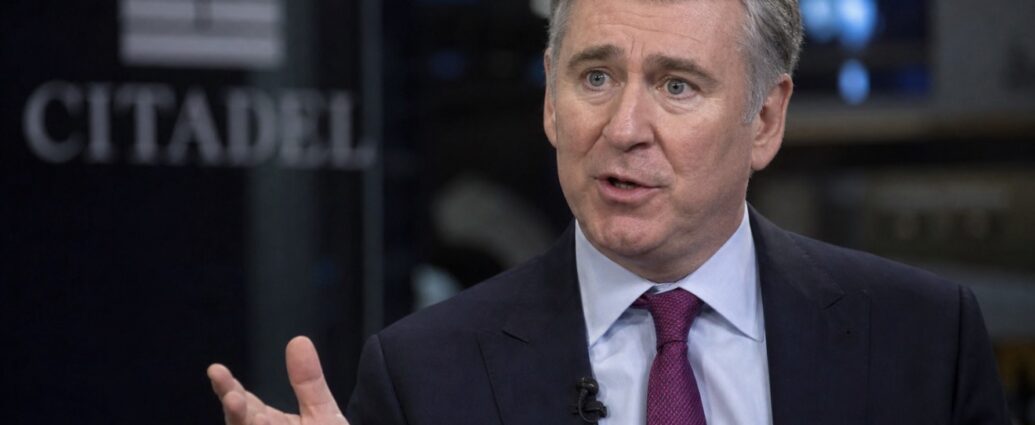
A public clash between Ken Griffin, founder and CEO of Citadel, and New York City Mayor Zohran Mamdani has escalated into a high-stakes confrontation over the city’s economic direction, with Griffin warning that New York risks driving away the very investment and leadership it depends on to remain competitive.
The dispute erupted on Tax Day, April 15, when Mamdani released a video filmed outside Griffin’s residence at 220 Central Park South — home to the billionaire’s 24,000-square-foot penthouse, purchased in 2019 for a record $238 million. In the video, the mayor announced a proposed pied-à-terre tax, targeting luxury properties valued above $5 million owned by non-full-time residents. “When I ran for mayor, I said I was going to tax the rich. Well, today we’re taxing the rich,” Mamdani said, using Griffin’s property as a backdrop to underscore the policy.
City officials estimate the tax could generate roughly $500 million annually, funding initiatives including childcare, sanitation, and public safety. The proposal, backed by New York Governor Kathy Hochul, still requires approval from the state legislature — a hurdle that has stalled similar efforts in the past.
Griffin responded sharply, framing the move not as policy but as a personal attack. Speaking at the Norges Bank Investment Management 2026 Conference in Oslo, he criticized the mayor’s approach and tone. “A personal attack like that reflects a profound lack of judgment,” Griffin said, warning that public targeting of business leaders risks undermining confidence in the city’s leadership. He added that the broader climate of hostility toward wealth creators could have real consequences for New York’s future.
A $6 Billion Decision at Stake
The rhetoric quickly translated into tangible economic risk. In an internal memo obtained by the Wall Street Journal, Citadel COO Gerald Beeson signaled that the firm may reconsider a major Midtown Manhattan redevelopment project centered at 350 Park Avenue. The project, if completed, would represent more than $6 billion in investment, create approximately 6,000 construction jobs, and support over 15,000 permanent positions.
“The project — if we move forward — will entail more than $6 billion dollars of spending,” Beeson wrote, emphasizing that the decision now hangs in the balance. He directly criticized the mayor’s approach, stating: “It is shameful that he used Ken’s name as the example of those who supposedly aren’t carrying their fair share… This reflects a broader disdain toward those committed to building this city.”
The message was clear: policy rhetoric is now intersecting with real economic decisions, and major capital projects may be reconsidered in response.
The Stakes for New York’s Economy
The fallout highlights the broader economic role of high-net-worth individuals and major firms in New York’s ecosystem. Griffin employs more than 2,500 people in New York City, while his philanthropic contributions include $400 million to Memorial Sloan Kettering Cancer Center and $25 million to expand the Success Academy charter school network. Despite these ties, Griffin relocated Citadel’s headquarters from Chicago to Miami in 2022 — a move widely interpreted as part of a broader shift among financial firms toward lower-tax jurisdictions.
Support for Griffin’s position came quickly from other prominent business leaders. Bill Ackman, CEO of Pershing Square, defended the role of wealthy investors in sustaining New York’s economy. “The Ken Griffins of the world make NYC high-end development viable… driving construction, legal, brokerage, and other high-paying jobs,” Ackman said. “We should be applauding that level of investment, not attacking it.”
The debate over the pied-à-terre tax is not new. The concept has circulated in Albany for years but repeatedly failed to gain traction amid concerns it could discourage investment. Mamdani has argued that without such measures, the city may need to raise broader property taxes — a move that could impact a wider base of residents and businesses.
A Broader Fiscal Challenge
The confrontation comes as New York faces growing fiscal pressure. Earlier this year, Governor Hochul explored policies aimed at taxing wealthy residents leaving the state, even as officials expressed concern about a shrinking tax base and outmigration of high earners. The tension reflects a deeper structural challenge: balancing progressive revenue policies with the need to retain capital, talent, and business activity.
At its core, the Griffin-Mamdani dispute has become a proxy for a larger national question — whether major economic centers can sustain growth while increasing tax burdens on top earners. For cities like New York, where large-scale development depends heavily on private investment, that balance is becoming increasingly difficult to maintain.
What Comes Next
With a $6 billion development project now uncertain, the stakes extend far beyond a single policy proposal. The outcome could signal to investors, developers, and corporate leaders how New York intends to navigate its economic future — whether as a city that partners with capital or one that challenges it more aggressively.
For now, both sides remain firmly positioned. But as decisions shift from rhetoric to action, the real test will be whether New York can retain the investment engine that has long powered its growth — or whether policies targeting wealth ultimately push that engine elsewhere.
JBizNews Desk
© JBizNews.com. All rights reserved.