By JBizNews Desk
Dell Technologies has become the latest major American corporation to sever ties with Delaware, with the company’s board unanimously approving a plan to reincorporate in Texas — adding momentum to a corporate exodus that has now surpassed $3 trillion in combined market value.
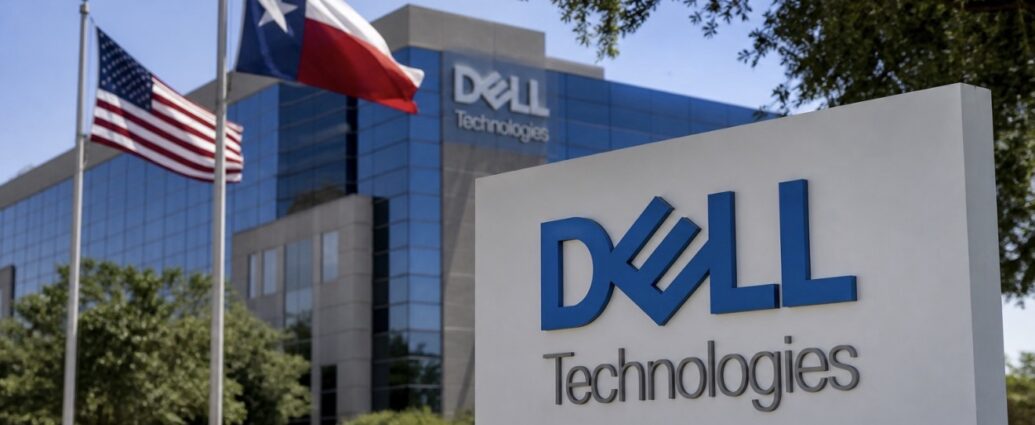
The move, announced Monday, will shift Dell’s legal home from Delaware to Texas, where the company was founded and remains headquartered. Michael Dell launched the company in Austin in 1984, and today its global headquarters, executive leadership, and largest U.S. workforce presence are all based in the state. The company said the reincorporation will not affect its operations, strategy, assets, or employees.
Shareholders are expected to vote on the proposal at Dell’s June 25, 2026 annual meeting. With a market capitalization of approximately $137.6 billion and enterprise value exceeding $158 billion, Dell becomes one of the largest companies to formally exit Delaware’s long-dominant corporate legal system.
The decision underscores a broader shift that is rapidly reshaping the legal foundation of American business. Over the past two years, more than 60 publicly traded companies — spanning technology, energy, retail, and finance — have either left Delaware or announced plans to do so, citing growing dissatisfaction with the state’s courts and litigation environment.
Dell’s own experience reflects that frustration. In 2023, the company agreed to a $1 billion settlement in a shareholder class-action case tied to its 2018 stock conversion. The case, heard in Delaware’s Court of Chancery, resulted in $266.7 million in legal fees awarded to plaintiff attorneys — one of the largest such payouts in the court’s history. The outcome intensified concerns among executives about litigation risk and legal costs associated with Delaware incorporation.
Critics argue that the state’s system has become increasingly vulnerable to opportunistic lawsuits, creating what some describe as a feedback loop: companies settle quickly to avoid prolonged litigation, while plaintiff attorneys secure substantial fees regardless of long-term shareholder benefit. The movement of some judges into private practice at firms that previously appeared before them has also drawn scrutiny from corporate leaders.
Legal scholars and commentators have begun questioning Delaware’s once-unquestioned status as the nation’s corporate hub. Alan Dershowitz, a Harvard Law School professor emeritus, has publicly criticized the state’s judiciary and, as reported in published accounts, described it as among the most problematic venues for corporate litigation — a characterization reflecting growing unease within parts of the business and legal community.
Others point to increasing unpredictability in rulings. Karen Harned, former director of the National Federation of Independent Business Legal Center, wrote that Delaware’s Court of Chancery is now viewed by some executives as less consistent, with decisions that can introduce uncertainty into routine corporate governance and invite costly legal challenges.
The departures are accelerating. In recent months, companies including Samsara, Tesla, Coinbase, Roblox, Dropbox, and Simon Property Group have either completed or announced plans to shift their incorporation away from Delaware. Meanwhile, firms such as ExxonMobil have bypassed Delaware entirely, moving directly to Texas.
Texas has emerged as the primary alternative, positioning itself as a business-friendly jurisdiction with a more predictable legal framework. A key component of that strategy is the Texas Business Court, launched in September 2024 to handle complex commercial disputes with specialized judges and expedited timelines.
Texas Governor Greg Abbott welcomed Dell’s decision, stating: “This is what happens when job creators and innovators are welcomed, not punished. More businesses are sure to follow.” The state has already attracted more than 250 corporate headquarters relocations since 2019, driven by its regulatory environment, absence of a corporate income tax, and lower operating costs.
For Dell, the move aligns its legal structure with its operational reality. The company has been headquartered in Round Rock, Texas, for more than three decades, yet remained incorporated in Delaware throughout that time. Reincorporating closes that gap and signals a broader shift in how companies are evaluating legal risk alongside operational efficiency.
Investors appeared largely unfazed by the announcement. Dell shares have risen approximately 126% over the past year, recently trading near $211, approaching their 52-week high. The lack of market disruption suggests confidence that the change is structural rather than operational.
What is shifting more fundamentally is the balance of power in corporate law. Delaware still hosts more than 60% of Fortune 500 incorporations, but that dominance is now facing its most serious challenge in decades.
Whether the state can reverse the trend will depend on its ability to address concerns around litigation costs, judicial consistency, and corporate predictability. For now, however, the trajectory is clear.
The companies are leaving — and the legal map of American business is being redrawn in real time.
JBizNews Desk
© JBizNews.com. All rights reserved. This article is original reporting by JBizNews Desk. Unauthorized reproduction or redistribution is strictly prohibited.