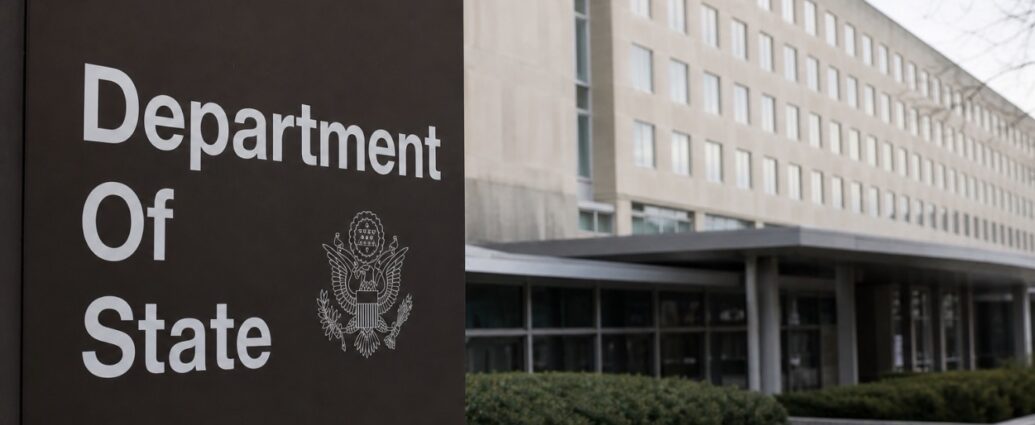
The U.S. State Department officially terminated more than 200 career diplomats Tuesday in the culmination of a reduction-in-force process that began nearly a year ago, completing a sweeping overhaul of the nation’s diplomatic workforce at a moment when the United States is managing an active military conflict with Iran.
Termination notices were delivered May 5 to approximately 246 Foreign Service officers and at least 30 civil service officials, ending a six-month period during which affected employees had been placed on paid administrative leave following an initial round of layoff notices issued last July. The delay stemmed from a combination of factors: a government shutdown in November, multiple lawsuits challenging the reductions-in-force, and congressional efforts to block the firings. Staff continued to receive salaries throughout the waiting period.
State Department spokesperson Tommy Pigott called the move part of what the Trump administration describes as “the most complex and tailored” reorganization in federal government history, designed to produce what he characterized as a more efficient, faster, and more effective America First diplomacy. The department’s fiscal year 2027 budget proposal envisions continuing to shrink its overall workforce, targeting approximately 11,000 Foreign Service employees and 6,000 civil service employees — down significantly from pre-Trump levels of more than 14,000 Foreign Service employees and nearly 13,000 civil service workers.
What has drawn sharp criticism from career diplomats and lawmakers alike is the timing and apparent contradiction at the heart of the restructuring: the State Department is simultaneously recruiting and onboarding new officers to fill vacant positions — including, in at least one documented case, the exact role from which a laid-off officer was terminated. A second Foreign Service officer told Federal News Network that the department’s USAJobs posting for his position noted it has “MANY vacancies” to fill.
The American Foreign Service Association, the professional union for U.S. diplomats, strongly condemned the separations. “The department has never adequately explained why it is removing experienced Foreign Service professionals with critical skills while simultaneously hiring new personnel,” the group said in a statement. Among those let go are officers with rare language skills, specialists with decades of institutional knowledge, and crisis responders — capabilities that take years and significant taxpayer investment to develop and that will be difficult to replace quickly.
The broader toll of the State Department’s restructuring is substantial. In total, rough estimates by affected staff put the number of terminated employees over the past year at 246 Foreign Service officers and 1,070 civil service employees — part of what the American Foreign Service Association says amounts to the U.S. shedding at least 20 percent of its diplomatic workforce through a combination of shuttered institutions, forced resignations, and formal layoffs.
Under Secretary for Management Jason Evans told the House Foreign Affairs Committee that the department intends to reinstate a practice of “low-ranking” employees — removing those who fail to meet performance benchmarks — and that supervisors who hand out too many top ratings will face consequences. The Office of Personnel Management has proposed a related rule that would cap how many federal employees across government can receive the highest marks on annual reviews.
For the businesses, contractors, and exporters that depend on U.S. diplomatic infrastructure overseas — from visa processing and trade facilitation to crisis response and regulatory navigation — the gutting of institutional knowledge at the department carries practical costs that may not be immediately visible but will compound over time.
JBizNews Desk
© JBizNews.com. All rights reserved. This article is original reporting by JBizNews Desk. Unauthorized reproduction or redistribution is strictly prohibited.