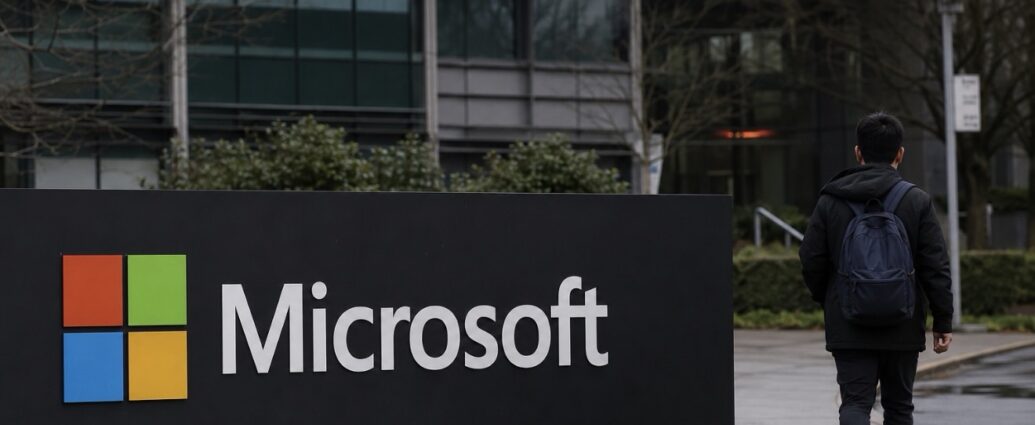
Microsoft is offering voluntary separation packages to thousands of longtime employees for the first time in the company’s 51-year history, marking a major cultural and strategic shift as the software giant redirects billions of dollars toward artificial intelligence infrastructure and next-generation computing.
The program, announced internally this week, makes roughly 8,500 U.S.-based employees eligible for buyouts under a formula tied to age and years of service — a move that signals even one of the world’s most financially powerful technology companies is entering a new era of workforce restructuring shaped by AI.
The initiative applies to employees whose age and years of service combined equal 70 or more, representing approximately 7% of Microsoft’s U.S. workforce. In a memo sent to staff, Microsoft Chief People Officer Amy Coleman described the program as an opportunity for longtime employees to leave “on their own terms” with substantial company support.
“Our hope is that this program gives those eligible the choice to take that next step on their own terms, with generous company support,” Coleman wrote.
Under the eligibility structure, an employee who is 52 years old with 18 years at Microsoft would qualify. The offer applies to workers at the senior director level and below, while employees participating in sales incentive compensation programs are excluded from the package. Microsoft told employees full program details would be distributed beginning May 7.
The move represents a historic departure for the company founded in 1975 by Bill Gates and Paul Allen, which until now had never implemented a formal voluntary retirement buyout program on this scale.
AI Spending Is Reshaping Corporate America
The timing reflects a broader transformation unfolding across the global technology sector as companies race to fund massive artificial intelligence investments.
Microsoft has emerged as one of the central players in the AI economy through its multibillion-dollar partnership with OpenAI and aggressive rollout of AI-powered products across Windows, Office, Azure cloud services, GitHub, and enterprise software offerings. The company is simultaneously spending enormous sums expanding data centers, purchasing Nvidia AI chips, and building infrastructure capable of supporting generative AI systems.
That spending boom is now beginning to reshape workforce priorities.
Rather than pursuing another high-profile round of layoffs, Microsoft appears to be choosing a softer restructuring strategy — encouraging veteran employees nearing retirement eligibility to voluntarily exit while the company reallocates resources toward AI engineering, cloud infrastructure, cybersecurity, and automation.
Investors are closely watching whether the strategy reduces long-term labor costs without triggering the reputational damage often associated with mass layoffs.
Microsoft shares fell nearly 4% Thursday after employees were informed of the buyout program, reflecting investor concern about the potential financial impact, including one-time restructuring charges and the possible loss of experienced institutional talent.
The Risk of Losing Institutional Knowledge
While voluntary buyouts are generally viewed as less disruptive than layoffs, they carry their own risks.
Longtime Microsoft employees often possess decades of internal product knowledge, enterprise relationships, and technical expertise that cannot easily be replaced. Analysts say the company could face challenges if a significant number of highly experienced engineers, managers, and operational leaders choose to leave simultaneously.
The company’s leadership appears aware of that tradeoff.
By limiting eligibility to certain management levels and excluding employees tied to sales incentive structures, Microsoft may be attempting to reduce disruption to revenue-generating operations while gradually reshaping its workforce profile.
Still, the symbolism of the move is difficult to ignore.
For decades, Microsoft represented one of corporate America’s most stable long-term employers, known for retaining veteran talent through multiple generations of technological change. The buyout program signals that even legacy tech giants are now adapting to an AI-driven environment where automation, efficiency, and infrastructure spending increasingly dominate corporate strategy.
Big Tech’s AI Workforce Reset Accelerates
Microsoft’s move comes amid a broader wave of restructuring across the technology industry.
Meta announced approximately 8,000 job cuts this week as the company accelerates spending on AI systems and metaverse-related infrastructure. Oracle earlier this year reduced its workforce by roughly 30,000 positions as part of broader operational streamlining efforts. Amazon eliminated approximately 16,000 corporate roles in January while continuing to expand AI and logistics investments.
Across Silicon Valley, executives are increasingly balancing two conflicting realities: AI is creating enormous revenue opportunities, but building that future requires unprecedented capital spending.
Companies are now redirecting resources toward AI chips, data centers, cloud computing capacity, machine learning talent, and energy-intensive infrastructure — often at the expense of traditional staffing growth.
Microsoft Chief Executive Satya Nadella has repeatedly described AI as the next foundational computing platform, comparing its impact to the rise of the internet and cloud computing. The company has integrated AI tools into nearly every major product division while positioning Azure as one of the central platforms powering enterprise AI adoption globally.
That strategy has helped push Microsoft’s market value above $4 trillion and made it one of Wall Street’s biggest beneficiaries of the AI boom.
But the buyout announcement underscores a growing reality inside the technology industry: the AI transition is not only changing products and services — it is reshaping the workforce itself.
Unlike traditional layoffs, Microsoft’s approach attempts to frame the transition as voluntary and respectful toward longtime employees. Whether workers accept the offer in large numbers will determine how substantial the workforce reduction ultimately becomes.
Either way, the decision marks a turning point for one of America’s most iconic companies — and another sign that the AI era is fundamentally changing how even the most established corporations think about labor, growth, and the future of work.
— JBizNews Desk