The State of Israel is in one of the most tense periods in its history. While the Ministry of Defense’s air and naval convoys are pumping in weapons at an unprecedented pace and eyes are fixed on Tehran, Brigadier General (res.) Prof. Yaakov Nagel sat down for an open conversation with Maariv‘s military correspondent, Avi Ashkenazi.
Prof. Nagel is a senior fellow at the Foundation for Defense of Democracies, a former acting head of the National Security Council, and the one who recently headed the committee to examine the defense budget for the coming decade.
In the interview, he analyzed the new doctrine of the State of Israel after October 7, warned against entering into negotiations with the Iranians, and explained why the calm in the north may be only a temporary illusion.
In recent days, we have seen unusual announcements from the Defense Ministry about an air-and-sea bridge to supply weapons to the IDF. This is happening on the eve of renewed tensions with Iran.
Is the goal to signal to the Iranians that we are prepared, or are we really on our way to another campaign?
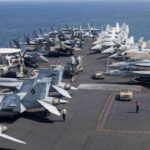
The truth is that we are a small country, and anyone who travels near Ben-Gurion Airport sees that there is not much parking for regular civilian planes, even though flights are regular. A stream of supplies is arriving at both Ben-Gurion and the Air Force bases, and this has been happening since the war began. US President Donald Trump has left his entire ‘armada’ in the Middle East – planes, refuelers, aircraft carriers, not only in Israel but also at American bases in the Gulf. The message to the Iranians is clear: it will end well, or it will not end well.
From your experience, where is it going in the end?
I’ll start with a joke that explains the situation: A man found a genie who granted him one wish. He asked for a bridge to Saudi Arabia to drive his car to. The genie told him it was too difficult and to ask for something else. So he said, ‘Explain to me how Trump thinks.’ The genie answered him: ‘How many lanes do you want on the bridge?’
Trump is a man whose moves are difficult to predict, and on the other hand, he is certainly attentive to internal and external pressures, but he reads the big picture correctly and understands correctly: it is impossible to overlook Iranian behavior and let them wait until the end of 2028 to restart their plans. He is currently putting a deal on the table that I personally don’t like, but fortunately for us, the Iranians like it even less.
Why is the current situation ‘the best’ we could have, as you claim?
Right now, the US is applying economic pressure, and it’s a war that works. Israel is ‘swallowing saliva’ and paying a heavy price in the north to maintain this pressure on Iran together with the US. If this economic pressure continues, within weeks, not years, the Iranians will probably reach a breaking point.
It is very possible that this pressure will cause the Iranian people to take to the streets and change the government, and in order to permanently remove the existential threat from Israel, the government must change, even if this is not defined as one of the goals of the war, and rightly so.
Trump offers them a deal in which they surrender nuclear weapons and accept many conditions, mainly money, but in my opinion, entering a room with the Iranians for negotiations always ends badly. They know how to negotiate better than any of us.
Do the Iranians understand that they are dealing with a businessman here and not an ordinary statesman?
The Iranians are dealing with someone who does not think like them and who cannot be predicted in advance.
I remember that on the eve of Prime Minister Benjamin Netanyahu’s first official meeting with Trump in February 2017, when I was acting head of the National Security Council, I met with Michael Flynn, who was then the national security adviser. I asked him what one could expect from Trump in the meeting, and he told me: ‘The only thing one could expect from him is that he will be unpredictable.’ A few hours after the meeting with me, Flynn resigned.
Trump behaves like a businessman in the meeting room, not like a president and diplomat – he has ideas, he brings them up, and if something doesn’t work, he immediately moves on to the next topic. He probably even brought up the idea of the ‘Riviera in Gaza’ on the way between the closed talks and the press conference. He simply doesn’t work by the book.
Let’s talk about the ‘Nagel Committee’ that determined the defense budget and the IDF’s equipment. You recommended an outline for the coming decade. Does Israel have enough interceptor missiles for the Iron Dome and the other systems?
The Nagel Committee did not determine the defense budget for the coming decade; it recommended what it thought it should look like. The State of Israel will never have enough interceptors, but we will always have as many as we need. We are the only country in the world with three active defense layers. The problem is economic and technological – there is a limit to how many production lines can be operated and how much budget can be allocated to air defense.
In the end, it’s a compromise: if we produce more interceptors, there will be fewer shells. If there are more shells, there will be fewer armored personnel carriers. We have built a blueprint that says what the country can afford financially for the next decade, and then what is recommended to be done with this budget.
There is an argument that the army prefers to destroy missiles while they are on the ground rather than intercepting them in the air. Is that your view?
The argument is incorrect, but as with everything, there is also some truth in it. Israel’s defense consists of much more than three layers. One of the layers is hitting launchers or warehouses before the missile even takes off. I call it ‘closing the tunnel opening in Iran.’
In the current war, we were partially successful – the Iranians were left with about 40% of the ballistic missile stockpile they had at the beginning of the war, and half the number of launchers. These numbers were confirmed by the IDF.
When they fired more than 600 missiles at us, our systems intercepted over 90%. There was property damage, but the damage to life was zero thanks to the excellent defense.
You were the man who headed a committee that recommended that we use the Iron Dome over the Iron Beam. In retrospect, was that the right decision?
Absolutely. Some people misled us and used incorrect information. The Iron Beam was actually an American project that failed and was closed in the early 1990s, on the basis of which a cooperation project with the Arab League began in 1996, which was closed in 2005 because it did not meet expectations and did not work.
I headed the committee that recommended the Iron Dome as a response to short-range interception. In the same breath, we wrote in the secret report that we must continue to invest in the laser, a solid position because in 2019, our opinion was that there would be a breakthrough. And indeed there was.
We must understand that the laser is not the ‘Messiah’, but it will definitely be an excellent complementary system that will work as an additional interceptor to the Iron Dome starting in the second half of 2026 and will save interceptors.
And what about the new threat – drones and UAVs? We have seen that Hezbollah uses simple ‘eBay’ weapons and manages to surprise us.
That’s an excellent question. We are a country that knows how to intercept missiles in space, but sometimes has difficulty understanding that it must provide solutions even against a simple drone with explosives. There are solutions for that too, and I assume that they will be implemented on the ground very quickly.
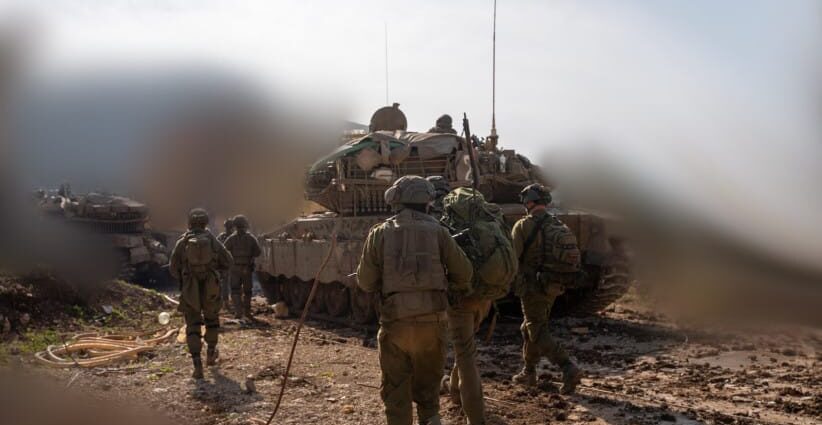
In the committee report, we placed enormous emphasis on the need for arms independence for Israeli industries and a new approach to acquiring cheaper capabilities. The concept of the ‘small and smart army’ died on October 7. We need a large and smart army. We do need a lot of intelligence and air power, but we also need more land, more armor, and more proper handling of manpower.
This brings us to the most burning issue – the recruitment of Haredim. You wrote two lines in your report that caused a stir. What do they say?
We argued among the team for two days about this wording, because I wanted everyone to sign it. We wrote this: ‘The State of Israel is a democracy, and anyone who wants to be a citizen with equal rights must be a citizen with equal duties.’
There is no word there for ‘ultra-Orthodox’ or ‘Arabs’, but ‘every citizen.’ From the first to the last. If you want rights, give duties. This is the only way the IDF will get the manpower it needs. It must happen gently, over time, and in accordance with the army’s absorption capacity, but it must happen.
Finally, you talk about a change in Israel’s security concept from “containment” to “prevention.” What do you mean?
We learned the hard way on October 7 that we cannot let the other side arm itself quietly. The terms “containment” and “deterrence” against terrorist organizations have collapsed. The new concept is “no more containment” – no more passive defense and containment.
Now it’s “Prevention and Offense”. We need to eliminate threats before they grow to monstrous proportions. This is a profound strategic change that the IDF has already begun to implement in the ceasefire agreement in Lebanon and elsewhere.