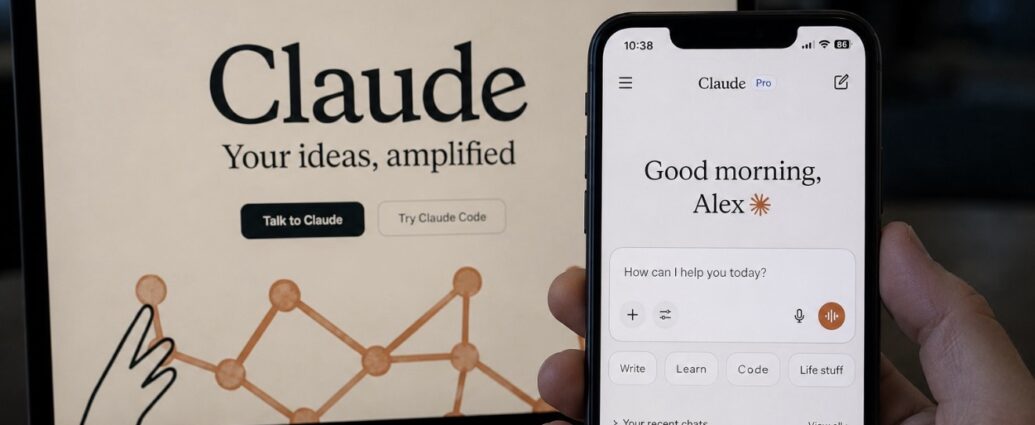
Anthropic, the artificial intelligence startup best known for enterprise software and AI safety research, is making a major push into the mainstream consumer market as it tries to transform Claude from a developer-focused chatbot into a daily-use AI assistant for millions of ordinary users.
The shift marks a significant strategic evolution for the San Francisco-based company, which until recently was viewed primarily as a high-end enterprise AI platform competing for corporate contracts rather than mass consumer adoption.
Now Anthropic wants Claude to become part of everyday life — helping users with everything from interpreting lab results and planning travel to answering cooking questions and managing personal routines.
The move comes as paid subscriptions for Claude more than doubled this year, according to company data and transaction analysis, fueling growing investor optimism that Anthropic could emerge as a legitimate consumer challenger to OpenAI’s ChatGPT.
Anthropic’s Consumer Push Is Accelerating
Since late last year, Anthropic has increasingly directed internal teams to improve Claude’s ability to handle personal and consumer-oriented tasks.
According to Mike Krieger, co-leader of Anthropic’s Labs division, the company has been focusing heavily on making Claude more useful for practical daily questions involving health, travel planning, recipes, organization, and broader lifestyle support.
The effort represents a meaningful expansion for a company that originally built its reputation around AI safety, enterprise reliability, and developer tools.
Anthropic’s Labs division was specifically created to experiment with more ambitious and consumer-facing AI products.
Company President Daniela Amodei described the group as an internal innovation team designed to “break the mold and explore” frontier AI capabilities before scaling successful features into products used by millions.
Paid Subscriber Growth Has Exploded
The strategic pivot is being supported by rapidly growing consumer demand.
Anthropic confirmed that paid Claude subscriptions have more than doubled this year, with some of the fastest growth occurring between January and February.
Most users are reportedly selecting the company’s $20-per-month Claude Pro subscription tier.
Industry transaction data analyzing billions of anonymized credit-card purchases from approximately 28 million U.S. consumers showed a sharp acceleration in consumer spending tied to Claude subscriptions this year.
Several major product launches appear to have fueled the growth.
Anthropic gained momentum following:
- Its Super Bowl advertising campaign criticizing ChatGPT’s potential advertising strategy
- The launch of Claude Code and Claude Cowork developer tools
- The rollout of “Computer Use,” a feature allowing Claude to autonomously navigate and operate computers on behalf of users
The company also achieved a major milestone when Claude temporarily overtook ChatGPT to become the No. 1 app in Apple’s U.S. App Store rankings.
Free account signups reportedly climbed more than 60% since January, while daily user registrations hit all-time highs. By early March, Claude was reportedly adding more than one million new users per day.
Health Is Becoming a Major Focus
One of Anthropic’s biggest consumer bets is healthcare assistance.
Claude Pro and Max subscribers can now securely connect personal health data, including lab results, fitness information, and medical records through integrations with Apple Health, Android Health Connect, and new beta connectors including HealthEx and Function.
Once connected, Claude can summarize medical history, explain test results in plain language, identify trends across health metrics, and help users prepare questions for doctor appointments.
The feature highlights a broader trend emerging across the AI industry: companies increasingly want chatbots to become personalized digital assistants deeply integrated into users’ daily lives.
Rather than simply answering questions, AI companies are racing to build systems that organize information, automate tasks, interpret personal data, and act proactively on behalf of users.
Anthropic Still Trails OpenAI by a Wide Margin
Despite its rapid growth, Anthropic remains far behind OpenAI in total consumer scale.
OpenAI reported earlier this year that ChatGPT reached approximately 900 million weekly active users globally — more than double the roughly 400 million weekly users reported the previous year.
The gap between the two companies remains enormous.
Still, Anthropic appears increasingly willing to compete directly for consumer attention rather than limiting itself to enterprise software and research applications.
The company’s recent momentum has also slightly altered how investors view its long-term business model.
Anthropic was originally seen primarily as a safety-focused AI lab supported by enterprise customers and large institutional partnerships.
Now analysts increasingly describe it as a consumer AI platform with enterprise revenue — a materially different positioning with potentially far larger long-term monetization opportunities.
That shift became even more important after Anthropic’s February 2026 funding round reportedly valued the company at approximately $380 billion.
The AI Consumer War Is Expanding
Anthropic’s consumer push reflects the broader transformation unfolding across the AI industry.
The competition is no longer simply about building the most powerful model.
It is increasingly about becoming the default AI assistant consumers use every day.
OpenAI, Google, Meta, Microsoft, xAI, and Anthropic are now all racing to integrate AI into search, smartphones, productivity tools, healthcare, education, communication, shopping, and personal organization.
For Anthropic, the challenge is balancing rapid growth with the cautious, safety-focused culture that originally distinguished the company from many rivals.
The company’s structure may give it flexibility to pursue both goals simultaneously.
Its Labs division can continue experimenting aggressively with frontier consumer products while its core enterprise business scales services for more than 300,000 business customers worldwide.
The larger question now is whether Claude can evolve from a respected AI assistant into something more emotionally and practically embedded in daily life — a platform people routinely rely on not just for work, but for the personal decisions and everyday questions that increasingly define the consumer AI era.
— JBizNews Desk