A mysterious $920 million crude oil trade placed in the middle of the night — just 70 minutes before news broke that the United States and Iran were nearing a peace framework — is intensifying allegations that politically connected traders may be profiting from advance knowledge of war-related developments before they become public.
The trade triggered a fresh wave of outrage Wednesday after oil prices collapsed more than 12% within hours of the position being placed, generating an estimated $125 million profit for whoever made the bet.
The incident is now the latest — and largest — in a growing series of suspicious oil market trades tied to major developments in the Iran conflict, with lawmakers, analysts, and market observers increasingly calling for aggressive federal investigations.
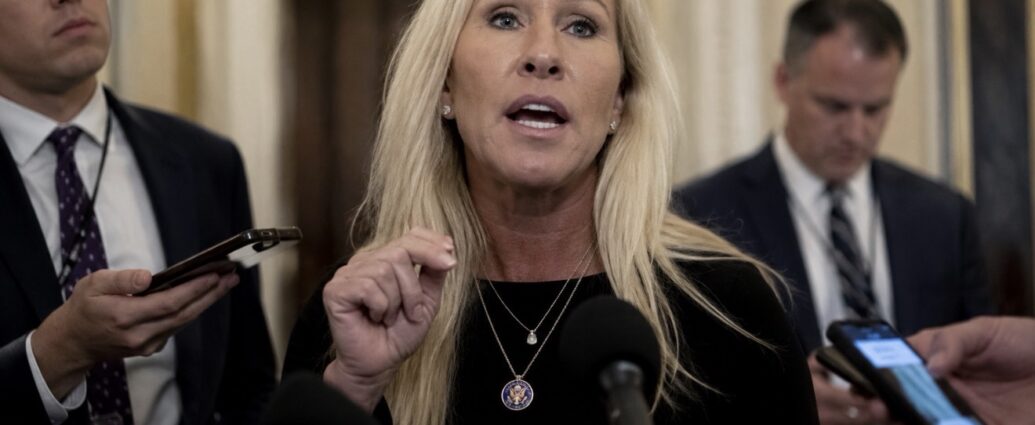
Among the loudest voices Wednesday was Rep. Marjorie Taylor Greene (R-GA), who openly accused political insiders of profiting from war-related volatility.
“When is everyone going to start realizing that the on-again, off-again war/peace rhetoric is really just insider trading?” Greene wrote on X. “And sprinkle in some murder. Only a select few in the top tax bracket are benefiting from this.”
The Trade Happened Before the News Existed Publicly
According to financial market intelligence firm The Kobeissi Letter, nearly 10,000 crude oil short contracts — representing approximately $920 million in notional value — were executed at 3:40 AM Eastern time Wednesday morning.
At the time, there were no major geopolitical headlines, no official announcements, and little meaningful market-moving news publicly available.
Then, at approximately 4:50 AM ET, Axios reported that the White House believed the U.S. and Iran were nearing a one-page memorandum of understanding aimed at ending the war and restarting nuclear negotiations.
The report, written by Axios Middle East correspondent Barak Ravid, immediately triggered a sharp collapse in oil prices.
By 7:00 AM ET, crude prices had plunged more than 12%, generating roughly $125 million in gains for the trader behind the short position.
The identity of the trader remains unknown.
Analysts Say the Pattern Is Becoming Harder to Ignore
Market analysts and political observers reacted almost immediately after the timeline circulated online.
Adam Cochran, a policy consultant and market analyst, said additional suspicious trades may have occurred outside traditional futures markets as well.
“$900M in oil shorts right before the Axios article,” Cochran wrote on X. “I’ve found at least another $100M in the same kind of trades on-chain. Meaning multiple insiders knew about the article forthcoming and traded on it.”
Energy investor Eric Nuttall, partner and senior portfolio manager at Ninepoint Partners, suggested investors should focus less on daily price swings and more on what may be driving them.
“We continue to encourage energy investors to focus on ‘the day after,’ as day-to-day volatility may be intentionally induced for nefarious reasons,” Nuttall wrote.
It Is Now the Fifth Suspicious Oil Trade in Ten Weeks
What makes Wednesday’s trade especially explosive is that it does not appear isolated.
This is now the fifth documented instance in roughly ten weeks where massive oil market positions were placed shortly before major Iran war-related announcements triggered violent price swings.
Among the previously flagged incidents:
- March 23: Oil futures activity surged shortly before President Donald Trump announced renewed talks with Iran on Truth Social, triggering a sharp drop in crude prices.
- April 7: Traders reportedly placed approximately $950 million in bearish oil positions hours before Trump announced a two-week ceasefire with Iran, causing oil prices to fall roughly 15%.
- April 17: Approximately $760 million in Brent crude futures were sold roughly 20 minutes before Iran’s foreign minister announced the Strait of Hormuz would remain open, immediately pushing oil prices down approximately 11%.
- April 21: Traders executed roughly $430 million in Brent crude sell-side positions just 14 minutes before Trump announced an indefinite extension of the U.S.-Iran ceasefire.
Now Wednesday’s $920 million trade has intensified fears that material nonpublic government information may be leaking into financial markets repeatedly.
Congress and Regulators Are Already Investigating
Federal scrutiny has already begun escalating.
Rep. Ritchie Torres (D-NY) previously flagged approximately $2.1 billion in suspicious oil trades tied to Iran war developments and formally requested investigations by both the Securities and Exchange Commission and the Commodity Futures Trading Commission.
Torres said the activity “may constitute one of the largest instances of insider trading in history.”
“I have a lack of confidence in our market regulators,” Torres said previously. “But we have no choice but to agitate for accountability.”
Sens. Elizabeth Warren and Sheldon Whitehouse also sent letters to regulators warning that the repeated trades raise “serious questions” about misuse of sensitive government information.
Sen. Chris Murphy called the potential conduct “mind-blowing corruption.”
According to multiple reports, the CFTC has already opened a probe into the unusual trading activity.
One Criminal Case Has Already Emerged
The broader investigation has already produced at least one arrest tied to war-related predictive trading.
On April 23, the Department of Justice charged Gannon Ken Van Dyke, a U.S. Army Special Forces soldier, with allegedly using classified operational intelligence to profit from bets placed on Polymarket regarding the timing of a U.S. military operation connected to Iran.
Federal prosecutors allege Van Dyke used inside knowledge related to military planning to generate approximately $400,000 in profits.
Separately, the Financial Times previously reported more than $580 million in oil futures activity shortly before Trump announced a temporary halt to strikes targeting Iranian energy infrastructure earlier this year.
Oil Markets Are Now Swinging Billions Within Hours
Wednesday’s trading chaos did not end with the initial crash.
Oil prices partially rebounded later in the day after Iran announced formation of a new “Persian Gulf Strait Authority” intended to regulate passage through the Strait of Hormuz under Iranian-controlled terms.
The announcement undermined some of the earlier peace optimism and sent oil prices surging back roughly 8% within hours.
The result was another violent intraday oil market reversal worth billions of dollars in market value.
That volatility itself is now becoming part of the broader investigation into whether sensitive geopolitical information is leaking into financial markets before becoming public.
For Greene and a growing number of critics across both parties, the repeated pattern no longer looks accidental.
To them, the constant cycle of war escalation, ceasefire rumors, diplomacy headlines, and massive pre-positioned trades increasingly resembles something else entirely:
A highly profitable trading strategy.
— JBizNews Desk