May 7, 2026 | By JBizNews Desk
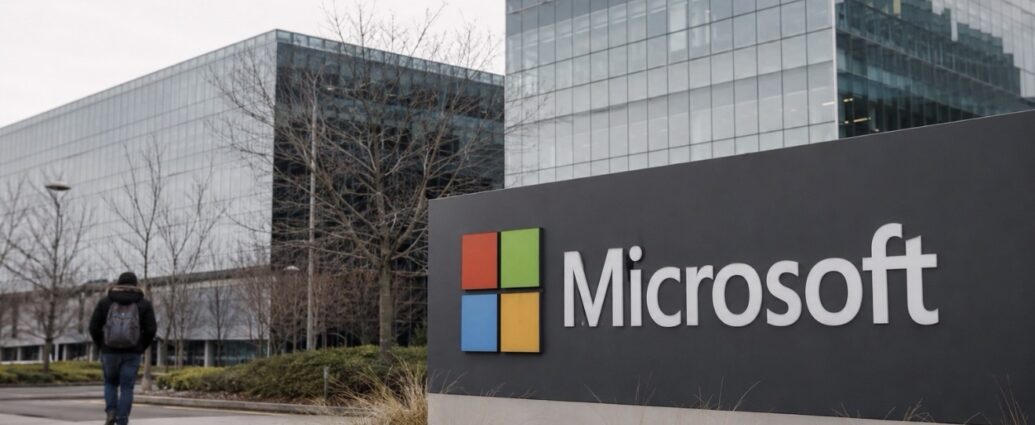
Microsoft is weighing whether to walk back one of its most ambitious environmental commitments, as the explosive energy demands of artificial intelligence force a collision between the company’s climate goals and its race to dominate the global AI infrastructure buildout.
At the center of the debate is Microsoft’s “100/100/0” pledge — unveiled in 2021 — which committed the company to matching 100% of its electricity use, 100% of the time, with zero-carbon energy sourced from the same regional grids where it operates. The initiative went far beyond the standard corporate practice of offsetting annual power use through renewable energy certificates and was viewed as one of the most aggressive clean-energy commitments in corporate America.
Now, the AI boom may be making that target unattainable.
Microsoft is internally considering whether to delay or potentially abandon the 2030 benchmark as the company rapidly expands AI data center capacity to support Azure cloud growth, OpenAI infrastructure, and the global rollout of Copilot services across its software ecosystem. While the company has not announced any formal retreat, a Microsoft spokesperson acknowledged the company is reevaluating pathways to maintain its energy goals — notably avoiding a direct reaffirmation of the hourly clean-energy matching standard.
The challenge is largely one of scale.
Microsoft has reportedly been adding roughly one gigawatt of data center capacity every three months — enough electricity demand to power approximately 750,000 homes. At that pace, securing zero-carbon power on an hourly basis across multiple regional grids has become increasingly difficult both financially and operationally.
The company expects to spend approximately $190 billion through the end of December, much of it tied to AI infrastructure and next-generation data centers. That spending surge has placed growing pressure on internal budgets, including programs tied to sustainability and carbon reduction initiatives.
The broader reality confronting the technology industry is becoming impossible to ignore: AI requires enormous amounts of electricity, and renewable energy infrastructure is not expanding fast enough to fully support the demand wave now underway.
Microsoft, Amazon, Alphabet, and Meta are collectively investing hundreds of billions of dollars into AI facilities that consume unprecedented levels of power. Some hyperscale AI campuses are expected to require multiple gigawatts of continuous electricity — rivaling the power needs of entire metropolitan regions.
With solar, wind, and battery deployment lagging behind AI demand growth, natural gas is increasingly filling the gap.
Microsoft is currently working with Chevron and Engine No. 1 on plans for a large natural gas facility in West Texas that could eventually generate up to five gigawatts of electricity. The project underscores the increasingly uncomfortable balancing act facing major tech firms that publicly champion carbon reduction goals while simultaneously pursuing AI expansion at breakneck speed.
The company has also moved aggressively into nuclear power as a potential long-term solution. In 2024, Microsoft signed an agreement with Constellation Energy tied to restarting a unit of the Three Mile Island nuclear facility in Pennsylvania — one of the most symbolic nuclear energy projects in decades.
But nuclear projects take years, sometimes decades, to fully deploy, while AI demand is accelerating in real time.
Inside Microsoft, executives reportedly viewed the 100/100/0 target as extraordinarily difficult even before the AI explosion triggered by ChatGPT and generative AI adoption. That internal skepticism, combined with the company’s rapidly growing emissions footprint, suggests any future rollback would likely reflect operational realities more than a sudden policy reversal.
The numbers across the tech industry illustrate the scale of the challenge.
Since the launch of ChatGPT in late 2022, sustainability reports from the largest AI companies have shown sharp increases in carbon emissions. Meta’s emissions have risen roughly 64% compared with pre-AI benchmarks, Alphabet’s approximately 51%, Amazon’s roughly 33%, and Microsoft’s about 23%. Microsoft specifically cited AI and cloud infrastructure growth as primary contributors to its emissions increase.
Despite the mounting pressure, Microsoft insists it remains committed to expanding carbon-free energy investments. The company recently signed agreements with We Energies to support 1.2 gigawatts of clean-energy projects in Wisconsin, including solar generation and battery storage systems expected to enter service by late 2028.
Still, even those projects highlight the central issue confronting the industry: clean energy deployment is not scaling nearly as fast as AI infrastructure.
For businesses and consumers using Microsoft products — from Azure cloud systems to AI-powered Office tools and Copilot assistants — the shift may not be immediately visible. Servers will continue operating, AI products will continue expanding, and cloud demand will continue growing.
But behind the scenes, the economics of AI are reshaping priorities across Silicon Valley and beyond.
The race to secure enough electricity to power artificial intelligence is increasingly overtaking the debate over how green that electricity actually is — marking a major turning point in the relationship between Big Tech, energy markets, and climate policy.
— JBizNews Desk
© JBizNews.com. All rights reserved. This article is original reporting by JBizNews Desk. Unauthorized reproduction or redistribution is strictly prohibited.