On the evening of May 6, the Israel Defense Forces eliminated the commander of Hezbollah’s Radwan Force, according to the IDF. The commander was identified as Ahmed Ali Balout. The precision strike was one of many recent Israeli operations. The pace of these operations has changed since the ceasefire in Lebanon in early April. However, Israel has continued to act against Hezbollah and dismantle its terrorist infrastructure.
The question now is whether the latest precision strike against the Radwan Force commander will have an effect. The IDF says that in recent weeks, it has eliminated 220 Hezbollah terrorists and commanders. More than 85 were killed in the past week alone, according to the IDF. These include other members of the Radwan Force, among them Muhammad Ali Bazi, the head of Hezbollah’s intelligence department in its Nasr Unit. In addition, a Hezbollah air defense observation officer was killed.
The challenge in Lebanon is whether these strikes will have a lasting effect or whether Hezbollah will simply replace the men it has lost. In the past, Hezbollah has lost many key commanders. This was particularly true between September and November 2024, when the IDF eliminated much of Hezbollah’s command structure. The problem is that Hezbollah replaced many of these figures. The group has shown resilience in its ability to absorb such blows and continue threatening Israel.
The military has the resources to deal with drone threats
One way Hezbollah has done this recently is through innovation. It has begun using new FPV drones with attached munitions. Some of these drones are flown using a fiber-optic cable that spools out as the drone moves, making them impossible to jam. This allows the small drones to search for targets of opportunity.
This has become a challenge for the IDF. The military has the resources to deal with drone threats, and Israeli defense companies are among the most advanced in the world in counter-drone technology. However, not every threat can be predicted or countered immediately. Israel has performed well against other types of Hezbollah drones, but the evolving threat remains significant.
The challenge, therefore, is that while Hezbollah is taking losses, it is also adapting. The group has lost older commanders with decades of experience, including men who remembered the 2006 war with Israel and fought in Syria. These commanders were tied to Hezbollah’s older doctrines and tactics. It is possible that their younger replacements will have less experience, but they may also learn quickly from the current battlefield.
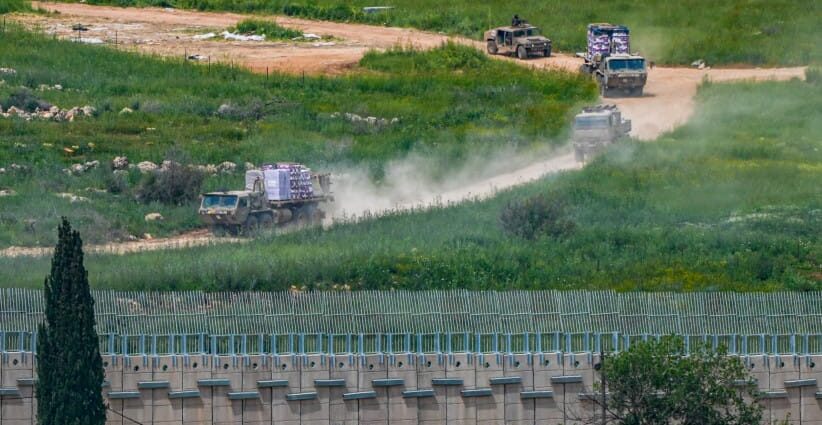
Israel has carved out a buffer zone in southern Lebanon. This buffer zone requires Israel to place soldiers in harm’s way. The theory is that Hezbollah will focus its attacks on the buffer zone rather than on Israel itself. But the longer Israeli soldiers remain there, the more time Hezbollah has to observe them and test new tactics with different weapons.
This is clearly the challenge now. The latest strike on the Radwan Force commander may come ahead of a possible US-Iran deal. Such a deal could include an extension of the ceasefire in Lebanon. It could also lead to pressure on Israel and Lebanese authorities to engage, and may renew focus on Lebanon disarming Hezbollah, or, at the very least, on getting Hezbollah to stop attacking.
That would likely postpone another confrontation rather than resolve the underlying problem. This is what has happened in the past.