JBizNews Desk | May 8, 2026
Novo Nordisk Scores Major Win in the Weight-Loss Pill Race
The obesity drug market has entered a new phase — one increasingly driven by pills instead of injections — and Novo Nordisk just delivered its clearest sign yet that it currently leads that battle.
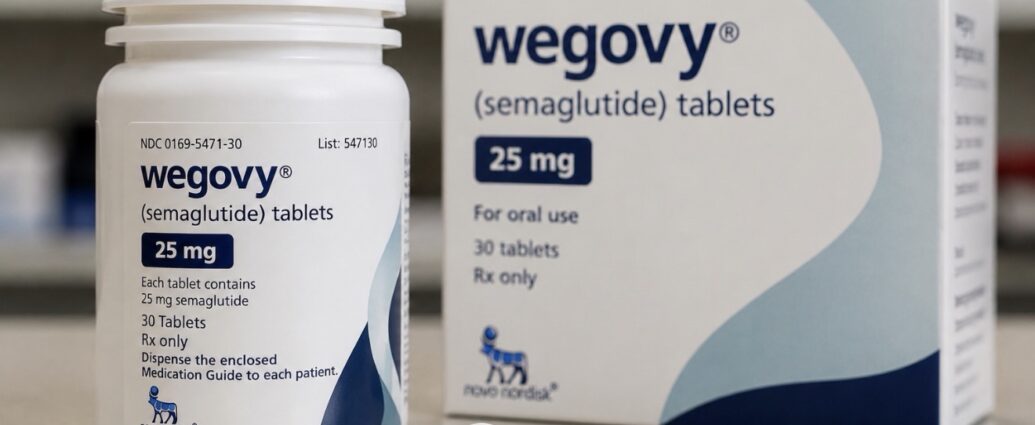
The Danish pharmaceutical giant reported stronger-than-expected first-quarter 2026 earnings Wednesday, fueled largely by the explosive launch of its oral Wegovy pill in the United States earlier this year.
The company said the pill has already generated more than 2 million prescriptions since launching in January, helping push Novo Nordisk shares roughly 7% higher in Copenhagen trading and prompting management to improve its full-year outlook after months of investor concerns and declining forecasts.
The oral Wegovy pill generated approximately 2.26 billion Danish kroner — roughly $354 million — during the first quarter, nearly double analyst expectations.
Weekly U.S. prescriptions surpassed 200,000 by late April.
Novo Nordisk CEO Mike Doustdar described the launch as the strongest GLP-1 drug rollout ever recorded in the United States.
Overall first-quarter net sales reached 96.82 billion kroner, up 24% year-over-year, while adjusted operating profit came in well above expectations at 32.86 billion kroner.
The company’s injectable Wegovy franchise continued growing as well, rising 12% year-over-year to 18.2 billion kroner, while diabetes drug Ozempic declined 8% but still exceeded analyst forecasts.
Novo also improved its full-year guidance, now projecting adjusted sales declines between 4% and 12% at constant exchange rates — an improvement from earlier forecasts calling for steeper declines.
The Real Breakthrough Is Price and Accessibility
For consumers, however, the biggest story may not be Wall Street performance but affordability.
Both Novo’s oral Wegovy and Eli Lilly’s competing obesity pill Foundayo are launching at approximately $149 per month for cash-paying patients — dramatically below the roughly $1,349 monthly list price for injectable Wegovy.
That pricing shift could significantly expand access to obesity treatments across the United States.
The market could become even larger beginning July 1, when expanded Medicare coverage for obesity medications is expected to take effect, potentially opening access to tens of millions of additional Americans who previously could not afford the drugs.
Industry analysts increasingly view the Medicare expansion as one of the most important catalysts in the history of the GLP-1 market.
Eli Lilly Is Racing to Catch Up
Novo Nordisk’s dominance, however, is already being challenged aggressively by Eli Lilly.
Earlier this year, Lilly received FDA approval for its oral obesity drug Foundayo and quickly launched it into the U.S. market.
Unlike Novo’s peptide-based pill, Foundayo uses a small-molecule approach and is being marketed heavily around one major convenience advantage: patients can take it anytime.
Novo’s oral Wegovy still carries stricter instructions. Patients must take the pill first thing in the morning on an empty stomach with only a small amount of water and then wait 30 minutes before eating or drinking anything else.
Foundayo does not carry those restrictions.
Lilly CEO David Ricks said the convenience advantage could eventually drive broader adoption, though he cautioned that scaling the rollout would take time.
Early prescription data still strongly favors Novo.
According to IQVIA prescription tracking data cited by Jefferies analysts, Foundayo generated roughly 5,600 prescriptions during its third week on the U.S. market — below the pace of Novo’s launch during the same period.
Novo currently controls roughly 65% of new prescriptions in the oral obesity drug category.
Doustdar said Novo is seeing a “synergetic effect” between oral and injectable products, with many patients using both rather than replacing one with the other — a sign the market itself may be expanding rapidly rather than simply shifting existing patients between products.
The Obesity Drug Boom Is Reshaping Pharma
The financial stakes surrounding the obesity market are enormous.
Analysts increasingly estimate the global weight-loss drug industry could eventually surpass $100 billion annually, making it one of the most valuable pharmaceutical markets in history.
A Deloitte analysis released this week found obesity treatments have now surpassed oncology as the single largest contributor to late-stage pharmaceutical pipeline value for the first time in 16 years.
The firm also warned that the sector may be approaching speculative “bubble” territory if pricing pressure, safety concerns, or disappointing clinical data emerge.
Novo continues investing heavily in next-generation obesity drugs.
The company recently secured FDA approval for Wegovy HD, a higher-dose injectable version that produced roughly 20.7% average weight loss in clinical trials.
Novo is also advancing its next-generation combination therapy CagriSema, though earlier trial results underperformed compared to Eli Lilly’s blockbuster obesity drug Zepbound — a setback that contributed to Novo shares hitting five-year lows earlier this year before the oral Wegovy rebound.
The Outcome Could Reshape American Healthcare
The battle between Novo Nordisk and Eli Lilly is no longer simply a pharmaceutical rivalry.
It is becoming a fight over who controls one of the largest emerging healthcare markets in the world — and whether obesity treatments become broadly accessible consumer health products or remain premium therapies concentrated among wealthier patients.
For millions of Americans struggling with obesity, diabetes, and related health conditions, the outcome of that competition could directly determine who can afford treatment — and who cannot.
— JBizNews Desk
© JBizNews.com. All rights reserved. This article is original reporting by JBizNews Desk. Unauthorized reproduction or redistribution is strictly prohibited.