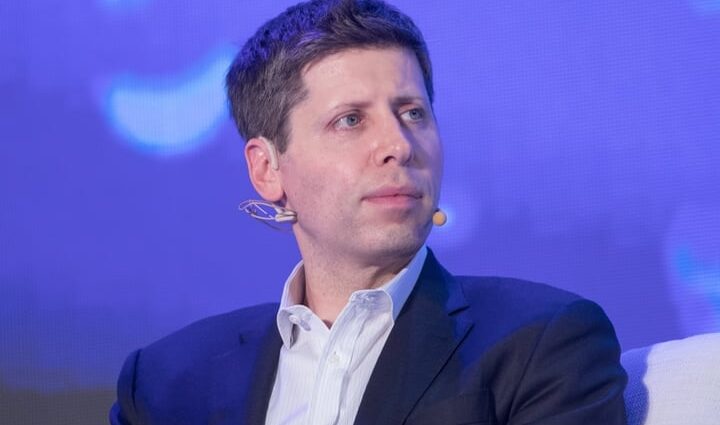
After spending years funding one of the most high-profile universal basic income experiments, OpenAI CEO Sam Altman now says the idea falls short of what the future will demand.
“I no longer believe in universal basic income as much as I once did,” Altman said in a recent interview with The Atlantic. “I’m much more interested in ways where we think about kind of collective ownership.”
That marks a notable shift from someone who helped back a $14 million study through OpenResearch in 2020 to test whether giving people free money would reduce their motivation to work.
Don’t Miss:
- Explore whether your retirement strategy is optimized for income, taxes, and long-term withdrawals — take the AdviserMatch quiz today.
- Demand for Faster Diagnostics Is Surging — NASA- and NIH-Supported Space-Tested System Targets At-Home Lab-Quality Blood Testing
The results didn’t match the usual fears. But Altman’s own thinking has moved beyond the original premise.
UBI Didn’t Kill Work Ethic
The three-year study gave 1,000 low-income adults $1,000 a month, while a control group of 2,000 people received just $50. Researchers expected to see whether steady cash would reduce motivation to work.
Instead, they found something different.
Participants actually reported valuing work more. Belief in the importance of work rose slightly, and many agreed with statements like “work is a duty toward society” and “people who don’t work turn lazy.”
At the same time, people worked fewer hours on average. But that didn’t mean they stopped working. Many used the financial cushion to make better decisions about their careers.
Trending: Think the biggest tech gains happen after an IPO? Click here to see why some investors are looking at opportunities before companies go public.
Some went back to school. Others pursued certifications or switched into jobs with more long-term potential. One participant said the extra money allowed her to take a temporary pay cut for a role with better growth opportunities. “If I didn’t have that money, there is no way I could have taken that pay cut,” the participant said.
Researchers concluded the drop in hours wasn’t about laziness. It was about flexibility.
People still wanted to work. Many said unemployment brought feelings of guilt or frustration, and they viewed work as essential to independence and self-reliance.
Why Altman Is Moving Beyond UBI
Even with those results, Altman believes UBI alone won’t be enough in a world shaped by artificial intelligence.
“I think any version of the future that I can get really excited about means that everybody’s got to participate in the upside,” he told The Atlantic. “And I think just like a fixed cash payment, although useful and maybe a good idea in some ways, does not get it what we’re really going to need for this next phase.”
See Also: You Saved for Retirement — But Do You Know What You’ll Keep After Taxes?
Instead, Altman is focused on ideas like shared ownership, whether through equity, access to computing power or other ways for people to benefit directly from AI-driven growth.
His concern is that AI could result in a small number of companies capturing most of the gains if access remains limited. “If it’s limited and hard to use and not well integrated, then the kind of existing rich people are going to bid up the price and it’s going to lead to further stratification,” he said.
The UBI study suggests people don’t lose their drive when given financial stability. But Altman’s latest thinking points to …





This post was originally published here